Fun with Dick and Jane
Classics back in simple words
Description
For a good part of the twentieth century, millions of American children met their first printed sentence in the company of two kids named Dick and Jane. The words were short, the pictures were bright, and the plots barely qualified as plots: a ball rolls, a dog runs, a little sister points at something and says the word for it. "Fun with Dick and Jane" gathers these stories and reissues them in the same deliberately plain vocabulary that made them famous. Turning the pages now, we recognize a texture more than a story — the rhythm of a child sounding out one careful word at a time.
The book collects the familiar cast: Dick and Jane, little Sally, the dog Spot, the cat Puff, Mother and Father, all moving through a tidy suburban world where nothing much happens and every small event is worth naming. The sentences repeat on purpose. "Look, look. Oh, look." A word appears, then appears again a page later, then again, until it stops being a puzzle and becomes something the reader simply knows. What feels almost hypnotic to an adult was, for the child it was built for, the whole point.
That plainness is easy to smile at and easy to underestimate. Behind the repeated words sits a specific theory of how children learn to read, and behind the tidy pictures sits a specific picture of what an ordinary life looked like. The stories say very little and imply a great deal, which is exactly why they are worth reopening.
The question we’re asking : Why did a book that says almost nothing become the way an entire country learned to read?What we’ll see : How these plain little stories work, the reading method they were built to serve, and the world they quietly held up as normal.
Table of contents
01Chapter 1 — Look, look, see the sentence
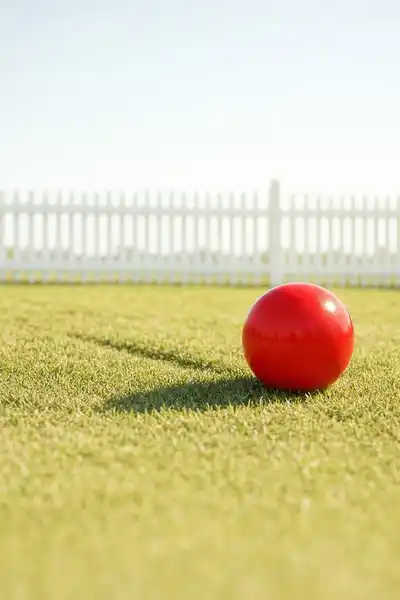
Open the book anywhere and the style announces itself. "Look. Look, Dick. See Jane. See Jane run." There is no ornament, no subordinate clause, no word longer than it needs to be. The sentences are short enough to be held in a small head all at once, and simple enough that a child who has learned five words can already build a page out of them. The stories in the collection lean entirely on this restraint. What happens is minimal — a ball is thrown, a puppy hides, Sally wants to help and gets in the way — and the smallness is deliberate, because the event is never really the subject. The word is.
Repetition is the engine here. A new word arrives, gets used, and then comes back a few lines later, then again on the facing page, so that by the time the story ends the reader has met it often enough to own it. "Run, Dick, run. Run and see. Oh, see Dick run." To an adult this reads like a chant, almost a lullaby, and there is something quietly pleasant in the rhythm. For the beginning reader it is scaffolding: each repeated word is a rung, and the story is really a ladder dressed up as a game.

02Chapter 2 — The method behind the repetition
The plainness of Dick and Jane was not an accident of taste. It was the visible surface of a whole theory about how children should be taught to read, the approach usually called the whole-word or look-say method. Instead of teaching a child the sounds that letters make and asking them to assemble words piece by piece, look-say taught children to recognize entire words on sight, the way we recognize a face. A word was shown, named, and then repeated until the shape of it became instantly familiar. The stories in the collection are essentially delivery vehicles for that repetition — controlled little worlds built around a small, carefully chosen vocabulary.
That controlled vocabulary explains almost everything about how the book reads. Writers working in this tradition could only use words the child had already been introduced to, and each new word had to be repeated a set number of times before another could be added. The result is prose that feels engineered, because it was: the sentences bend around the word list rather than around the story. A page reads oddly to an adult precisely because its real job is not to entertain but to make a handful of words unforgettable through sheer exposure.
03Chapter 3 — Dick, Jane, and the world they lived in
Set the method aside and look at who these children actually are. Dick is the older brother, Jane the sister close to him in age, Sally the small one still learning the words the reader is learning. There is Mother in the kitchen or the yard, Father coming and going, a dog named Spot and a cat named Puff. They live in a clean house on a quiet street with a green lawn and a family car. Nothing about this world is stated as a claim; it is simply the air the stories breathe, the unremarked backdrop against which balls roll and puppies hide.
The collection keeps that world small and warm on purpose. Trouble, when it appears, is the gentlest kind — a lost toy, a puddle to jump, a pet that will not come when called. Every problem is solved within a page or two, usually by someone helping someone else, and the emotional register never rises above mild delight or mild worry. The children are endlessly agreeable, the adults endlessly patient, the pets endlessly cooperative in the end. It is a world with the sharp edges filed off, calibrated to reassure as much as to instruct.
04Chapter 4 — What a reading primer teaches us to read
A book built to teach children the mechanics of reading turns out to have been teaching something less visible alongside it. When a story repeats a scene often enough to make a word stick, it also repeats a picture of life often enough to make that stick too. Dick and Jane never told anyone that a family had a mother in the house and a father with a car, a lawn out front and a dog in the yard — the stories just kept showing it, page after page, in the same neutral tone they used for everything else. The world arrived pre-sorted, and because it was never presented as a choice, it registered as simple fact.
That is the quiet power of a primer. It reaches children at the exact moment they are learning that print carries truth about the world, and it delivers its picture of normal life in the same trustworthy voice it uses to name a ball. A child does not weigh whether the world of the stories is one option among many; the child absorbs it the way they absorb the words, through repetition and familiarity, below the level of argument. The reissued collection lets us see this at a distance, now that its version of an ordinary household reads as an artifact of a particular time and place rather than as the shape of things.
05Conclusion
"Fun with Dick and Jane" gathers stories that were never meant to be admired the way stories usually are. They were tools, built to turn a small child into a reader through repetition, matched pictures, and a vocabulary kept deliberately tiny. Reissued in their original plain words, they still do what they always did: they hand us the rhythm of a first sentence being sounded out, the moment marks on a page become a voice. That the plots are almost nothing was the whole design — the words were the point, and the words worked.
Related books