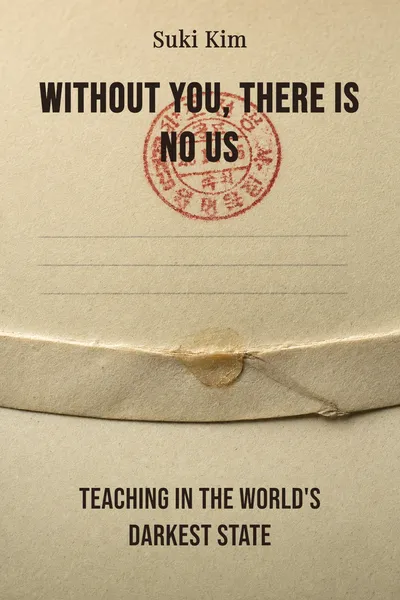
Without You, There Is No Us
Teaching in the world's darkest state
Description
In the summer of 2011, a South Korean-born writer named Suki Kim moved into a walled compound on the outskirts of Pyongyang, carrying a laptop she was not supposed to have and a secret she could tell no one. She had come to teach English at the Pyongyang University of Science and Technology, a school funded largely by evangelical Christians from abroad and run, improbably, inside the world's most closed dictatorship. Her students were 270 young men, the sons of North Korea's ruling class. She was, in the same six months, a teacher, a guest of the regime, and an undercover journalist gathering the material for the book that became Without You, There Is No Us.
The timing was strange even by North Korean standards. Every other university in the country had been shut for a year, the students dispatched to construction sites for a national labor campaign. Only this compound stayed open, its classrooms watched over by portraits of Kim Il-sung and Kim Jong-il hanging on every wall. Kim taught, ate, and lived under near-constant supervision, her lessons monitored, her movements logged, her few phone calls scripted. And then, halfway through her stay, Kim Jong-il died, and the country she was living in tipped into a grief she could not quite read.
What Kim brought back was not a spy's dossier but something quieter and harder to shake: a portrait of the young men she came to love, and of the machinery that had shaped them since birth. She calls them, at one point, both soldiers and slaves — privileged and imprisoned at once. The book sits uneasily between memoir and reportage, and that discomfort is exactly the point.
The question we’re asking : What does it actually feel like to teach, and to grow attached to, the future rulers of a country built on lies?What we’ll see : An outsider's six months inside a sealed compound, and what daily life there reveals about a nation that has learned to survive on fabrication.
Table of contents
01Chapter 1 — A walled compound and 270 sons of the elite
The Pyongyang University of Science and Technology, known as PUST, opened in 2010 as an odd experiment: a private university inside North Korea, bankrolled by Korean-American and other evangelical Christians, staffed by foreign teachers who were forbidden from ever mentioning religion. The regime allowed it because it wanted its elite to learn English and technical skills without exposing them to the outside world. So the school became a compound — gated, guarded, self-contained — where teachers and students lived side by side and almost no one left.
Kim's students were not ordinary North Koreans. They were the sons of the ruling class, young men in their late teens and early twenties who had been selected for their loyalty and their families' standing. They wore matching pins bearing the faces of the leaders. They marched to meals in formation, sang songs praising the regime, and spoke of their country in language so uniform it sometimes felt rehearsed. And yet they were also just boys — competitive, homesick, quick to laugh, curious in ways they could not always admit.

02Chapter 2 — Teaching a language with no place to put it
English, in Kim's classroom, turned out to be a dangerous subject — not because of grammar, but because language carries the world it comes from. To teach a sentence is to teach an assumption behind it, and almost every ordinary English exercise smuggled in ideas the regime could not tolerate. A lesson on writing a personal essay assumed a self with private opinions. A lesson on persuasion assumed that facts could be debated. Kim found herself constantly editing the world down to what would fit through the compound's walls.
The simplest assignments produced the strangest results. When she asked the students to write about their daily lives, their essays came back flattened into slogans and praise for the leaders, as though a genuinely personal sentence were a thing they had never been allowed to form. When she asked them to describe their weekends, the answers were vague, because free time in the Western sense barely existed. The very structure of the language she was teaching kept bumping against the structure of the lives they were living.
03Chapter 3 — The lies that held everyone together
The most haunting thread in Kim's account is how completely lying had become the fabric of daily life — not as a moral failing but as a survival mechanism woven into everything. The students lied to her, sometimes knowingly, sometimes not, because they had been raised inside a story and had no vantage point from which to see it as a story. They told her about family trips and abundant food and technological triumphs, and she could rarely tell where propaganda ended and genuine belief began. The line had been erased long before any of them were born.
Kim, in turn, was lying too. Every day she smiled through her role as a devoted teacher while secretly recording notes for a book, hiding her laptop, disguising her true reasons for being there. She was as embedded in deception as her students were, and she felt it. The book's honesty about her own dishonesty is part of what gives it weight; she does not pretend she stood cleanly outside the system she was documenting. She lived inside its logic, and it cost her something.
04Chapter 4 — What a closed country does to the people inside it
Step back from the semester and Kim's book becomes an argument about what total control does to the inner life of the people it holds — even, or especially, its favored ones. We tend to picture dictatorship as a matter of walls, guards, and censored newspapers, an external cage. Kim's account suggests something more disturbing: that the deepest damage is done inside the mind, in the erosion of the ordinary capacity to know what is true, to speak plainly, to trust another person with a private thought. Her students were not starving in a camp. They were the elite. And they had still been remade at the root.
This is why she calls them both soldiers and slaves. They were being groomed to run the country, given rare access to foreign teachers and modern tools, and they were also utterly captive — captive not only physically but epistemically, unable to step outside the only reality they had ever been permitted. The privilege and the imprisonment were the same fact seen from two angles. That doubling is what makes them so hard to write about, and so hard to forget.
05Conclusion
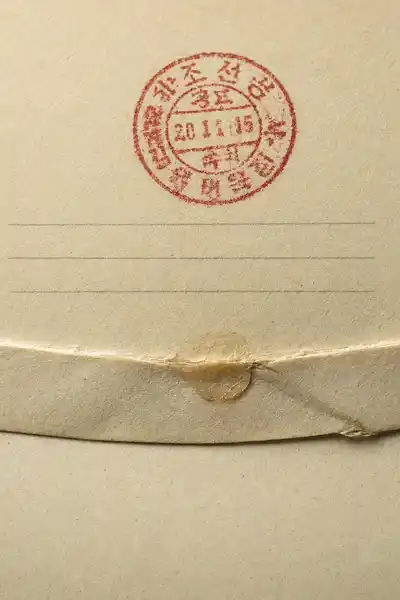
When Kim finally left, she carried her students' faces and letters out with her, along with the notes that would become the book — and the knowledge that she could never tell them what she had done, or send word, or know what became of them. The intimacy she had built was real, and it was also, structurally, impossible; the wall she had lived behind closed again the moment she stepped past it. Without You, There Is No Us takes its title from a regime anthem, a line meant to bind the people to their leader. In Kim's hands it curdles into something else: a portrait of people so thoroughly bound to a fiction that they can no longer locate themselves apart from it.
Related books