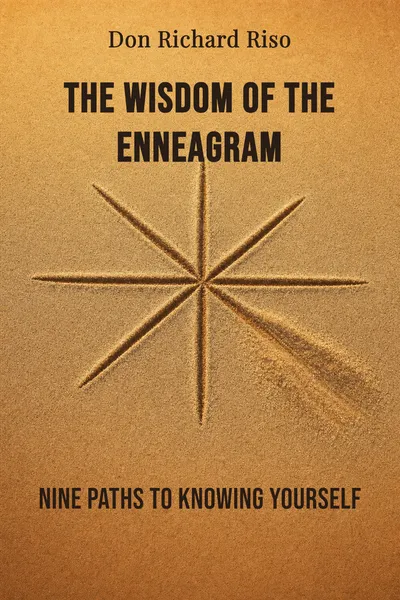
The Wisdom of the Enneagram
Nine paths to knowing yourself
Description
There is a familiar experience that comes with any personality test: the small thrill of being seen, followed by the suspicion that the description would fit almost anyone. Don Richard Riso spent decades circling that problem. A former Jesuit who left the seminary in the 1970s, he first encountered the Enneagram — a nine-pointed diagram of personality types — in a Jesuit context, and became convinced it was not one more parlor trick but a serious map of the human interior. In 1999, with his collaborator Russ Hudson at the Enneagram Institute they had founded together, he published The Wisdom of the Enneagram, a book that set out to turn the system into something usable for genuine change.
The pitch was ambitious. Most personality frameworks describe you and stop there. Riso and Hudson argued that describing a type was only the beginning — that each of the nine patterns is really a habit of attention, a way we contracted early in life to feel safe, and that the same habit which once protected us is the thing quietly running the show. The Enneagram, in their hands, was less a set of nine boxes than nine descriptions of how a person can lose contact with themselves, and nine routes back.
What makes the book distinctive is that it refuses to let the reader stay comfortable. Recognizing your type is meant to sting a little. The system does not hand out flattering labels; it names the specific way each of us tends to overreach, and then asks what we might do about it. That combination — a tidy diagram and an untidy invitation to grow — is what carried the book far beyond its niche origins.
The question we’re asking : Can a nine-point map of personality actually move someone toward change, or does it just give them a nicer name for staying the same?What we’ll see : How the system organizes the nine types, what it says drives them beneath the surface, and where it asks to be handled with care.
Table of contents
01 Chapter 1 — Nine ways of going wrong
The Enneagram sorts people into nine basic types, each numbered rather than named, which is itself a small act of tact — a number does not flatter or wound the way a label like "the Achiever" might. Riso and Hudson describe them roughly like this: Ones want to be good and get it right; Twos want to be needed and loved; Threes want to succeed and be admired; Fours want to be authentic and understood; Fives want to be capable and to understand; Sixes want to be secure and to trust; Sevens want to be satisfied and free; Eights want to be strong and in control; Nines want peace and to avoid conflict.
Stated that plainly, the list sounds almost pleasant. The book's move is to flip each desire over and show its shadow. The One's pursuit of goodness curdles into a critical, resentful perfectionism. The Two's generosity hides a need to be indispensable and a difficulty admitting its own wants. The Three's drive to achieve can hollow out into performing a self it no longer feels. Each type, in other words, is built around a virtue that has quietly become a compulsion — a good thing done so reflexively it stops being a choice.

02 Chapter 2 — The three centers, and the fear underneath
Beneath the nine types the book lays a deeper structure: three centers, each governing three types. There is the Body or Instinctive center (Eight, Nine, One), the Heart or Feeling center (Two, Three, Four), and the Head or Thinking center (Five, Six, Seven). The grouping is not decorative. Riso and Hudson argue that each center is organized around a core emotion — the Body center around anger, the Heart center around shame, the Head center around fear — and that each type inside a center handles that emotion in its own way.
Take the Heart center. All three types are wrestling with shame and with the question of identity, of who they are in others' eyes. The Two manages it by focusing outward on being loving; the Three by achieving an image worth admiring; the Four by amplifying feeling and insisting on being different. Same underlying wound, three strategies. Seeing your type this way reframes it — your particular pattern is not a random quirk but a coping style built on top of an emotion you have been trying, unsuccessfully, to resolve.
03 Chapter 3 — Wings, arrows, and the levels of health
A single number would make the Enneagram a crude instrument, so the system adds motion. The first refinement is the wing — the type adjacent to yours on the circle that colors your basic type. A Five with a Four wing looks quite different from a Five with a Six wing: one more withdrawn and artistic, the other more anxious and engaged. Nobody is a pure number. The wing explains why two people of the same type can seem unalike.
The second refinement is the arrows, sometimes called the directions of integration and disintegration. Each type is connected by lines to two others, and the book describes how you shift toward one when you are growing and toward another when you are stressed. Under pressure the accommodating Nine can take on the anxious traits of the Six; when integrating, the same Nine moves toward the healthy assertiveness of the Three. Your type is not a cage but a starting point with predictable exits in both directions.
04 Chapter 4 — A map is not the territory
Step back and the book is making a larger, quietly demanding claim: that self-knowledge is not a diagnosis you receive but a practice you sustain. The whole apparatus of types, centers, wings, arrows and levels exists to support one act — noticing yourself in motion, before the automatic pattern completes. Riso and Hudson call this presence, and they are candid that the diagram is worthless without it. You can memorize all nine types and change nothing.
This is where the Enneagram parts company with the tests it superficially resembles. A framework that just labels you invites you to relax into the label — to explain yourself, forgive yourself, and carry on. Riso's version does the opposite. It hands you a precise account of your least attractive habit and then insists the account is only useful if you use it against the habit. The system is built to be uncomfortable enough to be productive.
05 Conclusion
The thrill of being seen, and the suspicion that follows it, is exactly the tension The Wisdom of the Enneagram sets out to resolve. Riso and Hudson answer it by refusing the flattery. Their nine types are not compliments but confrontations, each one naming the good instinct we have let harden into a reflex. The centers explain the emotion underneath, the wings and arrows show the pattern in motion, and the Levels of Development turn a static label into a scale we are always climbing or slipping down.
Related books