The New Book of Middle Eastern Food
800 recipes, 30 years of travel
Description
In 1972, a young woman who had grown up in Cairo published a book of Middle Eastern recipes in English and watched it become something she had not planned: a reference. James Beard, the closest thing America had to a culinary elder, called it "a landmark in the field of cookery." Claudia Roden had not set out to write a landmark. She had set out to hold on to something. Her family, part of a Jewish community that had lived in Egypt for generations, had scattered after the political upheavals of the mid-twentieth century, and the recipes she collected were less a project than a rescue. She gathered them the way other exiles gather photographs.
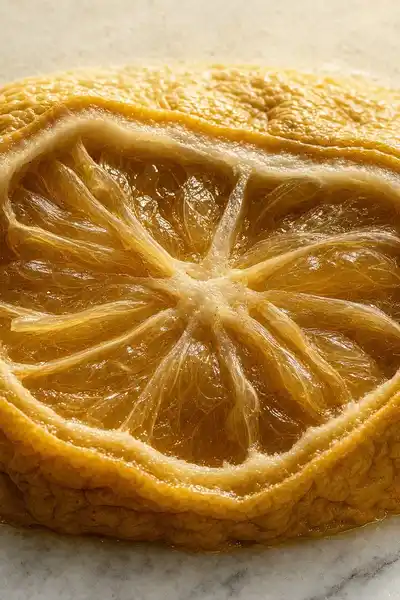
Thirty years later she went back and rebuilt it — not a light revision but a re-creation. The new edition carries more than 800 recipes, gathered across three decades of travel through a region that kept changing: Morocco and Tunisia, Turkey and Greece, Lebanon, Syria, Egypt, Persia. She had eaten in kitchens, copied down what cooks told her, argued about whether the cumin came first or the garlic, and come home with the aromatic signatures that separate one country's version of a dish from another's. Sumac and tamarind in Syria. Pomegranate syrup in Iran. Preserved lemon and harissa in North Africa.
What arrives is not the exotic curiosity a 1972 reader might have expected. The ingredients now sit on supermarket shelves; the dishes now turn up on American tables. The book that once introduced a foreign cuisine reads today like a document of a world in motion — and a home cook's practical companion at the same time.
The question we’re asking : What does a cookbook actually preserve when the world it came from keeps changing?What we’ll see : How a rescued family archive grew into an eight-hundred-recipe map of four cuisines, made lighter, quicker, and no less alive.
Table of contents
01Chapter 1 — A cookbook that began with exile
The book has an origin most cookbooks don't. Roden grew up in a cosmopolitan Cairo where Jewish, Greek, Armenian, Syrian and Italian families cooked side by side, and where a dish could tell you where a household had come from three generations back. When that world dissolved and the families dispersed, the food went with them — but only in fragments, in the heads of aunts and grandmothers who had never written anything down. Roden started collecting because the sources were leaving, and because a recipe not passed on simply vanishes.
So the first edition was assembled less from libraries than from people. She wrote to relatives, cornered acquaintances at gatherings in London and Paris, coaxed measurements out of cooks who worked by feel and would say "enough" when she asked how much. A cuisine that had lived in memory and repetition got fixed, for the first time, in grams and minutes. That act of transcription is quietly radical: an oral tradition turned into a text that a stranger in another country could follow.

02Chapter 2 — The four kitchens under one roof
There is no single Middle Eastern cuisine, and one of the things the book does best is refuse to pretend there is. Roden organizes the sprawl around four great cooking styles, each with its own logic, its own signature flavors, its own idea of what a good meal should feel like. Holding them together in one volume is the trick — showing what they share without flattening what makes each distinct.
Arab cooking, from Syria, Lebanon and Jordan, is the one many Western readers meet first, largely through mezze: the table crowded with small dishes, the fillo crescents and cigars, the chopped salads, the endlessly reworked trio of tahina, chickpeas and eggplant. It is generous, vegetable-forward, built for sharing and grazing rather than a single plated event, and it remains a rich source of grain and bulgur dishes that hold up on their own.
03Chapter 3 — Making the elaborate everyday
A cuisine known for patience — dishes that simmer for hours, pastries assembled leaf by leaf — carries a risk in translation: it can look like a museum you admire rather than a kitchen you use. Roden's second great project in this edition is to close that gap. She reworks traditional dishes toward simpler approaches, lighter ingredients and time-saving methods, insisting throughout that none of it costs the flavor, freshness or texture that made the food worth recording.
This is a genuine editorial position, not a marketing line. Traditional recipes often carry steps that made sense in a household with unlimited hands and no clock — clarifying, pounding, days of soaking. Roden asks which steps actually change the result and which are simply inherited habit. Where a shortcut holds, she takes it and says so. Where it doesn't, she leaves the labor in and tells us why it matters. The reader ends up trusting her precisely because she doesn't pretend everything can be fast.
04Chapter 4 — More than food on a plate
It would be easy to read all of this as a very good practical manual and stop there. But the book keeps doing something a manual doesn't: it remembers. Between the recipes, Roden threads her own childhood in Egypt and stories gathered on the road — who cooked a dish, at which wedding, in which lost neighborhood, why a family made it one way and their neighbors another. The food is never presented as techniques floating free of the people who kept them alive. It comes attached to lives.
That's because a recipe is one of the most durable things a displaced people carries. Language erodes, documents get lost, houses are left behind — but a grandmother's way with a stuffed vine leaf survives, transmitted hand to hand, carrying inside it a whole vanished arrangement of the world. Roden understood early that she was writing down more than instructions. She was writing down a way of belonging that history had scattered, and the book became, without announcing it, an archive of communities that in many cases no longer exist where they began.
05Conclusion
The book closes the loop it opened in 1972. A woman who set out to keep her scattered family's food from disappearing ends up producing what many consider the definitive record of an entire region's cooking — updated, enlarged, lightened for the modern kitchen, and richer for three decades of walking through it. Beard's "landmark" was accurate about the first edition. The re-creation earns the word again, with the authority of someone who went back and checked her own map against the territory.
Related books