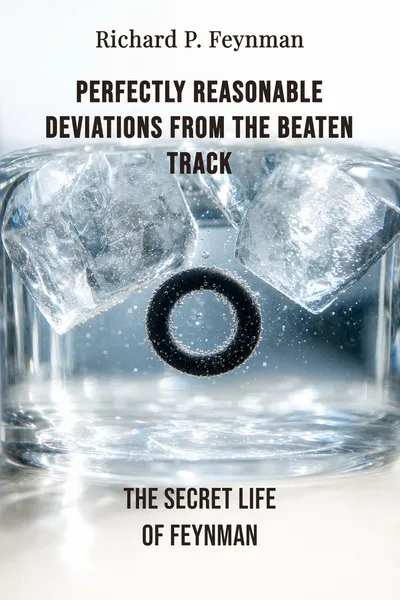
Perfectly Reasonable Deviations from the Beaten Track
The secret life of Feynman
Description
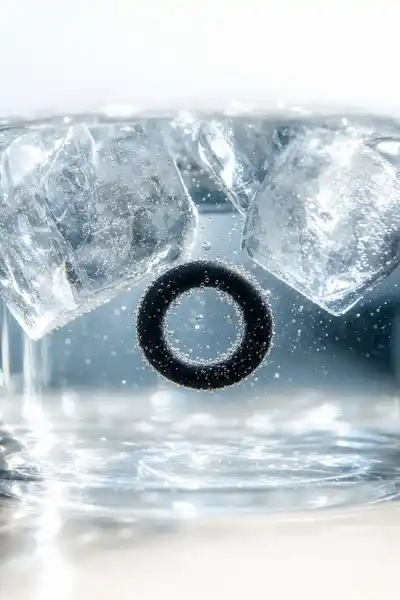
In 1988, Richard Feynman died in Los Angeles at sixty-nine, already one of the most beloved figures American science had produced. He had won a Nobel Prize for his work on quantum electrodynamics, cracked open the Challenger investigation with a glass of ice water and a rubber O-ring, played the bongos, cracked safes at Los Alamos, and told the stories himself in two bestselling memoirs. The public Feynman was a performer — the wisecracking genius who made physics look like the most fun anyone could have. What almost nobody had seen was the paper trail he left behind: four decades of letters, filed away, answered one by one.
His daughter Michelle spent years going through the filing cabinets. What she found were not the polished anecdotes of the memoirs but the raw material of an actual life — replies to Nobel laureates and replies to teenagers, notes to his wife, refusals of honors, patient answers to strangers who wrote in with a physics question or a personal one. In 2005 she published a large selection as Perfectly Reasonable Deviations from the Beaten Track, and the collection does something the anecdotes never quite managed. It shows Feynman when he wasn't onstage.
The letters turn out to be a different kind of portrait. A man is one thing in a lecture hall and another when he sits down to answer a grieving parent, decline a membership he finds pompous, or explain to a high-school student why she shouldn't be intimidated by the word 'scientist.' The correspondence catches him in the act of being ordinary, which for Feynman was its own kind of remarkable.
The question we’re asking : What does a lifetime of private letters reveal about a man the public thought it already knew?What we’ll see : A physicist who treated a stranger's question with the same care as a colleague's, and who kept his deepest feeling in writing rather than in speeches.
Table of contents
01Chapter 1 — The letters nobody was supposed to read
Feynman was famous for talking, not writing. His reputation rested on lectures, on the two memoirs assembled from tape-recorded stories, on the sheer theatrical pleasure he took in explaining things out loud. So the discovery that he had been a diligent, lifelong correspondent came as something of a surprise even to people who thought they knew him. He kept copies. He answered almost everyone. The filing cabinets in his office held decades of two-sided conversations, carbon copies of his own replies stapled to the letters that had prompted them.
The book's editor, his daughter Michelle Feynman, was a child when he died and did much of her knowing of him afterward, through this paper. She organized the letters roughly by decade, from the Los Alamos years of the 1940s through the last months of his life, and resisted the temptation to smooth them into a story. The result reads less like a biography than like sitting beside someone while they open forty years of mail.

02Chapter 2 — The physicist who answered the mail
The letters to strangers are the heart of the collection, and they are startling for how seriously Feynman took them. He was, by the 1960s, a famous man with limited time and a great deal of his own work to do. Yet when someone wrote in with a genuine question — about relativity, about how magnets work, about whether God and physics could coexist — he sat down and answered it properly, in plain words, without condescension and without pretending certainty he didn't have.
When a young woman wrote that she was interested in science but discouraged, worried it wasn't for someone like her, he wrote back that the only thing that mattered was whether she found it interesting, and that she should ignore anyone who made it sound like a club with a locked door. When people asked him about meaning, he did not perform wisdom. He said what he actually thought, which was often that he didn't know, and that not knowing was a comfortable place to be rather than a failure.
03Chapter 3 — A love letter to a woman who had died
In 1946, sixteen months after his first wife died, Feynman wrote her a letter. Arline Greenbaum had been his high-school sweetheart. She was diagnosed with tuberculosis before they married, and Feynman married her anyway, against the advice of nearly everyone, and cared for her through the years he was working on the atomic bomb at Los Alamos. She died in June 1945, at twenty-five, while he was there. He was in his twenties.
The letter he wrote her more than a year later was never meant for anyone else. In it he tells her that he loves her still, that he wants to comfort her and take care of her, that he keeps wanting to discuss things with her because she was the person he thought with. He apologizes for not writing sooner. And then, near the end, comes the line that has since become one of the most quoted things he ever wrote — an admission that he knows she cannot read it, followed by the simple close: he loves his wife, and his wife is dead.
04Chapter 4 — The private man behind the public genius
Step back from any single letter and the collection makes an argument about what correspondence preserves that lectures and anecdotes cannot. Feynman's memoirs were performances — funny, self-aware, shaped for effect, and he knew it. A letter written to one person, answered in an afternoon and filed away, has no audience to play to. What survives in these pages is closer to how he actually reasoned and felt in real time, before the story hardened into a story.
And what survives is consistency. The same man wrote to Teller and to a fourteen-year-old, and treated the question, not the questioner, as the thing that mattered. This is easy to state as a virtue and hard to actually do across four decades and thousands of letters. Feynman's egalitarianism was not a stated principle so much as a habit of attention: if a problem was interesting, its source was irrelevant, and if a person was suffering, their fame was irrelevant. The filing cabinet is the evidence, because you cannot fake that kind of thing letter after letter for a lifetime.
05Conclusion
The Feynman of the memoirs was a character he half-invented — the irreverent genius who made everything look like a game. The Feynman of the letters is quieter and, in a way, more surprising: a man who answered the strangers who wrote to him, refused the ceremonies he found empty, encouraged the young, and kept his grief folded in a drawer for forty years. The two are the same person, which is exactly what the collection lets us finally see. The joke and the tenderness came from one source.
Related books