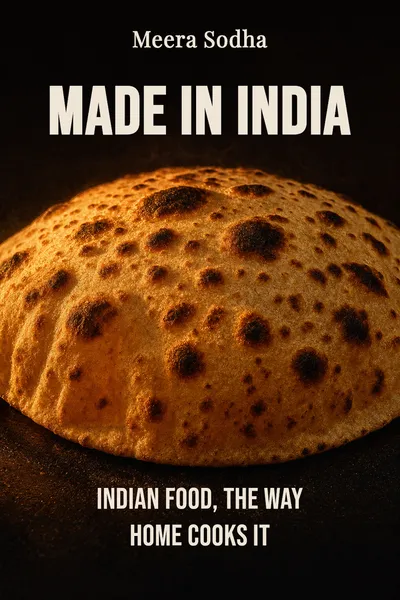
Made in India
Indian food, the way home cooks it
Description
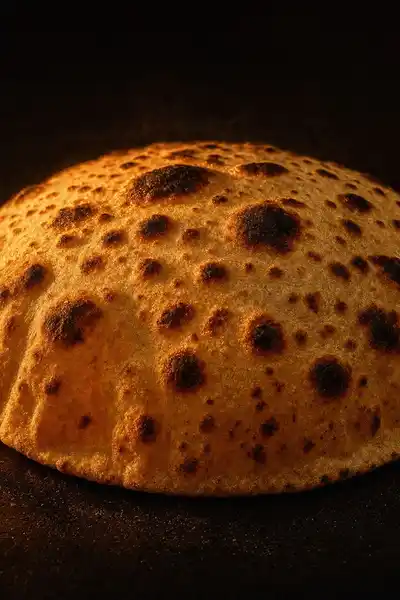
Meera Sodha grew up in Lincolnshire, in the flat green east of England, in a house where the smell of frying cumin and ginger met the front door before anyone did. Her grandparents had come from India by way of Uganda, expelled in the early 1970s, and they arrived carrying almost nothing except the food they knew by heart. In that kitchen, dinner was never an event. It was Tuesday. A curry went on the stove, chapatis puffed on a dry pan, and the family ate the way they had eaten for three generations — quickly, cheaply, and with a depth of flavor that had nothing to do with the vindaloo down the road.
For most people outside India, though, "Indian food" means exactly that road: the takeout menu, the laminated photos, the tikka masala under a slick of orange oil, the sense that this is heavy, complicated food best left to professionals. Sodha's argument, laid out across more than 130 recipes in Made in India, is that this version is a translation error. The food she was raised on is lighter, faster, and far simpler than the restaurant convinced us it was. Most of it lands on the table in under an hour, built from spices already in the cupboard.
So the book is less a technical manual than an invitation into one family's actual eating life — the chili paneer and the beet samosas, the salmon curries and the saffron kulfi, dishes collected from a grandmother, a mother, and a daughter who wrote them down before they could slip away. It reads like being handed the recipe box that usually never leaves the house.
The question we’re asking : If the Indian food we order out is a translation, what does the original — the food actually cooked at home — taste like?What we’ll see : A cook's return to the everyday dishes of her own family, and why the truest version of a cuisine lives on the home stove rather than the restaurant menu.
Table of contents
01Chapter 1 — The takeout menu was never the real thing
The Indian restaurant, as most of the West knows it, is a particular invention with a particular history. Much of it was built by immigrants — many of them Bangladeshi in Britain, Punjabi elsewhere — who learned early that survival meant giving customers what they expected: rich, saucy, reliably heavy dishes that could be produced fast and eaten with a pint. Cream and butter got dialed up. Heat got standardized into a ladder from korma to vindaloo. The result was popular, durable, and almost entirely disconnected from what those same cooks ate at home after closing.
Sodha's point isn't that this food is bad. It's that it is a genre of its own, shaped by economics and by a foreign palate, and that mistaking it for the whole of Indian cooking is like judging Italian food by a jar of supermarket pasta sauce. The takeout version flattens an enormous, regional, seasonal cuisine into a dozen brown dishes that mostly taste of the same base gravy. Whole categories — the quick vegetable dishes, the fresh chutneys, the everyday dals — simply never made it onto the laminated card.

02Chapter 2 — A family recipe box, three generations deep
The recipes in Made in India did not come from cookbooks. They came from Sodha's grandmother, her mother, and her aunts — passed down by demonstration and taste rather than by writing, which is exactly why they were in danger. Nobody in the family measured. A curry was correct when it looked and smelled correct. To turn that into a book, Sodha had to stand in kitchens with a notebook and a set of scales, catching quantities that had only ever lived in someone's hands.
That act of recording gives the collection its emotional weight. The family's journey runs underneath the food: from Gujarat in western India to East Africa, where her grandfather ran a business in Uganda, then to England after Idi Amin expelled the country's Asian population in 1972. Each move carried the cooking along, adapting to new ingredients and new shortages without ever quite losing its center. The samosas picked up local touches; the curries bent to what a British market could supply.
03Chapter 3 — Fresh, fast, and built from a handful of spices
The most practical surprise of the book is how quick the food is. The image of Indian cooking as an all-day project — the endless simmering, the mysterious spice blends — comes largely from the restaurant, which prepares base sauces in advance and holds them for hours. A home cook doesn't. Sodha's weeknight curries are often ready in half an hour, because the flavor comes from a short, sharp sequence rather than from long cooking.
The engine of nearly everything is the same small cast: onions, ginger, garlic, tomatoes, and green chili, fried into a base, then seasoned with a handful of ground spices most people already own — cumin, coriander, turmeric, garam masala, chili powder. That's not exotic. It's a starter kit, and once it's in the cupboard, the difference between a spinach and salmon curry, a cinnamon lamb curry, and a plate of chili paneer is mostly a matter of what you add and when.
04Chapter 4 — The kitchen is where a culture actually lives
Step back from the recipes and Made in India is making a larger claim about where a cuisine truly resides. Restaurants are the public face of a food culture — the version exported, marketed, and adjusted for outsiders. But the real archive is the home kitchen, where dishes are cooked without an audience, adjusted to a family's taste, and repeated so often they become muscle memory. That is where a tradition is actually kept, and it is precisely the part that rarely gets written down.
This makes home cooking fragile in a way restaurant food is not. A menu can be photographed and copied; a grandmother's instinct for how much cumin cannot. When the cooks who hold it die, the knowledge goes with them unless someone catches it first. Immigrant families feel this acutely, because so much of what they carry across borders is unwritten — recipes, songs, ways of doing things that exist only in the doing. Food is often the most durable of these, but only if it keeps being cooked.
05Conclusion
The book ends where it began, back in that Lincolnshire kitchen with cumin frying and chapatis puffing on a dry pan — except now the reader is standing in it too, sca
Related books