Julia and Jacques Cooking at Home
Two masters teach the basics
Description
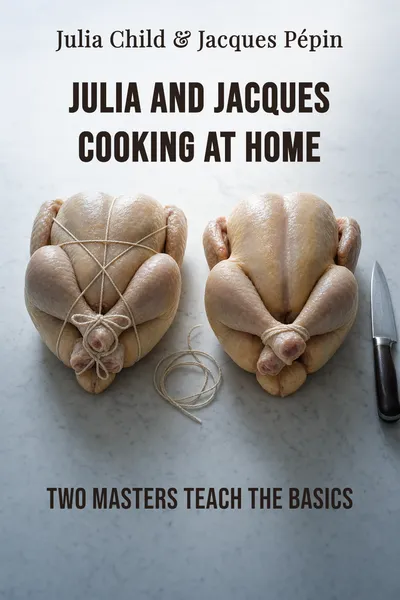
In the fall of 1999, two people who had spent their whole lives cooking sat down together in front of a camera and, later, on the page, to do something they had mostly done alone: cook side by side and let us listen in. Julia Child was in her late eighties, the woman who had taught America that French food was not out of reach. Jacques Pépin was a classically trained chef who had cooked for three French heads of state before crossing the Atlantic. Their book, Julia and Jacques Cooking at Home, is the record of that collaboration — recipes flanked by two voices, one on each margin, agreeing, disagreeing, and thinking out loud.
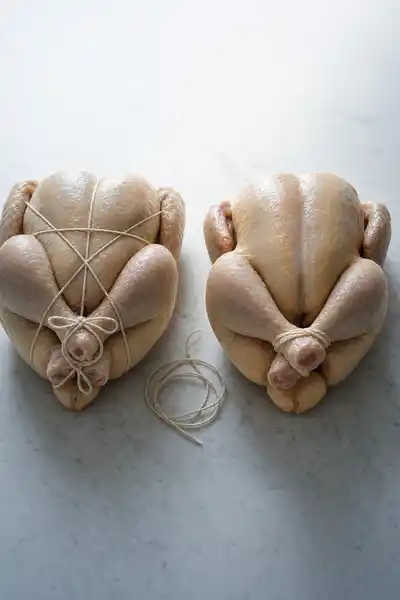
What makes the book unusual is that it doesn't pretend the two agree. Julia trusses her chicken one way, Jacques another. She adds the shallots at one moment, he waits. Rather than smoothing these differences into a single house style, the book keeps them in — the way two friends who both cook well will happily argue about the right way to peel garlic and both turn out something delicious. The recipes sit in the middle; the commentary lives in the margins, and the margins are where the real teaching happens.
They are showing us the basics: eggs, soups, stocks, roasts, vegetables, a few desserts. Nothing exotic, nothing that requires a specialist's kitchen. But the way they show it carries a quiet argument about what cooking at home actually is, and who gets to say how it's done.
The question we’re asking : What are two of the twentieth century's most trusted cooks really teaching when they disagree with each other over the same dish?What we’ll see : How the book handles technique, ingredients, improvisation, and the judgment that ties them together.
Table of contents
01Chapter 1 — Two masters, one kitchen, two opinions
Julia Child and Jacques Pépin came to cooking from opposite directions, and the book never hides it. Julia arrived at French cuisine as an adult, an American who fell for it in Paris after the war and spent years decoding it for people who had never held a whisk with confidence. Her genius was translation — turning intimidating technique into something a home cook in Ohio could actually attempt. Jacques was the professional: apprenticed in France as a teenager, trained in the demanding rhythm of restaurant kitchens, fast and precise in a way that only ten thousand repetitions produce.
Put them at the same counter and the differences show immediately. He works with the economy of a man who has boned a thousand chickens; she works with the deliberate care of someone who thinks about why each step matters and wants to explain it. The book lets both stand. A recipe will run down the center of the page, and along the sides Julia and Jacques comment on it — sometimes in harmony, sometimes frankly at odds over salt, over heat, over whether to rinse the bird.

02Chapter 2 — The basics, spelled out and argued over
The heart of the book is unglamorous on purpose: eggs, soups, salads, roast chicken, braises, potatoes, a handful of desserts. These are the foundations, and the two cooks treat them with the seriousness they deserve. An omelet gets pages. A roast chicken becomes a small lesson in heat, timing, and how to tell doneness by touch rather than by clock. The recipes themselves are written out carefully, step by step, because both cooks know that vague instruction is where home cooking goes wrong.
But the spelled-out recipe is only half of it. The margins carry the reasoning — why the pan should be hot before the eggs go in, what happens to the fat if you crowd the roasting pan, how a stock changes if it simmers versus boils. This is the difference between a recipe that tells you what to do and a book that tells you why, so that the next time, without the page in front of you, you can decide for yourself.
03Chapter 3 — Improvising, balancing, and rescuing leftovers
Once the foundations are solid, the book turns to the part of cooking that no recipe can fully capture: improvisation. Julia and Jacques are constantly adjusting — tasting, correcting, adding acid here, richness there, deciding a dish needs brightening or rounding out. They treat a meal as something to be balanced, not merely assembled. A plate that is all richness sits heavy; a squeeze of lemon or a fresh herb can reset the whole thing. This kind of judgment is the difference between following instructions and actually cooking.
Balancing a meal extends beyond the single dish. They think about how courses fit together, how a light starter earns a heavier main, how texture and richness should be distributed across a table so no one leaves overwhelmed or unsatisfied. It is composition, and they make it feel intuitive rather than technical — the accumulated sense of two people who have planned countless dinners and learned what works.
04Chapter 4 — Why nothing is written in stone
The book's deepest lesson is the one it never states as a rule, because stating it as a rule would contradict it. Nothing is written in stone. Every disagreement between Julia and Jacques quietly makes the same case: there is rarely one correct way, only ways with different consequences, and the cook's job is to understand those consequences well enough to choose. Authority in the kitchen is not obedience to a master recipe. It is judgment, earned slowly, tested against results.
This matters because so much cooking instruction works the opposite way — as commandment, as anxiety about doing it wrong. A single authoritative voice tells you the one right method, and any deviation feels like a mistake. Julia and Jacques dismantle that fear by disagreeing openly and both being right. If two people this experienced can differ on the fundamentals and both eat well, then the beginner's supposed errors are mostly just choices they haven't yet learned to make on purpose.
05Conclusion
By the time the last recipe is done, the book has taught fewer rules than it first appeared to and far more understanding. Two cooks who could have laid down the law instead invited us to watch them think, differ, taste, and adjust. The center of each page held a careful recipe; the margins held the reasoning, and the reasoning is what stays with you after the page is closed and the chicken is on the table.
Related books