Is This Anything?
Seinfeld's comic archive revealed
Description
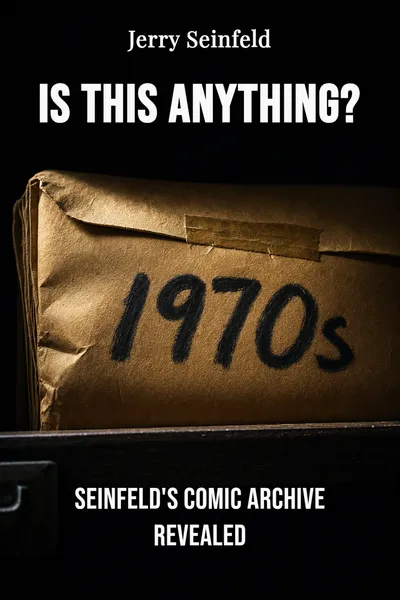
In 2020, Jerry Seinfeld published a book that looked, at first, like a greatest-hits album. Is This Anything? gathers material he had written and performed across five decades of stand-up — jokes about Pop-Tarts, cows, cab lines, the mail, the way we say "I'll be there in five minutes" and mean nothing by it. He had kept almost all of it. Every bit he ever thought was worth working on had gone into a set of yellow legal pads, then into manila envelopes, sorted by decade, stored in his office. The book is what happens when a comedian opens the archive and lets us read the drawer.
The title is the tell. "Is this anything?" is what one comic says to another backstage after trying out a fragment — a half-thought, an observation that might be a joke or might be nothing. It is the question that hangs over every piece of material before an audience decides. Seinfeld built one of the most recognizable acts in American comedy on tiny observations that other people walked past, and the book is organized to show the walking-past becoming the routine. It is a showcase, but it is also something stranger: a record of a man deciding, thousands of times, that a small thing was in fact something.
What is unusual is how little of it feels like autobiography in the ordinary sense. There are no confessions, no childhood wounds, no backstage feuds. There is the work, laid out by era, with short handwritten notes in between. And that choice — to let the jokes stand as the life — turns a comedy book into something closer to a portrait of a craft.
The question we’re asking : What does a comedian's own archive of jokes reveal about how the jokes were actually made?What we’ll see : Seinfeld opens five decades of material, and in reading it we watch observation harden into craft — and craft into a way of working.
Table of contents
01Chapter 1 — Every joke he ever kept
The premise of the book is almost absurdly simple: Seinfeld collected the stand-up material he had written since the mid-1970s, kept nearly all of it on yellow legal pads, and decided to publish a generous selection of it in one volume, arranged chronologically by decade. There is no through-line story, no narrative arc of a career. There are the bits — the raccoon that thinks the garbage bag is a gift, the horror of the airport, the strange social contract of the buffet — printed one after another, the way they lived in his files.
This is a departure from what a famous comedian's book usually is. The genre tends toward memoir: the hard early years, the big break, the celebrity encounters, the lessons learned. Seinfeld skips all of it. He assumes we are not there for his story; we are there for the jokes, and the jokes are the point of contact between him and everyone who ever laughed at him. So he gives us the jokes, and almost nothing else — a decision that ends up saying more about how he sees his own work than any confessional chapter could.

02Chapter 2 — The bit is a machine made of words
Read in bulk, the material makes an argument that Seinfeld never states outright: a joke is a built object. It is a machine made of words, and the words are chosen with a precision that borders on obsessive. He has talked elsewhere about spending weeks on a single sentence, moving one word to the end because the laugh sits better there, cutting a syllable because the rhythm needs it. On the page, stripped of his delivery, that engineering becomes visible in a way it never is on stage.
The observational form he is associated with — sometimes called "observational comedy," the humor of noticing rather than storytelling — depends entirely on this precision. The premise is usually something the audience already half-knows: we all wait in the same lines, use the same phone, eat the same cereal. Seinfeld's job is not to inform but to phrase. The laugh comes from the exactness of the description, the sense that he has said the thing we felt but never managed to put into words. Get the phrasing slightly wrong and the whole bit collapses into a shrug.
03Chapter 3 — Decades in a manila envelope
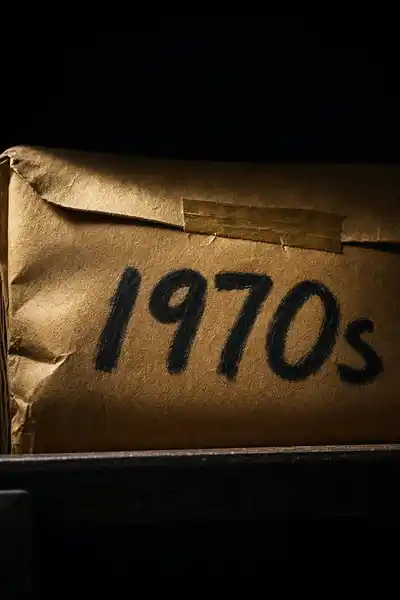
The physical fact behind the book is worth sitting with. For roughly fifty years, Seinfeld wrote his material by hand on yellow legal pads and kept it. Not the highlights, not the famous routines — nearly everything he thought worth developing, sorted into envelopes by the decade it came from. The book reproduces some of these pages in his own handwriting, and they change the reading. You see the crossings-out, the arrows, the alternate versions of a line stacked on top of each other. The finished joke sits beside the wreckage of the drafts that got it there.
This is the part of the archive that turns a comedy collection into something more revealing. A polished bit hides its own labor; that is part of what makes it funny. Seemingly effortless is the whole illusion. But the legal pads break the illusion open. They show that the effortless line was the survivor of a dozen worse versions, that the punch we assume arrived fully formed was ground into shape over months, sometimes years, of standing in front of rooms and testing.
04Chapter 4 — The discipline hiding inside the laugh
Step back from the individual jokes and the book becomes an argument about work. Seinfeld is famous, wealthy, and could plausibly have coasted for decades, and instead the archive documents a man who kept writing by hand on legal pads long after he had anything left to prove. The collection is not really a celebration of talent. It is a portrait of discipline — of showing up to the same small task, the tuning of sentences, again and again, as if the next Pop-Tart bit mattered as much as anything he had ever done.
This reframes what looks, from the outside, like the easiest of the arts. Stand-up presents itself as spontaneous, a person talking, apparently making it up. Seinfeld's own material insists on the opposite. The laughs we experience as offhand are the output of a slow, private, unglamorous process: write, test, cut, rewrite, test again, until the sentence can't be beaten. The book quietly refuses the myth of the naturally funny person who simply opens his mouth. It replaces that myth with a tradesman at a bench.
05Conclusion
The title never gets answered, and that is right. "Is this anything?" stays a question, the one a comic asks before an audience decides, the one Seinfeld asked of every fragment on every legal pad. The book is the record of all the times he answered yes and kept going. Read cover to cover, by decade, it lets us watch a young comic's tight setups loosen into an older comic's patient noticing, without a single confession or backstage anecdote getting in the way of the jokes.
Related books