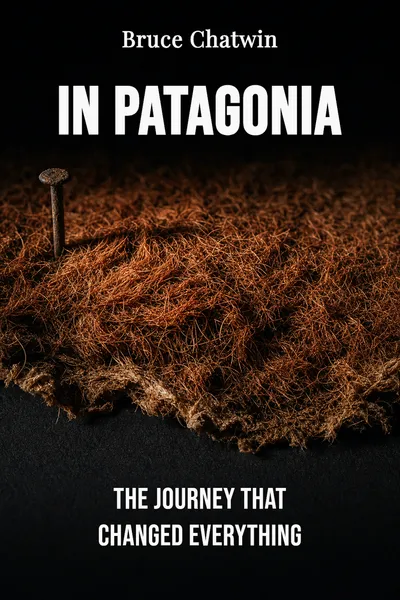
In Patagonia
The journey that changed everything
Description
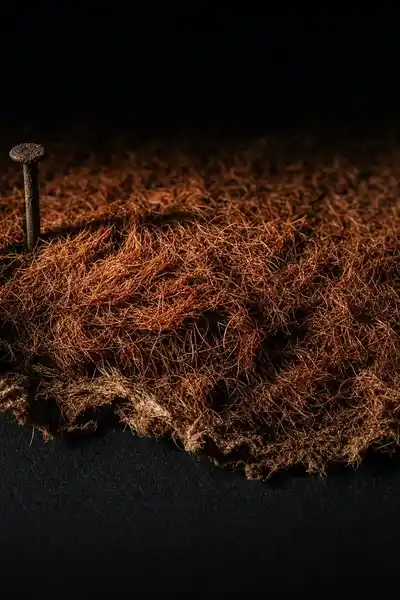
There was a scrap of reddish, coarse-haired skin in Bruce Chatwin's grandmother's dining-room cabinet in Birmingham, pinned to a card, and the family called it a piece of brontosaurus. It was really a fragment of giant sloth, sent back decades earlier by a cousin named Charley Milward who had gone to the far end of South America. To the child staring through the glass, the label hardly mattered. What mattered was that the creature came from a place called Patagonia, a word that sat at the bottom of every map like a promise nobody had claimed. When the piece was later thrown out, the loss lodged somewhere permanent.
Years on, Chatwin was working as a journalist, having already walked away from a glittering early career at Sotheby's, the London auction house where he had risen fast and then decided he could not stay. In late 1974 he sent a now-famous cable — the story goes, "Gone to Patagonia" — and vanished for roughly six months into the dry, wind-scoured south of Argentina and Chile. He was chasing the sloth, or the idea of it, and a hundred other threads besides. What he brought home was not reportage. It was something the publishing world did not quite have a name for.
"In Patagonia" appeared in 1977 and made its author famous almost at once. Readers who had never wanted to go anywhere near that emptiness suddenly could not stop reading about it, and writers who thought they knew what a travel book was had to think again. The strange thing is how little the book explains itself, and how much it leaves us to assemble.
The question we’re asking : How did a slim account of a walk through South America's emptiest corner rewrite what a travel book could be?What we’ll see : A journey stitched from fragments — a lost relic, forgotten exiles, and a form that refused to behave like the genre it belonged to.
Table of contents
01Chapter 1 — A piece of brontosaurus and a telegram
The book opens where the obsession began: that cabinet in Birmingham, the label reading brontosaurus, the cousin Charley Milward who had shipped the thing north. Milward was a sea captain who ended up running a foundry in Punta Arenas, at the bottom of Chile, and who had a hand in one of the more improbable finds of the late nineteenth century — the preserved remains of a mylodon, a giant ground sloth, pulled from a cave near Last Hope Sound. The skin in the cabinet was a piece of that. Chatwin's whole southward journey is framed, half-seriously, as a quest to replace the fragment his family had thrown away.
This is the first clue to how the book works. Chatwin does not set out to describe Patagonia the way a guide would; he sets out to follow a personal thread and lets the country arrange itself around it. The relic is a pretext, and he half-admits it. What the quest really licenses is wandering — the freedom to stop wherever a story lives and to move on the moment it stops paying out.

02Chapter 2 — The road south, in fragments
The body of the book is a string of encounters, each one short, each one self-contained. Chatwin arrives somewhere, talks to someone, records a scrap of their life, and leaves. There are ninety-seven numbered sections in all, some barely a page. He does not connect them with the usual travel-writing mortar — the bus timetables, the hotel complaints, the weather as filler. He simply cuts from one to the next, trusting the reader to feel the through-line without being handed it.
The people he finds are almost all exiles or their descendants. A Welsh-speaking town in the Chubut valley where the chapel and the choir survived the ocean crossing. A woman who remembers Butch Cassidy. An old anarchist who fought in the failed rural uprisings of the early 1920s. A Scot who quotes Burns in a house at the end of a track. Each carries a piece of somewhere else, held onto with the stubbornness of people who have run out of road. Chatwin listens, transcribes, and rarely judges.
03Chapter 3 — Outlaws, exiles, and the end of the world
Some threads run the length of the book and give it whatever spine it has. The longest belongs to Charley Milward himself, whose story Chatwin reconstructs from letters, memory, and rumor: the shipwrecks, the foundry, the mylodon in the cave. Milward is the ancestral ghost the whole journey is walking toward, and by the end the sloth and the cousin have merged into a single figure of the restless outsider who goes as far as the map allows and makes a life out of what he finds there.
Then there are the outlaws. Chatwin devotes several sections to Butch Cassidy, the Sundance Kid, and Etta Place, who really did flee the United States and ranch quietly in Patagonia in the early 1900s before the law and their own habits caught up with them. He tracks down the cabin, the neighbors' memories, the fragments of a legend gone local. He is drawn to them for the same reason he is drawn to everyone in the book — they ran to the end of the earth to become someone else, and the earth let them.
04Chapter 4 — A book that broke its own genre
What made "In Patagonia" a landmark was not where it went but how it was built. Before 1977, the travel book had a fairly settled shape: a narrator moves from A to B, the days accumulate, reflections are offered, the reader arrives with him. Chatwin threw most of that out. He assembled his book the way a collector arranges objects in a cabinet — the very cabinet the book opens with — placing fragments side by side and letting the juxtapositions do the work. The journey is real, but the form is closer to collage than to chronicle.
This raised a question that has followed the book ever since: how much of it is true? Chatwin blurred the line between reporting and invention without warning the reader where the line was. Some of the people he described later objected that he had reshaped their words or their lives to fit his patterns. He never fully answered the charge, and in a sense the book does not need him to. It behaves less like journalism than like a kind of fiction assembled from real material — a distinction the genre had rarely allowed itself before.
05Conclusion
The book ends where it was always heading: Chatwin reaches the cave near Last Hope Sound, gathers a few strands of coarse hair from the ancient dung, and has, at last, his own piece of the sloth to set against the fragment his family lost. It is a quiet, almost anticlimactic finish, and that is the point. The relic was never the reason for the trip. It was the string that let him walk the length of a continent's forgotten edge and come back with the people he met threaded onto it.
Related books