
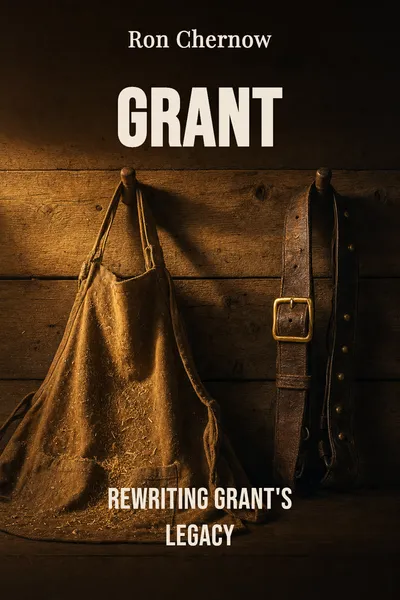
Grant
Rewriting Grant's legacy
Description
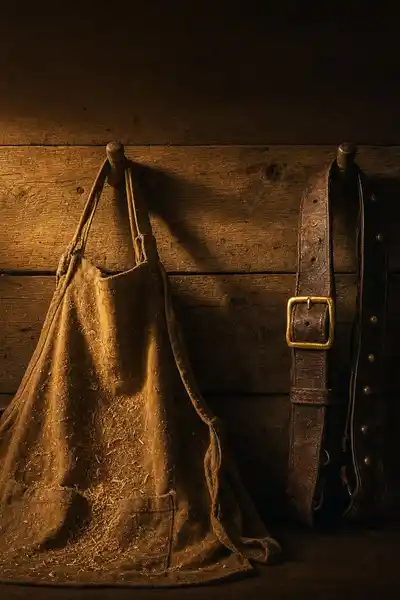
In the spring of 1861, a former army captain named Ulysses S. Grant was working as a clerk in his family's leather-goods store in Galena, Illinois, earning a modest salary from his younger brothers. He was thirty-nine, had resigned from the army under a cloud of rumored drinking, and had failed at nearly everything he had tried since — farming, real estate, bill collecting. Neighbors knew him as a quiet man who couldn't quite make a go of things. Four years later he accepted the surrender of the Confederate army at Appomattox. Eight years after that, he was serving his second term as President of the United States.
The arc is almost too steep to believe, and for a long time the men who wrote the history books preferred not to. Grant the general became, in the popular telling, a butcher who won by throwing bodies at the enemy. Grant the president became a byword for corruption and drift, routinely ranked near the bottom of every list. The drinking followed him into every account. His two terms were folded into the failure of Reconstruction rather than credited with anything it achieved.
Ron Chernow's 2017 biography sets out to take that portrait apart, panel by panel. He returns to a man who commanded armies of hundreds of thousands, who wrote some of the clearest prose any general has left behind, and who spent his presidency trying to protect four million freed people from a violent campaign to re-subjugate them. The Grant who emerges is neither saint nor cipher — but he is a great deal larger than the caricature the country settled for.
The question we’re asking : Why did a man who won the Civil War and defended the rights of freed slaves end up remembered as a drunk butcher and a failed president?What we’ll see : How Chernow rebuilds Grant from the ground up — the failures, the battlefield, the fight for Reconstruction — and traces how the losing side got to write the verdict.
Table of contents
01Chapter 1 — The clerk nobody expected
Chernow spends real time on the years before the war, because they explain almost everything about what came after. Grant was born in Ohio in 1822, sent reluctantly to West Point, where he was an indifferent student who loved horses and disliked the military pageantry. He served with distinction in the Mexican-American War, a conflict he privately considered unjust, then found himself posted to lonely garrisons on the Pacific coast, far from his wife Julia and their children. It was there, cut off and depressed, that the drinking started — and the reputation that trailed him for the rest of his life.
He resigned in 1854 and spent the next seven years failing. He tried farming a plot near St. Louis and named it, without irony, Hardscrabble. He sold firewood on street corners. He pawned his watch at Christmas. By 1860 he was reduced to clerking for his brothers in Galena, a man other men had stopped taking seriously. Chernow's point is not to wallow in the misery but to establish something about the character: Grant had already tasted total failure, and it left him with an unusual calm about risk and reputation.

02Chapter 2 — The general the war made
Grant rose fast because he did the thing other Union generals could not: he fought, and he kept fighting. In February 1862 he took Forts Henry and Donelson on the Tennessee rivers, demanding "unconditional surrender" in a phrase that made him a household name. At Shiloh two months later he was surprised and nearly overrun on the first day — the origin of the "butcher" charge — but he refused to retreat, counterattacked at dawn, and won. Lincoln, pressed to remove him, is said to have replied that he could not spare the man because he fights.
The Vicksburg campaign of 1863 is where Chernow makes his strongest case for Grant as a strategist rather than a bludgeon. To take the fortress city controlling the Mississippi, Grant cut loose from his supply lines, marched his army through hostile territory, won five battles in three weeks, and laid siege until the garrison surrendered on July 4. It was a campaign of maneuver and daring, and it split the Confederacy in two. This is not the work of a man who knew only how to charge.
03Chapter 3 — The president who defended Reconstruction
Grant won the presidency in 1868 as a national hero, and Chernow argues that his two terms have been judged by the wrong yardstick. The conventional story is one of scandal and passivity. The story Chernow tells is of a president who took the defense of freed slaves more seriously than almost any occupant of the office would for a century, and who paid for it in reputation.
The signature achievement was the war against the Ku Klux Klan. As the Klan waged a terror campaign of murder and intimidation across the South to reverse the outcome of the war, Grant backed the Enforcement Acts and, in 1871, the Ku Klux Klan Act, which let him suspend habeas corpus and send federal troops and prosecutors into South Carolina and elsewhere. The effort effectively broke the first Klan. Chernow presents this not as a footnote but as one of the most vigorous federal defenses of Black civil rights until the 1960s. Grant also championed the Fifteenth Amendment, guaranteeing Black men the vote, and appointed Black Americans to office.
04Chapter 4 — The verdict, written by the losers
The most useful thing Chernow's biography does is show that a reputation is a manufactured object, and that Grant's was manufactured largely by the people he defeated. In the decades after the war, a powerful body of Southern memory — the "Lost Cause" — set out to recast the conflict as a noble struggle over states' rights rather than slavery, to elevate Lee into a marble saint, and to diminish the man who beat him. A butcher who won only through numbers was easier to live with than a strategist who had simply been better.
That interpretation found a receptive home in the academy. The influential historians of the early twentieth century, many sympathetic to the white South, treated Reconstruction as a tragic error imposed on a prostrate region — which meant treating the president who enforced it as, at best, misguided. Grant's defense of Black voting rights, the very thing Chernow counts as his glory, became in that telling evidence of his failure. The verdict hardened into consensus, and consensus got copied from textbook to textbook until it felt like fact.
05Conclusion
The clerk from the Galena leather store won the largest war in the country's history, then spent his presidency trying to make its result stick, and was rewarded with a reputation that made him small. Chernow's Grant is not flawless — the alcoholism was real, the naivety about corrupt friends was ruinous, the scandals happened. But the man underneath is coherent: steady when others panicked, clear when others postured, and more committed to the rights of freed slaves than the country was willing to be. The failures were the failures of a large man, not the sum of a small one.