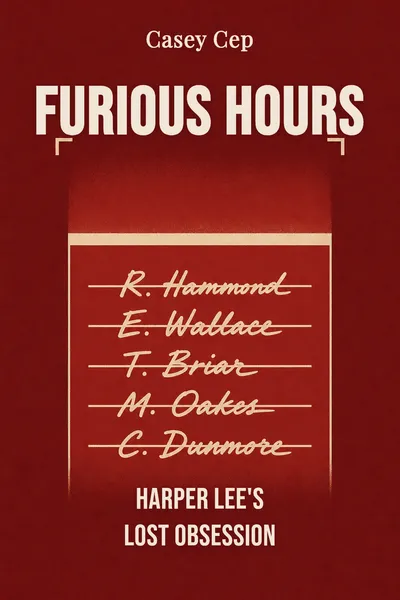
Furious Hours
Harper Lee's lost obsession
Description
In the summer of 1977, at a funeral in Alexander City, Alabama, a man named Robert Burns stood up in a crowded church, walked toward the front, and shot the Reverend Willie Maxwell three times in the head. There were hundreds of witnesses. The reverend had been buried within days, and Burns was arrested on the spot. What made the killing strange was not that it happened in front of everyone. It was who the dead man was, and why a room full of mourners felt something closer to relief than horror.
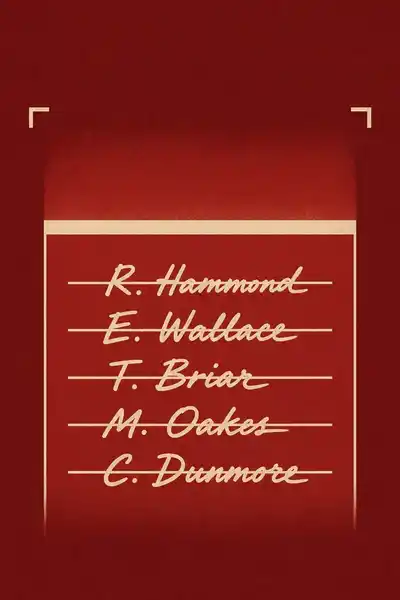
For years, the Reverend Maxwell had been suspected of murdering members of his own family — a first wife, a second wife, a brother, a nephew, a neighbor's child — and collecting on the life insurance policies he had quietly taken out on each of them. Five deaths, maybe more, and no conviction. People in the county whispered that he used voodoo. What he actually used, it seems, was paperwork, patience, and a lawyer good enough to keep him free. When the reverend was finally killed himself, that same lawyer agreed to defend the man who shot him.
Sitting in the courtroom during Burns's trial, taking careful notes, was the most famous novelist in America. Harper Lee had published To Kill a Mockingbird in 1960, watched it win the Pulitzer, and then published nothing for the rest of her life. She came to Alexander City convinced that this Alabama case was her way back — the true-crime book that would be her own In Cold Blood. Casey Cep's Furious Hours tells both stories at once: the killings, and the book about them that Lee could never finish.
The question we’re asking : How does a story with a serial killer, a courtroom, and a Pulitzer winner end without a verdict, a villain fully explained, or a finished book?What we’ll see : A string of insurance deaths in the Deep South, the trial that followed a public killing, and the decades Harper Lee spent circling a book she never wrote.
Table of contents
01 Chapter 1 — The reverend who kept collecting insurance
Willie Maxwell was a pulpwood hauler turned preacher in rural Coosa County, a Black man in a segregated Alabama who dressed well, spoke smoothly, and carried himself with a confidence the surrounding world was not built to reward. In 1970, his first wife, Mary Lou, was found dead in her car on a country road. Maxwell was charged. He was also, it emerged, the beneficiary of several life insurance policies on her. The charge did not stick, and in the years that followed a pattern took shape that Cep lays out with quiet precision.
People close to Maxwell kept dying, and Maxwell kept collecting. A second wife. His brother. A nephew. Eventually his teenage stepdaughter, whose death in 1977 was the one that broke the county's patience. Before each death, or so the insurance records suggested, a new policy had been written, sometimes several, sometimes at competing companies who did not know the others existed. The bodies were often found in cars, staged to look like accidents. The money followed with unsettling reliability.

02 Chapter 2 — The lawyer, the courtroom, and the shot nobody prosecuted
The most improbable figure in the whole affair is Tom Radney, a white liberal lawyer in a part of Alabama where that combination could cost a man his career and occasionally his safety. Radney had been Maxwell's attorney through the insurance disputes, fighting the companies that refused to pay out, winning settlements for a client half the county believed was a murderer. When Robert Burns shot Maxwell dead at the funeral in 1977, Radney did something that only makes sense in this story: he agreed to defend Burns.
The defense Radney built was, in its way, elegant. Burns had killed a man in front of three hundred people; there was no arguing the facts. So Radney argued the mind. He pursued an insanity defense, and the reverend's own dark reputation became the star witness for the man who killed him. The jury heard about the deaths, the policies, the fear that had settled over the county. By making Maxwell frightening enough, the defense made Burns sympathetic enough. It was the reverend, in absentia, who was really on trial.
03 Chapter 3 — The most famous novelist in America, taking notes
Harper Lee had reasons to want this case badly. Two decades earlier she had done the legwork for her friend Truman Capote on In Cold Blood, traveling to Kansas, interviewing reluctant townspeople, opening doors his abrasiveness kept closing. Capote gave her a curt acknowledgment and took the acclaim for what became the founding book of American true crime. Lee, meanwhile, had one novel of her own and a growing weight of expectation she could not answer. The Maxwell case looked like the way through.
She rented a room, worked the town, gathered documents, and spoke of the project she intended to call The Reverend. Cep, who is unusually careful about what can and cannot be known, shows a Lee who was serious and industrious — not a burned-out recluse but a working writer chasing a real book. She had the material journalists dream of: an unpunished killer, a courtroom reversal, a Southern county thick with rumor and race and money. She had Tom Radney's cooperation and his files. What she did not have, in the end, was the book.
04 Chapter 4 — The book that would not resolve
Read to the end, Furious Hours turns out to be less about the Reverend Maxwell than about the space between a true story and the book it declines to become. Cep has, in effect, written the book Harper Lee could not — not by solving the murders, which remain unsolved, but by making the failure to solve them the real subject. The unfinished book becomes the finished one's spine. That inversion is quietly radical: a true-crime narrative whose deepest mystery is authorship, not homicide.
It also reframes what we think we know about Lee. The standard story treats her long silence as a puzzle to be explained away — trauma, temperament, a single perfect novel that left nothing more to say. Cep suggests something harder. The silence was not a choice cleanly made but a defeat quietly endured, the residue of a writer who kept working at a book that would not cohere. The price of one flawless novel, in this account, was decades spent unable to produce a second.
05 Conclusion
Robert Burns lived out his life in Alexander City, unpunished for a killing he never denied. Tom Radney kept practicing law and kept his files, eventually passing the story along like a torch he had carried as far as he could. Harper Lee returned to Monroeville, stopped talking about The Reverend, and produced no second book in her lifetime; the Maxwell notes were still among her papers when she died in 2016. The murders stayed unsolved, the insurance money stayed spent, and the courtroom reversal stayed the closest thing to a conclusion anyone got.
Related books