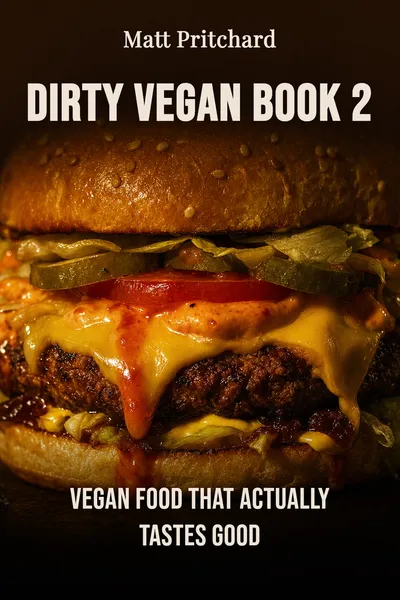
Dirty Vegan Book 2
Vegan food that actually tastes good
Description
Matt Pritchard spent years as one of the more chaotic figures on British television, a skateboarder and stunt performer whose reputation had nothing to do with the kitchen. Then he turned to endurance sport, cleaned up his life, and somewhere along the way became vegan — not out of ideology first, but because it made him feel better when he was pushing his body through triathlons and ultra distances. The first Dirty Vegan came out of that, and it landed with people who had assumed plant-based food was not for them. The second book, Dirty Vegan Book 2, doubles down on the same bet.
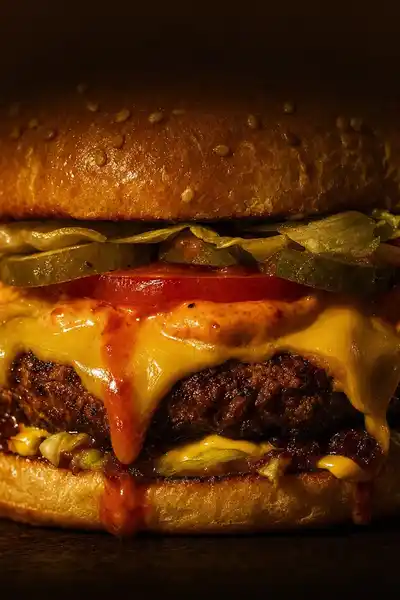
The bet is simple and slightly confrontational: most people don't avoid vegan food because they've tried it and found it lacking. They avoid it because of what they imagine it to be — limp, worthy, a plate of steamed vegetables with the fun surgically removed. Pritchard's whole project is to make that assumption look silly. The recipes are hearty, loud, built for someone who has just done something physical and wants a proper meal, not a lecture. There are curries, burgers, bakes, big sharing plates — the kind of food that doesn't announce what it's missing.
What makes the book worth sitting with is that it isn't really arguing about ethics or the planet, at least not on the plate. It's arguing about taste, and it's arguing from the position of someone who genuinely likes eating. That's a different conversation than the one vegan cookbooks usually start, and it changes who's willing to have it.
The question we’re asking : Can plant-based cooking win people over on flavor alone, without asking them to sign up to anything first?What we’ll see : How a former stuntman turned athlete builds vegan food that competes on taste, and what that reframing does to the whole idea of eating plants.
Table of contents
01Chapter 1 — From skate parks to skillets
Pritchard didn't arrive at vegan cooking through a farmers' market. He arrived through Dirty Sanchez, the stunt show that made him briefly notorious, and then through a hard turn toward endurance sport — Ironman triathlons, long-distance running, the kind of training that forces you to pay attention to what you put in your body. The diet came second, as a tool. He noticed he recovered faster and felt sharper on plants, and the cooking grew out of that practical need rather than a decision to become a healthy-eating personality.
That origin matters because it shapes the food. Someone who cooks to refuel after five hours of moving does not want a delicate composed plate. He wants volume, warmth, and enough flavor to make the whole effort feel worth it. Book 2 keeps that athlete's appetite front and centre. The portions are generous, the dishes lean toward comfort, and there's no sense that the reader is being asked to eat less or want less. If anything the opposite — the food is designed to satisfy someone who is genuinely hungry.

02Chapter 2 — The case against the sad salad
The stereotype Pritchard is fighting is specific and stubborn. Vegan food, in the popular imagination, is a punishment — a beige plate of raw vegetables, a wrap that tastes of nothing, the thing you eat because you have decided to feel bad about eating well. Anyone who has been served a hopeful but hollow plant-based dish knows the disappointment, and that single experience often stands in for the entire category. Book 2 exists largely to break that association.
The strategy is not subtle, and it doesn't need to be. Instead of trying to reinvent eating, Pritchard takes the dishes people already love and rebuilds them without animal products. Comfort food, essentially. The mental trick is that a reader flipping through doesn't see a list of restrictions; they see meals they already recognise and want. That recognition lowers the drawbridge. You're not being asked to develop a taste for something alien, you're being shown a version of something familiar that happens to skip the meat and dairy.
03Chapter 3 — Bold flavor is a technique, not a sacrifice
Once you accept that plants aren't the problem, the real question becomes technique — how you actually get big flavor onto a plate without leaning on the things vegan cooking removes. This is the heart of Book 2, and it's where Pritchard is most useful. Flavor, in his hands, is not an accident of good ingredients. It's the result of specific moves: layering spices, building depth with roasting and browning, using acid and heat and salt with confidence rather than caution.
A lot of timid cooking, vegan or otherwise, fails because it's underseasoned and afraid. Pritchard's food is the opposite. It's assertive. Curries are properly spiced, bakes are rich, sauces carry weight. He draws freely across cuisines — plenty of dishes borrow from Indian, Middle Eastern and Asian cooking, precisely because those traditions have spent centuries making vegetables taste extraordinary without any need to apologise. Plant-forward cooking, seen this way, isn't a modern invention; it's something whole food cultures already do brilliantly, and the book borrows their nerve.
04Chapter 4 — When plant-based stops being a category
Step back from the recipes and something larger is happening in the way Book 2 positions itself. For most of its modern life, vegan food has been sold as a category — a special aisle, a dietary identity, a lifestyle you either belong to or don't. That framing has been useful for the people already committed, but it's also a wall. It tells everyone else that this food is for a particular kind of person, and if you're not that person, you can walk on by. Pritchard's whole approach is an attempt to knock that wall down.
He does it by refusing to treat the food as anything other than food. The book doesn't ask whether you're vegan; it asks whether you're hungry. By judging the dishes on the same terms as any other cooking — does it taste good, is it satisfying, would you make it again — it quietly removes the barrier of identity. You don't have to declare yourself anything to cook from it. You can be a committed meat-eater who fancies a good curry on a Tuesday, and the book works exactly the same for you.
05Conclusion
Dirty Vegan Book 2 ends up being less a vegan cookbook than a cookbook that happens to be vegan, and the distinction is the whole point. Pritchard, the former stuntman who found plants through sport, isn't trying to win an argument about ethics or health on the page. He's trying to get someone to make a curry, taste it, and quietly revise what they thought plant-based food could be. The recipes are hearty, the ingredients are ordinary, and the flavor is loud enough to do the persuading on its own.
Related books