Dark Rye and Honey Cake
Bread, honey, and old stories
Description
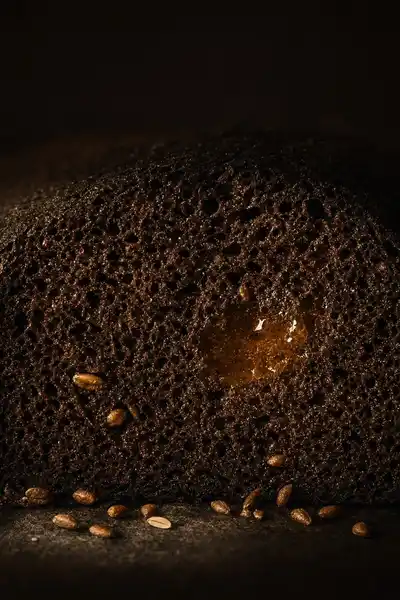
Somewhere in the Low Countries, on a flat stretch of land between the North Sea and the rivers, a loaf of dark rye has been sitting on a kitchen table for the better part of a week. It has not gone stale in the way a soft white loaf would. It has settled, deepened, turned almost sweet at the crumb. This is bread built to last, made in a place where the weather is grey, the soil is generous with certain grains and stingy with others, and where people learned long ago to bake around what the land actually gave them.
Regula Ysewijn spent years tracing loaves like that one. A Flemish writer and photographer with a long obsession for old cookbooks and older ovens, she went looking for the breads, cakes, and sweet ceremonial bakes of Belgium, the Netherlands, and the regions that brush up against them. What she found was not a tidy national cuisine but a patchwork: rye in the north, spice in the trading towns, honey where sugar was once a luxury, and a calendar of festivals that each demanded their own particular bake.
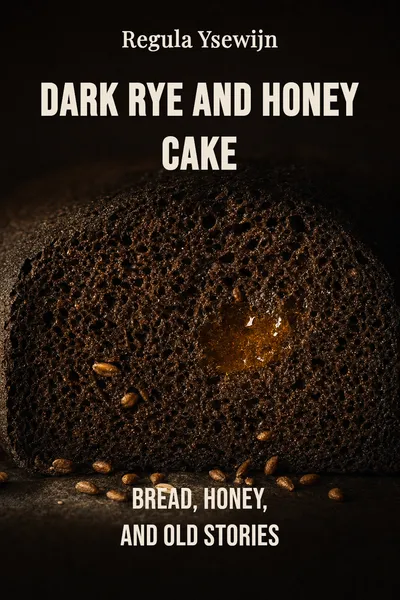
Her book, Dark Rye and Honey Cake, reads as both a recipe collection and a piece of cultural archaeology. She pairs practical instruction with the history underneath it — why a grain took hold, why a cake belonged to a saint's day, how a regional habit hardened into a recipe passed down without anyone quite remembering its origin. It is a book about baking, but it is also about how a place remembers itself through what it puts in the oven.
The question we’re asking : How did the grains, honey, and customs of the Low Countries shape breads and cakes that have outlasted the world that made them?What we’ll see : A journey through dark rye loaves, spiced honey cakes, and the festival baking of a corner of Europe where every recipe carries a piece of its own history.
Table of contents
01Chapter 1 — A country baked into its bread
The Low Countries are a difficult place to farm gracefully. Much of the land is low, wet, reclaimed from sea and marsh, and for centuries the grains that thrived there were not the elegant wheats of warmer climates but the hardy, unglamorous ones: rye, spelt, buckwheat, barley. Ysewijn's starting point is that you cannot understand the region's baking without understanding this. The bread was dark because the grain was dark. The loaves were dense because dense is what those grains give you.
From that constraint, a whole culture of baking grew. She moves through Flanders, the Netherlands, and into neighbouring pockets of France and Germany, showing how each town and each period bent the same handful of ingredients to its own needs. A trading port with access to imported spices baked differently from an inland farming village. A convent with beehives baked differently from a household that had to buy its sweetness at market. The map of the region's bread is really a map of its economy and its geography.

02Chapter 2 — Rye, the loaf that keeps
Rye is the book's spine, the grain that gives it its title and its darkest, most characterful breads. Ysewijn treats it with something close to reverence, because rye is the grain of endurance. It grows where wheat struggles, it tolerates poor soil and cold, and the bread it makes has a quality that softer loaves lack: it lasts. In a world before refrigeration and daily shopping, a bread that stayed good for a week or more was not a curiosity. It was survival.
She walks through the various forms rye took across the region, from coarse dense loaves to the slow-baked, almost cake-like breads left in cooling ovens for many hours until the crumb turned dark and faintly sweet. These are breads made with patience rather than speed, often built on sourdough rather than fast yeast, and they reward a baker willing to work on the grain's own timeline. The recipes she gives are honest about this. Rye does not behave like wheat, and she does not pretend otherwise.
03Chapter 3 — Honey, spice, and the sweet side of ritual
If rye is the everyday, honey and spice are the occasion. The second great strand of the book follows the sweet bakes — the honey cakes, spiced loaves, and festival breads that appeared not on ordinary tables but on special ones. Before cane sugar became cheap and common, honey was the sweetener people reached for, and Ysewijn treats it as a marker of both luxury and ceremony. A honey cake was something you made for a reason.
The spice tells its own story. The Low Countries sat at the heart of European trade, and the ports brought in cinnamon, ginger, cloves, and pepper long before such things were ordinary. Those imports found their way into the region's baking, producing the deeply spiced cakes and cookies that still define its sweet tradition. Ysewijn traces how a trading advantage became a taste, and how that taste settled into recipes tied to particular seasons and saints' days.
04Chapter 4 — What a recipe carries when it survives
Step back from the individual loaves and cakes, and a larger idea emerges from Ysewijn's work: a recipe is one of the most durable things a culture makes. Buildings fall, dialects fade, borders move, but a way of turning rye and water and time into bread can pass through centuries almost intact, carried in hands rather than words. Dark Rye and Honey Cake is, at bottom, an argument that baking is a form of memory, and that the memory is worth taking seriously.
What that memory holds is not sentiment but information. A surviving recipe encodes the grain a region could grow, the sweetener it could afford, the trade routes it could reach, the festivals it observed, the scarcity it worked around. Read closely, a honey cake or a keeping loaf tells you how people lived — what they lacked, what they treasured, how they marked time. Ysewijn's real subject is this hidden literacy, the way a bake preserves a working portrait of its own world.
05Conclusion
The dark rye loaf on that kitchen table was never just food. It was the outcome of a grain that suited grey, wet land, a technique built to outlast the days between bakes, and a set of habits passed from hand to hand until they became simply the way things were done. Ysewijn's achievement is to make that visible again — to show that behind an unassuming bread or a spiced honey cake sits a whole world of soil, trade, scarcity, and celebration, patiently baked in.
Related books