Boundless Realm
Inside the Haunted Mansion
Description
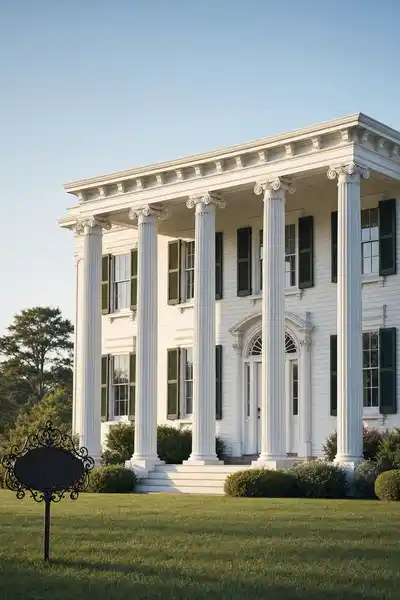
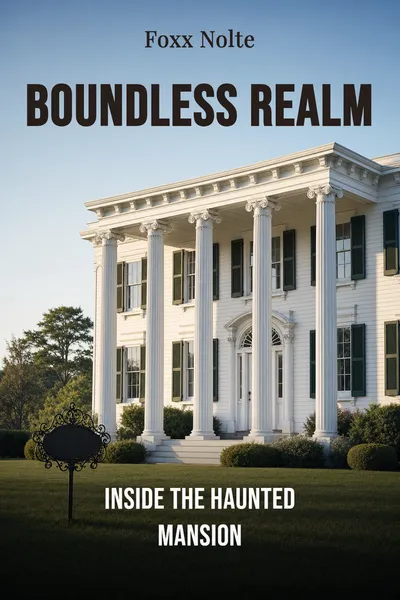
Disneyland's Haunted Mansion sat finished and empty for years before anyone was allowed inside. The white antebellum façade in New Orleans Square went up in 1963, complete and waiting, while a sign out front cheerfully invited ghosts to retire there. The building was ready; the ride was not. Walt Disney died in December 1966, and the attraction he had been arguing about with his designers for more than a decade did not open to the public until August 1969. For most of the 1960s, one of the most anticipated things at Disneyland was a house you could look at but never enter.
That long gestation is where Foxx Nolte begins, and it turns out to explain a great deal. The Mansion was pulled in two directions the whole time — some of Walt's designers wanted a genuinely scary walk-through, others wanted a lighthearted romp full of gags. The famous internal disagreement was never fully resolved so much as folded into the finished product, which is exactly why the ride feels the way it does: eerie and funny in the same breath, never committing to either. Nolte treats this not as a flaw to be explained away but as the source code of the whole thing.
Nolte is a themed-entertainment writer and longtime Disney-parks obsessive, and Boundless Realm reads like a friend walking us slowly through a building we thought we knew, stopping at each doorway to point out something we always felt but never named. The book is less a history than a close reading — of a room, a soundtrack, a change in floor height we never consciously registered.
The question we’re asking : How does a theme-park ride with almost no plot manage to feel like a place we've actually visited, and why has it held up for more than half a century?What we’ll see : A house built before its own ride, assembled from scattered influences and held together by the craft of moving us from one mood to the next.
Table of contents
01Chapter 1 — The house that took a decade to open
The Haunted Mansion had one of the longest development timelines of any Disneyland attraction, and Nolte uses that stretch of years to explain the ride's split personality. Walt Disney had wanted a haunted-house attraction since the mid-1950s. Concept work drifted through the studio for years, passing between designers who disagreed sharply about tone. Some, like Ken Anderson, sketched a genuinely menacing haunted walk-through with a backstory of murder and madness. Others leaned toward comedy, toward ghosts who were more mischievous than frightening. Nobody had the final word, and Walt kept the question open.
The physical building went up early, in 1963, and then sat sealed while the interior concept churned. This is one of Nolte's favorite details, because it inverts how we assume rides get made: the shell existed for years before anyone settled on what would happen inside it. The delay was not only creative indecision. The technology the finished ride would depend on — the ride system, the ghost effects — was still being developed and refined across the decade.

02Chapter 2 — A ride assembled from borrowed ghosts
One of the pleasures of Boundless Realm is watching Nolte trace where the Mansion's pieces actually came from. Very little of it was invented from nothing. The ride is a careful assembly of older traditions — the Victorian dark ride, the spook-house of the traveling carnival, the ghost story as told around a fire, the stage illusion perfected in the nineteenth century. Nolte is generous with this lineage because it makes the achievement clearer: the Mansion's originality lies in how it combines borrowed parts, not in pretending it has no ancestors.
The most celebrated illusion in the ride, the ballroom full of dancing spirits, is a version of a stage trick that dates to the 1860s, sometimes called Pepper's Ghost after the man who popularized it. A pane of angled glass reflects hidden figures so they appear to float, translucent, among solid scenery. Nolte walks through how the designers scaled this parlor illusion up to an enormous room seen from a moving vehicle, and how much engineering that leap required. The ghosts we find so charming are a Victorian magic act performed at architectural scale.
03Chapter 3 — The trick is the transition
The central argument of the book, if it has one, is that the Haunted Mansion's genius lives in its transitions. Nolte keeps returning to the moments between the set pieces — the corridor, the change in lighting, the shift from walking to riding, the descent that we barely notice. A lesser attraction would be a string of impressive rooms. The Mansion is a controlled sequence of moods, and the craft is in how one becomes the next without a seam we can point to.
Consider the famous stretching room near the entrance. It does several things at once. It gathers a crowd and moves them efficiently. It delivers the premise through the Ghost Host's narration. And it physically lowers guests below ground level, so that the ride that follows can occupy space the visible house could never contain. Nolte lingers here because it is a perfect example of the ride solving a practical problem and an emotional one with the same gesture. We are being managed and unsettled simultaneously, and we experience it only as atmosphere.
04Chapter 4 — Reading a place the way we read a book
Step back from the Doom Buggy and the Mansion becomes a strong case for something Nolte cares about across the whole book: that a themed space can be authored the way a text is authored, and read the way a text is read. The Haunted Mansion has barely any story in the conventional sense. There is no plot to follow, no character whose fate we track. And yet we come out feeling we have been somewhere with a coherent identity, a place that means something. That coherence is a deliberate act of composition, not a happy accident of good props.
What the Mansion demonstrates is that narrative can live in architecture and sequence rather than in events. The meaning is carried by the order of the rooms, the rhythm of light and dark, the way the tone slides from dread toward comedy and back. Nolte treats the ride's designers as authors making choices about pacing, register, and point of view — choices we would recognize instantly in a novel or a film, but which here are built into a physical route we travel through our bodies. To ride the Mansion is to be read a story we assemble ourselves from the spaces we pass.
05Conclusion
The white house in New Orleans Square that stood empty through most of the 1960s eventually filled with the argument that built it: the dread and the comedy, the Victorian stage trick and the New England ghost story, the practical crowd-management and the shiver down the spine. When it finally opened in 1969, it did not resolve its own contradictions so much as choreograph them, and that choreography is what Boundless Realm sets out to describe room by room.
Related books