Boss
Machine politics, bare all
Description
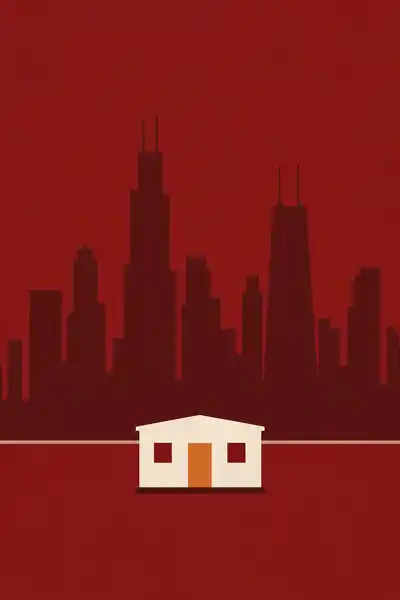
For twenty-one years, one man ran Chicago the way a foreman runs a shop floor — by knowing where every screw went and who tightened it. Richard J. Daley was elected mayor in 1955 and held the office until he died in it, in December 1976, still chairman of the Cook County Democratic Party, still the man whose phone call could make or unmake a career. He came out of a neighborhood called Bridgeport, a working-class Irish pocket of the South Side, and in a sense he never really left it. He lived in the same modest house, went to the same parish church, ate the same lunches. And from there he ran one of the largest cities in the world.
In 1971 the Chicago columnist Mike Royko published Boss, a portrait of Daley written while the man was very much alive and very much in charge. Royko had covered the machine for years, watched it up close, and he wrote without flattery and without the safe distance of the obituary. The book is a study of how power actually works in an American city — not the civics-textbook version with its checks and balances, but the real thing, built on jobs, favors, loyalty, and the quiet understanding that you take care of the people who take care of you.
What makes the book endure is that it refuses to settle Daley into hero or villain. He was both a builder and a boss, a devoted family man and the overseer of a system riddled with graft, a mayor who put up expressways and a machine chairman who let his precinct captains do what precinct captains do. Royko holds all of it in the same frame at once.
The question we’re asking : How did one man from a single Chicago neighborhood come to hold total power over a great city, and what did that power actually rest on?What we’ll see : A portrait of Daley the man, the machine that made him, the city he shaped, and the vanishing world of backroom power he came to embody.
Table of contents
01Chapter 1 — A South Side boy who never left the neighborhood
Daley was born in 1902 in Bridgeport, a tight Irish enclave hemmed in by the stockyards and the river, a place where you were defined by your parish, your block, and your loyalties. His father was a sheet-metal worker, his mother a woman of firm Catholic conviction who marched him to Mass and to school. He was an only child, quiet, careful with money, not one of the flashy corner boys. Royko is careful to show that Daley's ordinariness was not a pose — it was the real material of the man, and it became the foundation of his appeal.
He started as a stockyard cowboy and worked his way up through the classic machine route: errand boy, clerk, precinct worker, the sort of young man who showed up, kept his mouth shut, and did what the ward organization asked. He studied law at night, though he practiced little of it. What he was really learning was the organization — who held which favor, who owed whom, how a ward delivered its vote. Loyalty was the currency, and Daley banked it patiently for decades before he ever spent it.

02Chapter 2 — How the machine actually ran
The Chicago machine was not an ideology. It was a system of exchange, and Royko lays out the mechanics with the clarity of someone who watched it work. At the bottom were the precinct captains, thousands of them, each responsible for a few square blocks. Their job was to know their people — who needed a garbage can emptied, a parking ticket fixed, a son kept out of jail, a job at the city. They delivered these favors, and in return they delivered votes. On election day the captain who couldn't produce his numbers had a problem.
Above them sat the ward committeemen, the aldermen, the county officials — a pyramid of patronage in which some 30,000 or so public jobs were the machine's lifeblood. You got the job because you worked the precinct; you kept the job because you kept working it. Merit, examinations, civil-service protections — these existed largely on paper, worked around with temporary appointments and quiet understandings. The machine did not run on qualifications. It ran on obligation, and every job handed out created another debtor.
03Chapter 3 — The city Daley built, and the one he didn't
Daley genuinely built things, and Royko does not pretend otherwise. Under him the downtown skyline rose, the expressways were driven through, O'Hare grew into one of the busiest airports on earth, and a wave of construction gave Chicago the look of a city that worked. He courted the banks and the big developers, kept the Loop humming, and could point to concrete and steel as proof that the machine delivered. To much of the business establishment he was a godsend — stable, reliable, allergic to disorder.
But the building went one way, and it mostly went downtown. The massive public-housing projects thrown up on the South and West sides became vertical ghettos, and the neighborhoods left out of the boom stayed left out. Daley's Chicago was carefully segregated, and Royko is unsparing on the point: the machine depended on keeping the races in their places, delivering just enough to the Black wards to hold them while protecting the white ethnic neighborhoods that were its base. When Martin Luther King brought his campaign north to Chicago in 1966, he ran into a wall Daley had built out of patience and evasion.
04Chapter 4 — The last of the backroom Caesars
Royko calls Daley the last of a breed, and the phrase is doing real work. The machine Daley perfected was already an anachronism when he was at its height — a form of urban government invented in the immigrant nineteenth century, when new arrivals traded their votes for the help no other institution would give them. The precinct captain who found you a job was, for a long time, the closest thing many families had to a social safety net. The machine was corrupt, but it was also, in its way, a welfare state run on personal obligation.
What Daley embodied was power organized around loyalty rather than ideas. He had no program in the reformer's sense, no vision of the good city he was arguing for. He had a system, and the system's purpose was its own continuation. This is what separated the boss from the modern politician: he did not need to persuade, only to deliver. Elections were not contests of argument but demonstrations of organization. In that sense his Chicago was less a democracy than a very efficient client state that happened to hold elections.
05Conclusion
Daley died at his desk in December 1976, still mayor, still chairman, having never lost an election and never named a successor who could inherit what he'd built. Within a decade the machine he'd held together had splintered, and Chicago elected a Black mayor over the furious resistance of the old wards — the very thing Daley's system had been designed to prevent. The organization did not survive the man, because in the end the organization had been the man, and there was no one else who carried every line in his head.
Related books