The Art of Frugality and Voluptuousness
Restraint as a form of pleasure
Description
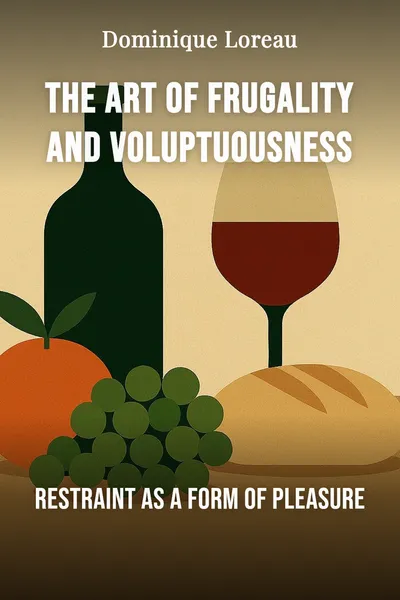
Dominique Loreau has spent decades living in Japan, and somewhere along the way she noticed something that runs against most of what we are told about pleasure. A single square of very good dark chocolate, eaten slowly, with attention, gives more than a whole bar swallowed in front of a screen. A bare room with one beautiful object in it feels richer than a room crammed with things we once wanted. She built a small book around this observation, published in French and translated widely, and gave it a title that sounds almost like a contradiction: the art of frugality and voluptuousness. Two words we are used to keeping apart. She puts them in the same sentence on purpose.
The book is not a budgeting manual and not a self-denial creed. Loreau is not interested in spending less for the sake of virtue, and she is openly suspicious of austerity as a moral badge. What she is after is closer to a wager: that the person who owns little, eats simply, and keeps their surroundings spare ends up feeling more, not less. Deprivation, in her account, is what happens when we have so much that nothing registers anymore. Abundance deadens. The full plate, the full closet, the full schedule — each one turns pleasure into noise.
It is a counterintuitive promise, and it borrows quietly from older sources — the Epicureans, who thought pleasure was best measured by its intensity rather than its quantity, and the Japanese aesthetic of the spare and the unfinished that Loreau absorbed by living inside it. The claim worth testing is simple to state and hard to live: that holding back is not the price of pleasure but its condition.
The question we’re asking : Can restraint actually produce more pleasure than abundance, and if so, how does deliberately having less sharpen what we feel?What we’ll see : How Loreau turns frugality from a sacrifice into a craft of the senses, and why the pleasure it promises arrives only through effort.
Table of contents
01Chapter 1 — The desert that tastes better than the feast
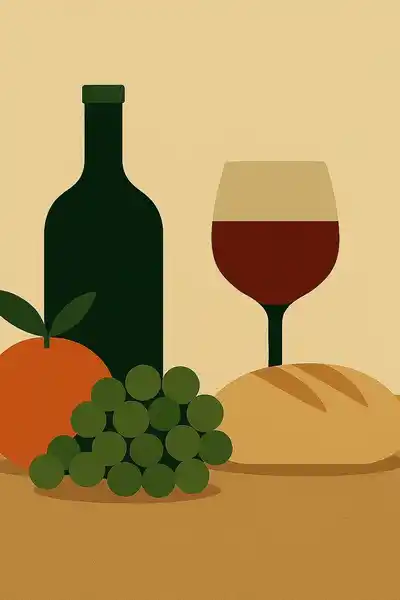
Loreau starts from a feeling most of us know but rarely name: the dulling that comes with excess. The first oyster is an event. The twelfth is maintenance. The buffet promises everything and delivers a vague fullness in which no single dish survives in memory. Her argument is that pleasure is not stored in the thing itself but in the gap between wanting and having — and when the gap collapses, when everything is available all the time, the sensation goes flat. Satiety, she writes, is the enemy of taste. We eat past the point where the food still speaks to us.
Against this she sets a different scene. One good thing, properly chosen, received with full attention. A ripe fig instead of a dessert cart. A cup of tea made carefully and drunk without a phone in the other hand. The restriction is not the point; the attention it makes possible is. When there is only one thing in front of us, we actually notice it. The senses, no longer scattered across ten competing stimuli, concentrate on the single one left — and concentration, for Loreau, is where voluptuousness lives.

02Chapter 2 — Emptying the space, sharpening the senses
The same principle moves from the plate to the home. Loreau is well known for her writing on the spare interior, and here she makes the case that an uncluttered space is not an aesthetic preference but a sensory one. A room full of objects asks the eye to work constantly, sorting, skipping, ignoring. Nothing is seen because everything is. Remove most of it, and the few things that remain are suddenly visible again — the grain of a wooden table, the light falling across a bare wall, the one vase that earns its place. Emptiness, she argues, is not absence. It is room for perception to move.
This owes a great deal to the years she spent in Japan, where the aesthetics of the spare are built into daily life rather than imported as a style. The tokonoma alcove holds a single scroll or flower, changed with the season, precisely so that it can be looked at. The tea ceremony strips the act of drinking down to a few deliberate gestures in a plain room. What Loreau takes from this is not decoration but a discipline of subtraction: keep only what serves, and what remains will be felt more keenly for the space around it.
03Chapter 3 — The body as the first laboratory
Where Loreau becomes most concrete is the body. The senses, she insists, are instruments that can be tuned or blunted, and most of us have blunted ours through overuse. A palate wrecked by sugar and salt can no longer taste the sweetness in a plain carrot. Ears saturated with constant sound stop hearing silence. Skin numbed by heavy fabrics and heavy scents forgets the pleasure of a single drop of good oil or the feel of linen. The book reads, in places, like a program of gentle recalibration — not to punish the body but to give it back its sensitivity.
So she proposes small, almost monastic practices. Eating a little less than one wants, so that food stays interesting. Keeping the wardrobe short, in natural materials, so that getting dressed becomes a choice rather than a rummage. Bathing with attention, caring for the body slowly instead of processing it. Fasting occasionally, not for weight but because hunger sharpens the next meal and clears the head. None of this is framed as virtue. It is framed as the maintenance an instrument needs to keep producing a clear note.
04Chapter 4 — When less stops being a sacrifice
What separates Loreau's frugality from simple self-denial is that she treats it as an art, and art is learned. The person who has just started clearing out their home or cutting back their meals feels the loss sharply — the missing comforts, the habits interrupted. The pleasure she promises does not arrive at that stage. It arrives later, after the senses have readjusted and the eye has relearned how to see an empty wall, when subtraction stops registering as a wound and starts registering as a gain. This is the part the title quietly carries: voluptuousness is on the far side of a discipline, not available without it.
That reframing matters, because it rescues the book from the cheerful lie of most minimalism, which promises that owning less will make us instantly lighter and happier. Loreau is more honest. The lightness is real but earned. It takes practice to eat slowly, to resist the next purchase, to sit in a quiet room without reaching for a screen, to want less. The art in her title is not a metaphor. Frugality is a skill with a learning curve, and like any skill it is uncomfortable before it is rewarding.
05Conclusion
Loreau's single square of dark chocolate, eaten slowly, is the whole book in miniature. It is less than the bar, and it gives more — but only to someone who has learned to pay attention to it, who has kept enough scarcity in their life that a small sweetness still lands. The frugality and the voluptuousness are not opposites she has cleverly reconciled. They are two ends of the same practice: the holding-back that keeps the senses alert, and the intensity that alertness makes possible.
Related books