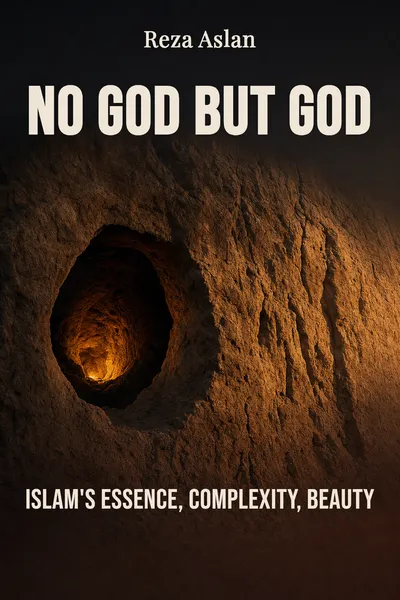
No God but God
Islam's essence, complexity, beauty
Description
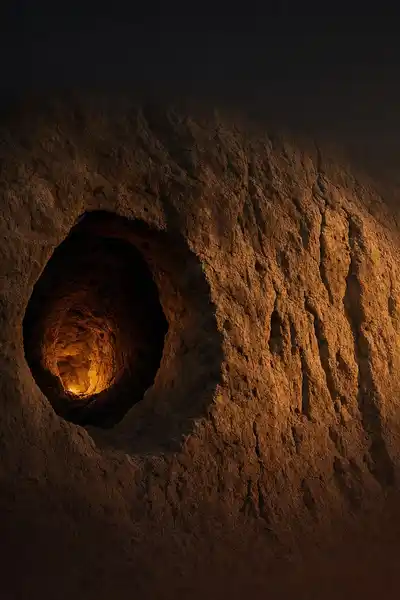
In the sixth century, in a dusty trading town on the edge of the Arabian desert, a merchant named Muhammad ibn Abdullah began climbing to a cave outside Mecca to sit alone with his thoughts. He was middle-aged, respected, married to a wealthy widow. Then, around the year 610, something happened in that cave that he could not explain, and that he would spend the rest of his life trying to convey. He came down shaken, convinced he had heard a voice. His wife, Khadija, believed him before he believed himself. What followed reshaped the religious map of half the planet.
Fourteen centuries later, the faith that grew from those recitations is the fastest-growing religion on earth — and, in much of the West, one of the least understood. We tend to reach for a single verdict: is it a religion of peace, or of the sword? Is its God the same as the God of Jews and Christians, or a rival? The scholar of comparative religions Reza Aslan, in No god but God, argues that the very shape of the question is the problem. We want a fixed answer about a thing that has never been fixed.
Aslan's account refuses the clash-of-civilizations frame that has flattened Islam into a slogan. He goes back to the town, the tribes, the trade routes, the earlier faiths already in the air — and then follows the argument the religion has been having with itself ever since Muhammad died. What emerges is less a monument than a living dispute, one that, according to Aslan, is reaching a turning point in our own lifetime.
The question we’re asking : What is Islam actually made of, once we set aside the verdict we came looking for?What we’ll see : How a desert revelation became a civilization, and why the fight over its meaning is far from settled.
Table of contents
01 Chapter 1 — The desert Muhammad was born into
To understand what Muhammad said, Aslan insists we first understand what he was answering. Sixth-century Arabia was not a spiritual blank slate. Mecca sat at the center of a lucrative pilgrimage economy, built around the Kaaba, a cube-shaped sanctuary crowded with the idols of countless tribes. The Quraysh, Muhammad's own tribe, controlled it, and controlled the money that flowed through it. Religion in Mecca was, among other things, a business — and a very good one for the men at the top.
This was a world of hard tribal arithmetic. Survival depended on the clan, and the clan protected its own. Widows, orphans, the poor, the tribeless — they had little recourse in a system where power meant blood and property. Aslan is careful, though, not to caricature pre-Islamic Arabia as pure darkness. There were established notions of the divine, including a high god the Arabs already called Allah, and long contact with the Jewish and Christian communities scattered across the peninsula and its edges.

02 Chapter 2 — A more egalitarian community
The revelations Muhammad received, later gathered into the Quran, kept returning to a set of concerns that were as social as they were spiritual: care for the orphan, restraint of the powerful, fairness in trade, the accountability of every soul before a God who could not be bribed by tribe or wealth. Aslan reads this as the heart of the message. The monotheism was inseparable from a demand for justice. To submit to the one God was to accept that no clan, no fortune, no lineage placed anyone above judgment.
When persecution in Mecca grew unbearable, Muhammad and his followers made the migration to Yathrib in 622 — the hijra, the event from which the Islamic calendar counts its years. Renamed Medina, the city gave Muhammad something Mecca never would: the chance to build. Here he was not just a preacher but an arbiter, a legislator, the head of a community that cut across the old tribal lines. Membership was defined not by blood but by faith and shared obligation.
03 Chapter 3 — The long argument over who owns the message
Muhammad left no clear instructions about succession, and no living successor could claim his revelation. That gap opened the argument that has never fully closed. Who now spoke for the community — and by what authority? The first dispute was political: should leadership pass to those closest to the Prophet by companionship, or to his family, embodied by his cousin and son-in-law Ali? From that fault line grew the division between what became Sunni Islam and the Shia, the party of Ali.
Aslan treats this not as a squabble but as a genuine question about where sacred authority resides. For the Shia, it settled in the Prophet's bloodline, in a line of Imams carrying his spiritual insight, and the memory of Ali's son Husayn, killed at Karbala, gave Shiism a lasting language of righteous suffering. Alongside these lines ran another impulse entirely: Sufism, the mystical tradition that cared less about who ruled and more about direct, ecstatic nearness to God, sometimes to the alarm of the guardians of the law.
04 Chapter 4 — The reformation nobody announced
Step back from the doctrine and the sects, and Aslan's larger claim comes into focus: Islam is not a settled object waiting for the West to rule it peaceful or violent. It is a faith in the middle of a fight over its own future, and much of the noise we hear from outside is really the sound of that fight. The trigger, he argues, was European colonialism, which arrived not only with armies but with the humiliating implication that Muslim societies had failed and modernity belonged to someone else.
The responses split. Some Muslims sought to purify the faith by returning to a supposed pristine original, stripping away centuries of accumulated interpretation — an impulse that, in its harshest forms, produced rigid and archaic readings of the law enforced by the modern Islamic state. Others argued the opposite: that the Prophet's teachings, rightly understood, were compatible with pluralism, human rights, and democratic self-government, and that the tragedy was letting a narrow clerical class monopolize the answer.
05 Conclusion
The man in the cave near Mecca never claimed to bring something wholly new. He claimed to be restoring, in stark clarity, a truth that tribes and idols and self-interest had buried: that there is one God, and that before this God the powerful and the powerless stand on level ground. Everything that followed — the community at Medina, the sects, the schools of law, the empires and the arguments — has been the human effort to hold on to that vision while living in a world that keeps complicating it.
Related books