Mirrors
History's forgotten voices
Description
Official history, Eduardo Galeano liked to say, records that Vasco Núñez de Balboa was the first man to see the Pacific and the Atlantic at once, from a Panamanian summit in 1513. Then Galeano asks the question that undoes the whole sentence: and the people who already lived there — were they blind? The line is small, almost a joke, but it carries the entire argument of his 2008 book Mirrors. The men history crowns as discoverers usually arrived somewhere that was already seen, already named, already lived in. What we call discovery is often just the moment a powerful stranger showed up with a pen.
Mirrors runs from the Garden of Eden to twenty-first-century New York across roughly six hundred short pieces — some a paragraph, some barely a sentence. It was Galeano's most ambitious book since the Memory of Fire trilogy, and he built it out of the people official accounts tend to skip: the enslaved workers who laid the stones of the White House, the women burned as witches, the artisans whose inventions got credited to kings, the gods that colonizers renamed as devils. He called it, with characteristic slyness, an almost universal history.
Isabel Allende once wrote that Galeano's work invades the reader's mind and persuades it to surrender to the charm of his writing and the force of his idealism. That charm is a method, not a decoration. The Uruguayan writer spent a lifetime turning the settled version of the past upside down, and Mirrors is the fullest expression of that habit — a mosaic assembled precisely so we notice the missing tiles.
The question we’re asking : How does a writer tell the history of everyone by telling the stories history left out?What we’ll see : A journey through Galeano's mosaic of the forgotten, and the argument about memory and power that holds its thousand fragments together.
Table of contents
01 Chapter 1 — A history written from below
Galeano did not invent the idea that history is written by the winners — that observation is old. What he did was build a whole book on the assumption and refuse to blink. Mirrors starts before writing itself, with the first stories humans told around fires, and moves forward without ever settling into the comfortable throne room where most history books like to sit. Kings appear, but usually from the servant's angle. Battles appear, but from the mud. The organizing instinct is to find the vantage point that the official record deliberately or lazily discarded.
This is the through-line that runs across everything he wrote, from The Open Veins of Latin America in 1971 onward. Galeano treated the past as a crime scene where the testimony of the powerful had been carefully preserved and everyone else's had been swept away. Mirrors is his attempt to collect the swept-away testimony and set it back on the table — not as protest, exactly, but as correction. He wants the fuller picture, the one where the cathedral is also the quarry, the masons, and the broken backs.

02 Chapter 2 — The vignette as weapon
The form of Mirrors is as pointed as its content. Galeano refused the long expository chapter, the thing that sounds authoritative because it goes on for pages. Instead he wrote in vignettes — hundreds of them, most under a page, many under half. Each one lands, then steps aside for the next. The book reads less like a treatise than like a night of stories, one voice picking up where another dropped off. It is a deliberate choice against the encyclopedic voice, the voice that pretends to know everything from nowhere.
The compression is where the sting lives. Galeano would set a grand fact beside a small one and let the collision do the work, never spelling out the moral. He tells us a monument was built and, in the same breath, who died building it. He notes an invention and, quietly, who profited and who was forgotten. There is often a final line that turns like a key — a reversal that makes us reread what came before. He trusted the reader to feel the irony rather than be lectured into it.
03 Chapter 3 — The mirror that shows who was erased
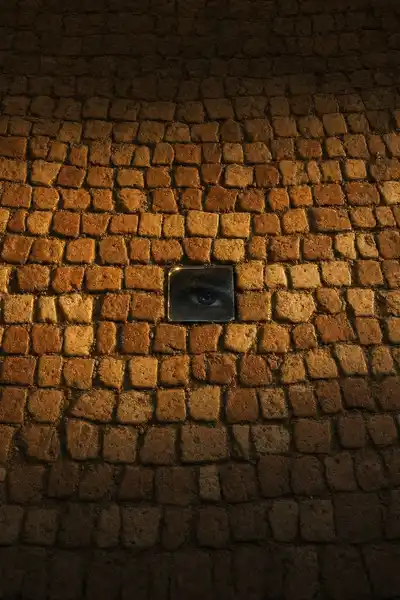
The title is not accidental. A mirror shows us ourselves, and Galeano's wager is that when we look honestly at the human past we see faces we were taught not to count as ours. The enslaved men who built the White House and the Capitol are the recurring emblem: the seat of a republic founded on liberty, raised by people who had none. Galeano does not editorialize the contradiction. He simply puts the two facts in the same frame and lets the reflection do its work.
Women recur throughout as the most systematically erased. He returns to the witch hunts of early modern Europe, to the healers and the scholars and the queens rewritten as footnotes or monsters. He notes how often a woman's discovery was signed by a man, how fear of female knowledge hardened into law and pyre. The women erased by men's fears is one of the book's steady refrains, and Galeano treats their absence from the record as evidence of something, not as a gap to shrug past.
04 Chapter 4 — History as a chorus, not a monologue
Step back from the individual stories and Galeano's larger claim comes clear: history is not a document to be trusted but an argument to be had. The official version is not simply incomplete — it is authored, and its authorship serves someone. Mirrors treats the past as contested ground, where deciding who gets to narrate is itself an exercise of power. To restore the forgotten voices is not nostalgia; it is a challenge to the authority that forgot them on purpose.
This matters beyond the pleasures of a good vignette, because who counts in the past shapes who counts now. A history in which only conquerors and kings appear quietly teaches that only conquerors and kings matter. Galeano's counter-history teaches the opposite — that the mason, the midwife, the enslaved cook, and the anonymous inventor were the actual substance of events, and that a civilization is the sum of its uncredited hands. The stakes are present-tense. The way we remember decides who we are willing to see today.
05 Conclusion
Return to that summit in Panama, where Balboa is said to have seen two oceans no one before him had seen. Galeano's question keeps ringing under the whole book: and everyone already standing on that shore? Mirrors answers by giving those people back their sight, and their names, and their work — six hundred times over, from the first fires to the towers of New York. The book never argues that Balboa did not climb the hill. It argues that the sentence about him was built to make the rest of humanity vanish, and that the vanishing can be undone one small reflection at a time.
Related books