Level 4
Inside the viral hotline
Description
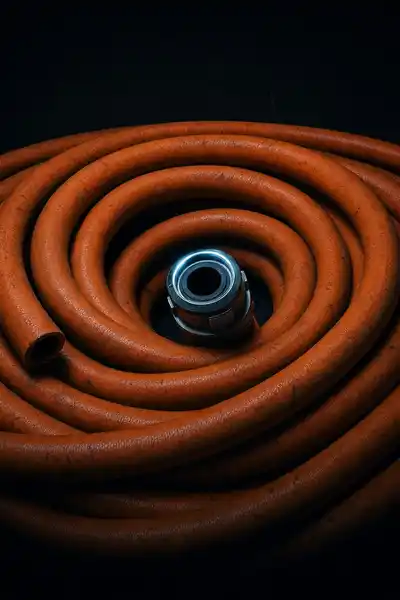
There is a room at the Centers for Disease Control in Atlanta where the air pressure runs backward. It flows inward, always, so that if a seal fails nothing invisible drifts out. Behind three sets of doors, technicians work inside pressurized suits fed by coiled orange hoses, their hands sunk into gloves that let them handle the deadliest organisms known to medicine. This is the maximum-containment lab, biosafety level 4 — the top of a four-rung ladder where level 1 is a kitchen sink and level 4 is Ebola in a test tube. Joseph McCormick spent years there, and years outside it in far rougher places, doing the same work with far less between himself and the virus.
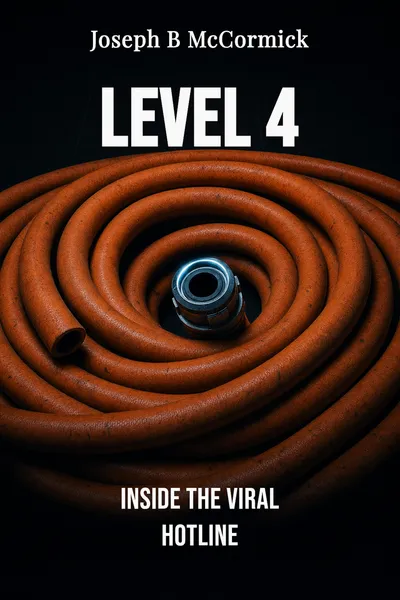
His book, simply called "Level 4," is the account of a physician who chose to move toward the things everyone else runs from. Lassa fever in the wards of West Africa. Ebola in a Zairean mission hospital where nuns were dying faster than anyone could explain. Crimean-Congo hemorrhagic fever, a name that sounds like a curse. And, arriving in the early 1980s like a slow tide, AIDS — a virus that behaved unlike anything in the containment manual. McCormick was there for much of it, notebook in one hand, syringe in the other.
What makes the book unusual is that it is not a horror show. The suits and the sealed doors are real, but McCormick keeps returning to the ordinary rooms where epidemics actually happen — a village clinic, a hospital ward, a mother holding a feverish child. The high technology of Atlanta and the low technology of a bush hospital turn out to be two ends of the same job.
The question we’re asking : What is it actually like to hunt the world's most dangerous viruses, from the sealed lab in Atlanta to the wards where they kill?What we’ll see : A physician's account of the suits and the fieldwork, the diseases that resisted explanation, and the price of getting close.
Table of contents
01 Chapter 1 — The suit, the seal, and the fear
McCormick opens with the machinery, because the machinery is what people imagine when they hear "level 4." The Special Pathogens work at the CDC was built around containment: the negative air pressure, the airlocks, the chemical showers, the one-piece suits that inflate around the body like a diving rig. Everything is designed on the assumption that the operator will, at some point, make a mistake, and that the building has to survive it. A dropped vial in a level-4 lab is not an accident to be cleaned up later. It is an emergency handled through gloves, behind glass, by someone breathing filtered air through a hose bolted to the ceiling.
But he is honest about what the suit does to a person. It is hot, loud, and clumsy. The rush of air in the hood drowns out sound, so colleagues communicate in exaggerated gestures. Fine work — drawing fluid, adjusting a slide — becomes an exercise in patience, because the gloves flatten sensation and the suit fights every movement. Hours pass slowly. The fear, McCormick admits, never fully leaves; it just recedes into a background hum you learn to work alongside. The danger is not dramatic. It is procedural, constant, and quiet.

02 Chapter 2 — Chasing Lassa into the wards
Lassa fever became, in many ways, McCormick's signature disease. Named for the Nigerian town where it was first identified in 1969, it kept turning up across West Africa — in Sierra Leone, in Liberia — with a mortality that was frightening precisely because it was uneven. Most people who caught it recovered. A minority bled, went into shock, and died within days. Working out who was at risk, and why, meant leaving Atlanta and setting up in places with intermittent electricity and no negative-pressure anything.
The fieldwork he describes bears little resemblance to the sealed lab. In a Sierra Leone hospital, the protective gear was whatever could be improvised, and the work was relentless: taking blood, tracking cases, mapping how the disease moved through wards and families. McCormick and his colleagues eventually pinned the animal reservoir on a common multimammate rat, whose droppings and urine carried the virus into homes and food stores. The disease was not exotic bad luck. It was woven into the everyday geography of village life.
03 Chapter 3 — The virus that would not name itself
In the early 1980s a different kind of problem arrived, and McCormick was among those trying to make sense of it. In central Africa, doctors were reporting patients wasting away from infections that should not have been fatal — a collapse of the immune system with no obvious cause. In the United States the same pattern was surfacing under a name that had not yet stabilized. It would become AIDS, caused by a virus that broke every rule the containment manuals were written for.
The hemorrhagic fevers McCormick knew were fast and loud. A patient sickened, crashed, and either recovered or died within a week or two, and the danger to those around them was measured in days. This new disease was the opposite: slow, silent, and patient. Someone could carry it for years, feeling well, unknowingly passing it on. The threat did not announce itself with a fever and a bleed. It hid, which made it far harder to trace and far more dangerous over time.
04 Chapter 4 — What it costs to walk into the fire
Step back from the suits and the sample vials, and McCormick's book is finally about proximity. The recurring image is not the sealed lab but the doctor sitting at a bedside, or drawing blood in a crowded ward, or explaining to a frightened family why he needs to ask so many questions. The most useful tool in the whole account is not a piece of technology. It is the willingness to be in the room — to stay close to the thing that could kill you because staying close is the only way to understand it.
This is where the book quietly argues against its own title. Level 4 is the fantasy of perfect separation: air that flows the right way, doors that never both open at once, a barrier engineered so completely that the virus can be studied without ever touching a person. The fieldwork McCormick describes is the exact reverse. There the physician has almost nothing between himself and the disease, and the trust he builds with local communities and colleagues does more to stop an outbreak than any hose or airlock ever could.
05 Conclusion
McCormick's career traces a strange arc: he built one of the most technologically advanced spaces on earth for handling danger, and then spent much of his life working where none of that technology existed. The level-4 lab in Atlanta and the improvised ward in Sierra Leone are both in the book, but the pages that stay with you are the ones without a suit — the bedside, the blood draw, the conversation with a family that had just buried someone. That is where the viruses were actually met.
Related books