I Didn't Do It for You
How empires carved up Eritrea
Description
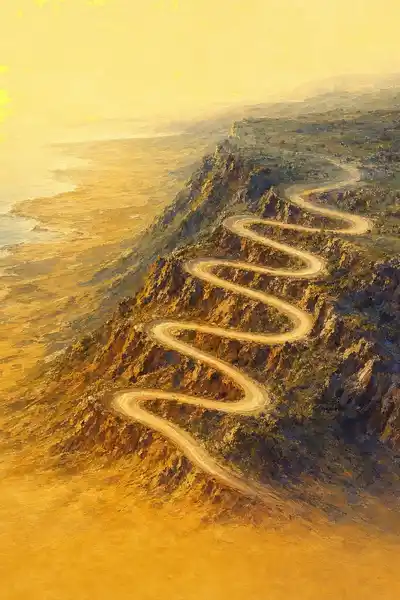
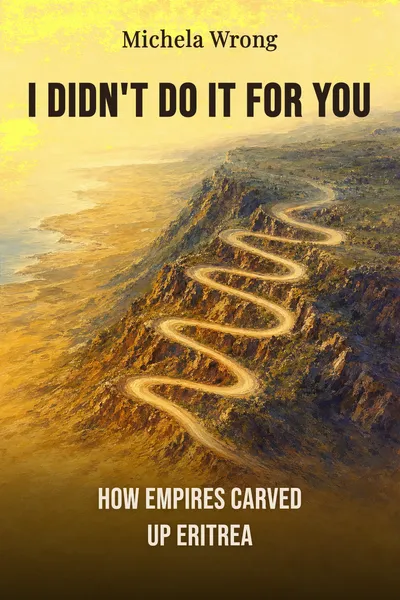
There is a road that climbs from the Red Sea coast up into the Eritrean highlands, switchback after switchback, gaining nearly two thousand metres in a stretch you can drive in an afternoon. Italian engineers cut it in the 1930s, along with a railway and a cableway that ran ore and grain over the escarpment. For a few years, Asmara — the capital — became one of the most concentrated showcases of modern architecture anywhere in the world, all cinemas and service stations built in the swooping style of Italian Futurism. It was, on paper, a colony that worked. It was also a stage set, built for someone else's ambitions.
Michela Wrong, a British journalist who spent years covering the Horn of Africa, went looking for the story behind that road. What she found was not one occupation but a relay of them. Italy, Britain, the United States, the Soviet Union — each arrived with its own use for the place, took what it needed, and left. Eritrea was never quite a country in anyone's plans; it was a coastline, a plateau, a listening post, a bargaining chip. The title of her book comes from a scrap of graffiti a colonial worker once left behind, and it carries the whole argument in five words.
Out of that succession of hands came the longest guerrilla war of the twentieth century, thirty years of fighting against a far larger neighbour, and an independence won in 1991 that almost nobody outside the region noticed. Wrong's book is an attempt to explain how a place gets used that thoroughly, and what it does to the people who live through it.
The question we’re asking : How did a small stretch of the Red Sea coast come to be shaped, and scarred, by four foreign powers in turn — and what did each one actually want from it?What we’ll see : A relay of occupations, each with its own appetite, and the war that grew out of being everyone's instrument and nobody's cause.
Table of contents
01 Chapter 1 — The launching pad for a new Rome
Italy arrived on the Eritrean coast in the 1880s, late and hungry, a newly unified nation looking for the empire that older European powers had already carved up. It bought the port of Assab, seized Massawa, and in 1890 stitched the territory together under a name borrowed from the ancient Greek word for the Red Sea. For decades it was a modest, faintly embarrassing colony — the springboard for the 1896 invasion of Ethiopia that ended in the humiliation of Adwa, where an African army routed a European one and Italy went home to nurse the wound for forty years.
The wound reopened under Mussolini. Fascism needed a colony that could carry the weight of its mythology, and Eritrea became the base camp for the conquest of Ethiopia in 1935 — the war of poison gas and aerial bombing that finally avenged Adwa. Asmara swelled almost overnight into a supply city. By the late 1930s tens of thousands of Italians had arrived, and the town filled with the modernist buildings that still stand: the Fiat Tagliero service station with its concrete wings, cinemas, apartment blocks, a whole imagined future poured in cement.

02 Chapter 2 — The scrap merchants
Britain took over in 1941 as a caretaker, administering Eritrea on behalf of nobody in particular while the victorious powers worked out what to do with Italy's former colonies. Caretaking, it turned out, could be a form of asset-stripping. London decided that Eritrea's industrial plant — the factories, the workshops, the port equipment the Italians had installed — was not going to serve any British purpose, and might usefully be sold.
So it was sold. Wrong documents the systematic dismantling of the colony's infrastructure during the British administration: machinery unbolted and shipped out, the cableway that ran from Massawa up to Asmara taken down and disposed of, port cranes and factory tooling auctioned off, some of it as scrap metal. A place that had been, by African standards, remarkably industrialised was quietly taken apart and sold for what its components would fetch. The verdict of a later British report — that the removals had gone well beyond what could be justified — arrived long after the equipment was gone.
03 Chapter 3 — A hilltop worth a country
The reason the United States wanted Eritrea tucked safely inside a friendly Ethiopia sat on a plateau above Asmara. It was called Kagnew Station, and by the 1950s it had become one of the most important American signals-intelligence and communications posts anywhere on the planet. The Eritrean highlands, high and dry and blessedly free of atmospheric interference, turned out to be near-perfect for intercepting long-range radio traffic and relaying it around the globe.
Wrong's account of Kagnew is the pivot of the book, because it explains the diplomacy. The Americans needed the base, the base sat on Ethiopian-controlled soil, and so American policy in the Horn of Africa bent itself around keeping Haile Selassie happy. When John Foster Dulles, the US Secretary of State, remarked that the strategic interests of the United States made it necessary that Eritrea be linked to Ethiopia — whatever the wishes of the people concerned — he was stating the arithmetic plainly. A listening post in the mountains outweighed the self-determination of the people who lived beneath it.
04 Chapter 4 — The war nobody watched
When the Americans lost interest, the other superpower stepped in — from the opposite direction. In 1974 a Marxist junta, the Derg, overthrew Haile Selassie and swung Ethiopia into the Soviet camp. Moscow, which had earlier flirted with the Eritrean rebels, reversed itself completely and poured arms into Addis Ababa to crush them. The same fighters who had once been armed against an American client were now facing Soviet tanks and advisers. Eritrea had simply been re-slotted into a different global game, its meaning rewritten by powers that had never asked its opinion in the first place.
This is where Wrong's larger point comes into focus, and it is not a comforting one. Eritrea's tragedy was never that it was worthless. It was that it was useful. A coastline, a plateau with clear skies, a foothold on the Red Sea — these were assets the powerful found reasons to hold, and each reason came with a use-by date. Italy needed a launching pad until it lost its war. Britain needed a stopgap until it could sell the fittings. America needed a hilltop until satellites made it obsolete. The Soviet Union needed a client until the Cold War ended. Nobody needed Eritreans.
05 Conclusion
The road still climbs from the coast to Asmara, and the Futurist buildings still stand, faded now, a museum of somebody else's ambition. Wrong's book follows that architecture back through the hands that shaped the country beneath it — Italian, British, American, Soviet — and finds in each a version of the same transaction: a use extracted, a bill left unpaid, a departure. Independence, when it came in 1991, was won by people who had stopped expecting anyone to arrive on their side, and who had built, in the trenches, a nation designed to need nothing from the outside world.
Related books