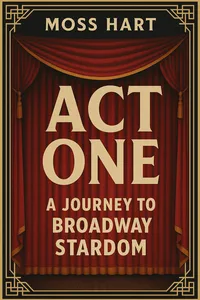
Moss Hart
About the author
Moss Hart (1904-1961) emerged as one of America's most distinguished playwrights and theatrical directors of the twentieth century. Born into poverty in the Bronx, Hart's early exposure to theater through his aunt's influence shaped his artistic trajectory. His collaboration with George S. Kaufman produced numerous Broadway successes, including 'You Can't Take It with You' and 'The Man Who Came to Dinner.' Hart's expertise extended beyond playwriting to encompass theatrical direction and production, establishing him as a multifaceted figure in American theater. His marriage to singer and actress Kitty Carlisle further embedded him within the cultural elite of his era.
Hart's critical perspective emerges from his lived experience of economic deprivation transformed into artistic success, providing him with unique insights into both the material foundations of theatrical production and the psychological dynamics of creative development. His writing style demonstrates the integration of theatrical sensibility with autobiographical reflection, creating narrative structures that mirror the dramatic techniques he employed as playwright. The influences shaping Hart's artistic development include not only established theatrical figures like Kaufman but also the broader social and economic conditions of early twentieth-century urban America, particularly the immigrant experience and the promise of American social mobility through cultural achievement.