

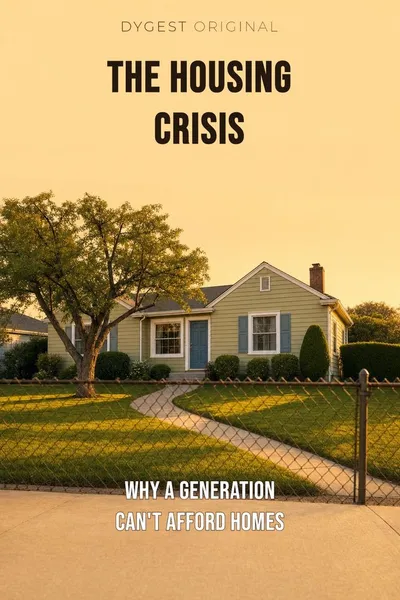
The housing crisis
Why a generation can’t afford homes
Description
The median price of an American single-family home reached approximately $420,000 in 2024. In 1980 it had been approximately $47,000 equivalent to approximately $180,000 in 2024 dollars. Across the four decades, the real cost of an American home had grown approximately 130 percent, while real wages for the typical American worker had grown approximately 11 percent. The ratio of median home price to median household income, which had been approximately 2.5 in 1980, had grown to approximately 5.8 in 2024 substantially exceeding the historical range that had been considered sustainable. The implications for the financial lives of two generations of Americans had become one of the central political and economic issues of the contemporary period.
The combination of factors that produced this trajectory has been substantially documented but has resisted substantial policy intervention. The supply of new housing construction had been substantially constrained by local zoning regulations that systematically prevented denser development. The demand had been substantially expanded by population growth, by the financialization of housing as an investment category, and by the substantial reduction in mortgage interest rates that had made debt-financed home purchase substantially more attractive across the 1990s and 2000s. The combination produced sustained price appreciation that substantially exceeded wage growth, with the affordability gap growing substantially across two decades.
The generational distribution of this transformation has been substantially uneven. Baby Boomers, who had purchased homes when prices were substantially lower relative to incomes, had benefited substantially from the price appreciation. Millennials and Gen Z, who entered the housing market after the substantial price increases had already occurred, faced substantially higher entry barriers than their parents had faced. The homeownership rate for Americans under 35 had declined from approximately 43 percent in 1980 to approximately 39 percent in 2024, with the decline being substantially concentrated among the lower and middle income tiers.
The question we’re asking: what produced the housing affordability crisis, who has been affected, and why the political response has been substantially limited.
What we’ll see: the supply constraints, the demand drivers, the generational distribution, and what survives.
Table of contents
01The supply constraints
The American housing supply has been substantially constrained for approximately four decades. The pace of new housing construction relative to population growth declined substantially after 2008, with the post-financial-crisis construction substantially below what underlying demographic demand required. The 2024 estimates from the National Association of Home Builders suggested an aggregate housing shortage of approximately 4-5 million units relative to demand substantial enough to substantially explain the price pressure that had emerged.
The principal mechanism of supply constraint has been local zoning regulation. Most American jurisdictions substantially restrict the density of residential development through zoning rules that mandate single-family construction on minimum lot sizes. The framework, which had been substantially established across the early twentieth century and substantially expanded through the postwar suburban period, makes denser development apartments, townhouses, accessory dwelling units substantially illegal in most residential areas. The cumulative effect is that the supply response to rising prices has been substantially constrained by regulatory rather than market factors.

02The demand drivers
The American housing demand has been substantially expanded across the past two decades by several specific factors. The mortgage interest rate decline from approximately 8 percent in 2000 to approximately 3 percent in 2021 substantially increased the home price that any given monthly payment could finance. The implication was that household ability to bid for houses substantially increased, with the increased bidding capacity substantially flowing into higher prices rather than into expanded homeownership. The framework had been substantially anticipated by economists but had nevertheless been substantially central to the 2000s and 2010s price increases.
The financialization of housing has been substantial. The institutional investor share of single-family home purchases grew from approximately 1 percent in 2010 to approximately 5 percent in 2023, with substantial concentration in the affordable starter-home category that first-time buyers had historically purchased. The investor demand has substantially supported price levels while substantially reducing the supply available to owner-occupant buyers. The framework substantially treats housing as an investment category rather than as a consumption good, with substantial implications for the population that needs housing for shelter rather than for investment return.
03The generational distribution
The generational distribution of housing wealth has been substantially uneven. Americans currently over 60 hold approximately 50 percent of American home equity despite representing approximately 25 percent of the population. The concentration is substantially the product of having purchased homes when prices were substantially lower relative to incomes, with the subsequent appreciation substantially building wealth that younger generations have not been able to access through equivalent paths.
The Millennial and Gen Z entry into the housing market has been substantially delayed. The median age of first-time American home buyers grew from approximately 28 in 1981 to approximately 36 in 2023 substantially the largest demographic shift in the timing of home purchase in American history. The implications for the broader life-cycle financial trajectory have been substantial, with delayed home purchase substantially affecting timing of family formation, retirement savings, and the broader category of life decisions that previous generations had made earlier.
04What survives, and what comes next
The housing affordability crisis has continued to operate as one of the principal economic conditions of contemporary American life. The supply constraints continue to operate. The demand drivers continue to operate. The price trajectory continues to substantially exceed wage growth. The generational distribution continues to be substantially uneven.
The political response has been substantial but largely ineffective. The federal-level proposals including tax incentives for first-time buyers, expanded mortgage assistance programs, federal support for low-income housing construction have been substantially insufficient relative to the scale of the affordability gap. The local zoning reform that would substantially address the supply problem has substantially moved in several jurisdictions (Minneapolis, Oregon, California) but has substantially not produced national change. The framework substantially preserves the supply constraints that the political coalitions in most jurisdictions continue to support.
05Conclusion
The American housing market has substantially transformed the financial lives of two generations of Americans across the past four decades. The substantial price growth, the supply constraints, the demand drivers, the generational distribution all of these have continued to operate substantially in the same form. The political response has been substantial but largely inadequate.