The gut-brain axis
How digestion talks to the mind
Description
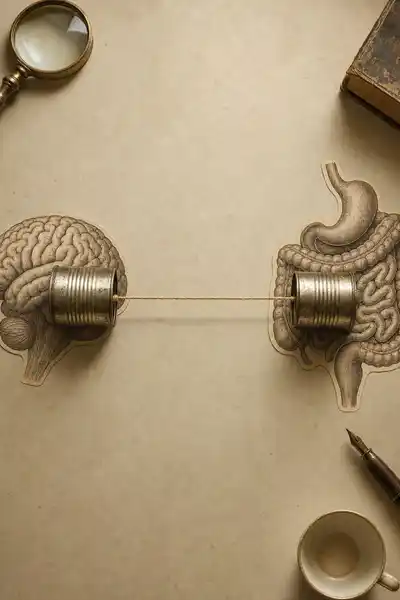
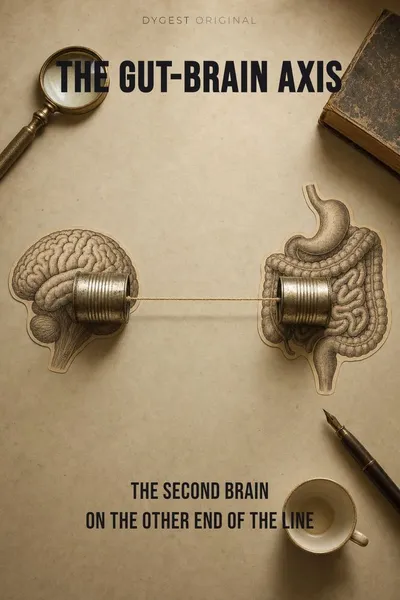
The intuition that the gut and the mind are connected is older than recorded medicine. The English language preserves it in phrases like “gut feeling,” “butterflies in the stomach,” and“having the guts to do something” — idioms that locate emotional and cognitive states in the digestive system rather than in the brain where the textbooks would put them. The phrases are usually treated as metaphor. The research that has emerged from the field of neurogastroenterology over the past three decades has been progressively confirming that the metaphors are closer to literal description than the older medical framework had assumed. The gut and the brain communicate constantly, through multiple biological channels, and the communication has substantial effects on mood, cognition, and behavior. The system that performs this communication is now called the gut-brain axis, and the research on it has become one of the more interesting reorganizations of how clinicians think about the relationship between digestion and mental life.
The discovery that the gut has its own nervous system — what the field calls the enteric nervous system, sometimes informally referred to as the “second brain” — was made systematically in the 1990s by the gastroenterologist Michael Gershon at Columbia University. Gershon documented that the gut contains roughly 500 million neurons, more than the spinal cord, and that these neurons produce substantially more of the neurotransmitter serotonin than the brain does. The discovery did not, by itself, establish that the gut affects mood or cognition. It established that the biological infrastructure for such effects was in place. The subsequent research, which has accelerated since the early 2010s, has been documenting how the infrastructure is actually used.
The gut microbiome — the trillions of bacteria, viruses, and fungi that inhabit the human digestive tract — has turned out to be one of the major players in this system. Research published since around 2011 has shown that the microbial communities in the gut produce molecules that travel to the brain through several pathways, that the composition of these communities correlates with mental-health conditions including depression and anxiety, and that manipulating the microbiome can produce measurable changes in behavior in animal models and, increasingly, in human studies. The implications for how we understand the relationship between what we eat and how we feel have been substantial.
The question we’re asking: what does the research actually show about how the gut affects the mind, what has been established and what is still speculative, and how should the contemporary understanding shape ordinary practice?
What we’ll see: the enteric nervous system, the microbiome and its messengers, the clinical implications, and what survives the careful reading.
Table of contents
01The second brain
The enteric nervous system was named by the British physiologist John Newport Langley in 1921, but its functional importance was not appreciated for most of the twentieth century. The dominant medical model treated the gut as a peripheral organ controlled by the central nervous system through the vagus nerve. The reframing of the enteric system as a substantially autonomous neural network occurred largely through the work of Michael Gershon, whose 1998 book The Second Brain established the term in clinical and popular usage.
Gershon’s research documented features that distinguished the enteric system from the standard model. The system contains roughly 500 million neurons, organized into two main plexuses — the myenteric plexus (motility) and the submucosal plexus (secretion). The enteric system uses all the neurotransmitters the central nervous system uses, including serotonin, dopamine, GABA, and acetylcholine. The system operates substantially independently of central nervous system control.

02The microbiome and its messengers
The gut microbiome has been the most active research area in the gut-brain field since around 2010. The advent of high-throughput sequencing technology in the 2000s made it possible to identify the bacterial species present in the human gut with substantially more precision than older culturing methods had allowed. The Human Microbiome Project, launched by the NIH in 2007, produced systematic catalogs of the microbial communities in healthy humans. The 2012 follow-up data from this project documented that the human gut contains roughly 100 trillion bacterial cells representing thousands of species, with the composition varying substantially across individuals.
The relationship between gut microbes and brain function has been documented through several lines of evidence. Germ-free mice, raised without exposure to bacteria, show altered behavior compared to mice with normal microbiomes. They display reduced anxiety, altered stress responses, and changes in social behavior. Reintroducing normal bacterial communities can normalize these behaviors, with the timing of reintroduction mattering — early exposure produces fuller normalization than later exposure, suggesting a developmental window for microbial influence on brain development. The 2011 work by Sven Pettersson at the Karolinska Institute established several of these patterns clearly.
03The clinical implications and the cautions
The clinical applications have moved more slowly than the popular coverage of the field would suggest. The most established use is probiotic supplementation in specific gastrointestinal conditions. The use of probiotics for mental-health conditions has produced more mixed results than the popular framing implies. Several systematic reviews have found modest effects of specific probiotic strains on mild to moderate depression and anxiety, with effect sizes smaller than standard antidepressants but larger than placebo.
Fecal microbiota transplantation has shown promise in specific applications. The standard use is for recurrent Clostridium difficile infections, where the procedure has been remarkably effective. The 2017 study by Kurokawa and colleagues examined fecal transplantation in patients with irritable bowel syndrome and comorbid depression and found improvements in both. The procedure remains experimental for non-Clostridium indications.
04What survives, and what the older intuitions got right
The gut-brain axis research has confirmed, in unusually specific biological terms, what older traditions had argued about the connection between digestion and mental life. The intuition embedded in language — that emotions live in the stomach, that diet affects mood, that fear and excitement produce digestive symptoms — has turned out to be substantially correct. The biological mechanisms that produce these effects have been documented, the connecting pathways have been mapped, and the clinical implications have begun to be tested rigorously. The older medical framework that treated the gut as a peripheral organ controlled by the brain has been substantially revised.
The reframing has practical implications for how clinicians and patients think about overlapping conditions. Patients with mental-health conditions often have gastrointestinal symptoms, and patients with gastrointestinal conditions often have mental-health symptoms. The older framework treated these as separate problems requiring separate specialist treatment. The newer framework treats them as expressions of a single interconnected system that responds to diet, stress, sleep, medication, and the underlying composition of the microbial communities the patient hosts. The treatment implications include greater attention to dietary patterns in mental-health treatment and greater attention to stress and mood in gastrointestinal treatment.
05Conclusion
Michael Gershon continues to teach at Columbia and to publish on the enteric nervous system. The field he helped to establish has become one of the most active areas of biomedical research, with thousands of papers published annually and substantial commercial activity in probiotics, prebiotics, and microbial therapeutics. The 2025 state of the field is one of expanding evidence and continued translation difficulties — substantial science, ongoing clinical trials, and a commercial market that has often moved faster than the evidence base supports.
Related books