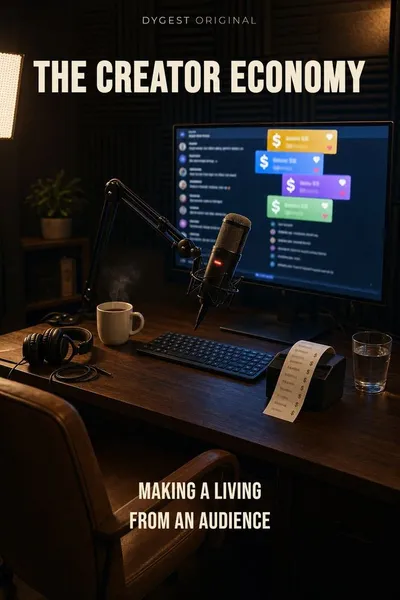
The creator economy
Making a living from an audience
Description
n May 2013, a thirty-year-old musician named Jack Conte launched a website called Patreon that allowed his fans to subscribe to him directly, paying a small monthly amount in exchange for access to his work. Conte had been producing music videos on YouTube for several years and had built a substantial audience, but the YouTube advertising revenue had been insufficient to support him as a full-time creator. The model Patreon enabled — direct fan payment to creators on a subscription basis — was substantially different from the advertising-mediated framework that YouTube and Instagram had established. Within ten years, Patreon was processing approximately $3.5 billion in annual creator payments, with approximately 250,000 creators earning income through the platform.
The broader category that emerged across the subsequent decade — called the creator economy — substantially extended the framework beyond direct subscriptions. The category now includes YouTube and TikTok ad revenue, Substack newsletters, Twitch streaming income, OnlyFans subscriptions, Kickstarter and crowdfunding campaigns, direct merchandise sales, and the broader range of mechanisms through which creators monetize audiences. The 2024 industry estimates suggest approximately 200 million people globally identified as creators with some monetization, with approximately 5-10 million earning enough to support themselves entirely. The aggregate creator economy was generating approximately $250 billion in annual revenue.
The shift from influencer culture (brands paying creators to promote products) to creator economy (audiences paying creators directly for their work) is substantial. The earlier model substantially aligned creator incentives with brand marketing objectives — the creators promoted whatever brands paid them to promote. The newer model substantially aligns creator incentives with audience preferences — the creators produce what audiences will pay for. The two operate in parallel for most working creators, but the proportional weight of direct audience payment has been growing substantially across the past decade.
The question we’re asking: what the creator economy actually is, how creators make a living, and how the framework differs from earlier models of media work.
What we’ll see: the platforms that built the framework, the income mechanics, the cultural shift it represents, and what survives.
Table of contents
01The platforms that built the framework
The infrastructure of the creator economy is substantially more distributed than the platform-mediated influencer economy. The principal categories include long-form video platforms (YouTube), short-form video platforms (TikTok, Instagram Reels, YouTube Shorts), live streaming platforms (Twitch, YouTube Live), audio platforms (podcasting infrastructure, Spotify), written content platforms (Substack, Medium), direct subscription platforms (Patreon, OnlyFans), and the broader category of merchandise and product sales that creators operate through Shopify and similar platforms.
The economic model varies substantially across these platforms. YouTube and TikTok operate principally on advertising revenue shared with creators, with the platforms taking a substantial portion and the creators receiving the rest. Patreon and OnlyFans operate principally on direct subscription, with the platforms taking a percentage commission and the creators receiving the majority. Substack operates principally on paid newsletter subscriptions, with the platform taking a 10 percent commission. The different models produce substantially different income structures for creators, with the platform choice substantially affecting the economics of the work.

02The income mechanics
The income distribution in the creator economy is substantially top-heavy, similar to other creative industries. The top tier — the approximately 1 percent of creators with audiences in the millions — earns substantially through multiple revenue streams, with the top creators in any category earning seven or eight figures annually. The middle tier — creators with audiences of 10,000 to 1 million — typically earns modest amounts that may constitute substantial income depending on the niche and the monetization mix. The bottom 90 percent of creators earn negligible amounts despite producing substantial content.
The principal revenue streams for working creators are platform advertising (YouTube AdSense, TikTok Creator Fund), brand sponsorships (paid promotions integrated into content), direct audience payments (Patreon subscriptions, Substack paid newsletters), and merchandise sales (custom products marketed to audiences). The proportional mix varies substantially by creator type, with YouTube long-form creators typically deriving more revenue from advertising and brand partnerships, while podcast and newsletter creators typically derive more from direct subscriptions.
03the cultural shift framework represents
The creator economy substantially represents a different framework for understanding work and audience relationships. The earlier media model — large corporations producing content for mass audiences through broadcast or print distribution, with revenue substantially derived from advertising — was substantially complemented and partially replaced by a framework in which individual creators produce content for self-selected audiences, with revenue substantially derived from audience payment and from advertising sold against the resulting attention.
The cultural implications have been substantial. The framework substantially democratized media production, with substantially lower barriers to entry than the earlier broadcast and publishing infrastructure required. The framework also substantially expanded the diversity of content that finds an audience, with substantial niches that were too small for traditional media now being commercially viable as creator-economy categories. The result has been substantial expansion of the range of content available, with substantial portions of audience attention shifting from traditional media to creator-economy alternatives.
04What survives, and what comes next
The creator economy has become a substantial and apparently durable feature of contemporary media and work. The platforms continue to expand, the creator population continues to grow, the audience payment continues to scale. The framework has become substantially central to how a generation thinks about media work, audience relationships, and the conversion of personal voice into commercial output.
The artificial intelligence developments of the past several years have substantially complicated the creator economy outlook. The AI tools that substantially expand the ability to produce content — text, image, video, audio — substantially reduce the labor advantage that human creators have had. The competitive landscape across the coming decade will probably involve substantial AI-augmented content production, with substantial implications for what human creator labor is worth and which categories of creator work remain economically viable.
05Conclusion
Patreon’s 2013 launch substantially produced the framework for direct audience funding of creators that has expanded across the subsequent decade into the broader creator economy. The framework has continued to evolve, with substantial AI developments, platform consolidation, and creator-platform conflict continuing to reshape the conditions under which the work operates.
Related books