The Anthropocene
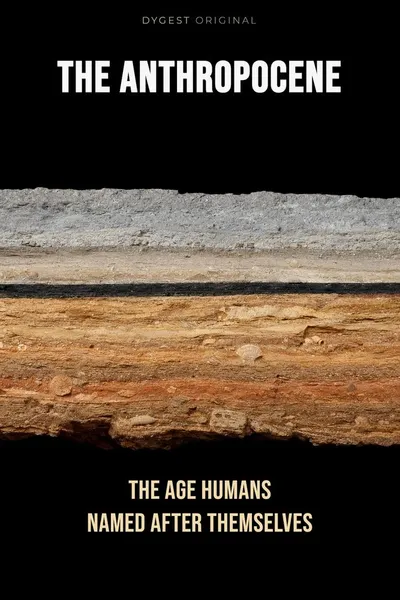
The age humans named after themselves
Description
In 2000, at a scientific conference in Mexico, the Dutch atmospheric chemist Paul Crutzen interrupted a colleague discussing the Holocene the current geological epoch, which began roughly 11,700 years ago with the end of the last ice age. 'Stop saying the Holocene,' Crutzen said. 'We're in the Anthropocene.' He meant that human activity had changed the Earth enough that the current time deserved a new geological name. Crutzen was a Nobel laureate (for work on ozone depletion), not someone prone to rhetorical flourishes. The term he coined that day has since become one of the most-debated concepts in contemporary science, philosophy, and cultural commentary.
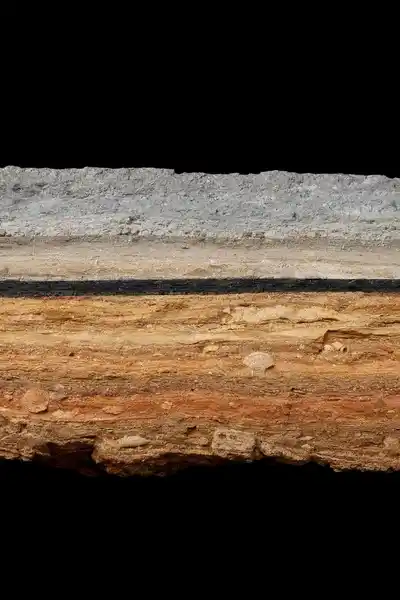
The Anthropocene proposes that human activity has become a geological force comparable to tectonic plates or solar variation in its effects on Earth systems. The evidence is substantial. Humans now move more sediment through construction and mining than all the world's rivers combined. Atmospheric composition has shifted in ways that will be detectable in ice cores for tens of thousands of years. Radioactive signatures from nuclear testing have produced a global stratigraphic marker visible in sediments worldwide. Industrial chemicals show up in the most remote environments. Species extinctions are occurring at rates last seen during the five previous mass extinctions in Earth's 540-million-year animal history.
Whether the Anthropocene is scientifically real as a formal geological unit has been debated intensely by the geological establishment. In 2024, the International Commission on Stratigraphy the formal body that defines geological units voted against formally recognizing the Anthropocene as a new epoch. The vote did not reflect a view that human impact is unreal; it reflected specific technical disagreements about when the epoch should start and whether the stratigraphic signatures are consistent enough across the world. The term continues to be used widely in scientific literature regardless, and the debate has largely moved past formal designation into what the concept implies for how humans think about their place in Earth's history.
The question we're asking: what is the Anthropocene, and what does naming it change about how we understand our situation?
What we'll see: the origin of the concept, the specific evidence, the debate over formalization, and the broader implications.
Table of contents
01The origin of the concept
The idea that humans might be changing the Earth at geological scale is not new. George Perkins Marsh's Man and Nature (1864) documented human deforestation, soil erosion, and species depletion, arguing that humanity was reshaping the planet through its cumulative actions. The Italian geologist Antonio Stoppani in the 1870s proposed that humans had created an 'anthropozoic era' a formulation Crutzen was probably unaware of when he coined his version. The basic insight has been available to observers since industrialization. What was new in 2000 was the specific scale of evidence that the observation now reflected a fact about Earth systems rather than a rhetorical claim about human influence.
Crutzen developed the term with the ecologist Eugene Stoermer, who had been using it informally since the 1980s. Their 2000 paper laid out the basic argument: human activity had changed atmospheric composition, altered biogeochemical cycles, modified land surfaces at scale, and was driving a mass extinction event. They proposed that the Holocene the geologically stable warm period that had made agriculture and civilization possible had ended, and a new epoch defined by human influence had begun. The paper was not initially widely noticed, but the term spread rapidly through earth sciences over the following decade.

02The specific evidence
Atmospheric composition provides the clearest evidence. CO2 concentrations have risen from 280 ppm in the preindustrial era to over 425 ppm a rate of change roughly 100 times faster than any natural transition documented in ice cores. Methane has tripled. Nitrous oxide has risen substantially. These changes are detectable globally and will persist in atmospheric records for millennia. The specific chemical signature of anthropogenic emissions (fossil fuels have a specific carbon isotope ratio) allows scientists to verify that the excess CO2 is indeed from human sources rather than natural variation.
Biogeochemical cycles have been radically altered. Humans now fix more nitrogen from the atmosphere (through industrial fertilizer production) than all natural processes combined a change that is reshaping aquatic ecosystems globally through runoff. Phosphorus mobilization has increased dramatically. The global carbon cycle has been disrupted by roughly 40 gigatons of annual CO2 emissions. Humans have constructed roughly 50,000 large dams, profoundly altering freshwater flows. The specific magnitude of these changes is unprecedented in any geologically recent timescale.
03The debate over formalization
The Anthropocene Working Group, a subcommittee of the International Commission on Stratigraphy, spent roughly fifteen years evaluating whether the Anthropocene should be formalized. Their work included identifying a Global Boundary Stratotype Section and Point (GSSP) the specific geological location that would define the start of the epoch. They proposed a sediment core from Crawford Lake in Canada, with the start of the Anthropocene set at roughly 1952 (corresponding to the 'Great Acceleration' after World War II and the clear plutonium signature from nuclear testing). The proposal was submitted to the full commission for vote.
The vote in 2024 rejected formal recognition. The specific reasons were technical: some voters argued the time span was too short to qualify as an epoch (epochs typically last millions of years), others argued the stratigraphic signatures were not consistent enough across different regions, others argued the human impact was more a matter of ongoing transition than a discrete boundary. The decision does not reject the underlying reality that humans are reshaping Earth; it reflects specific technical judgments about formal geological nomenclature.
04The broader implications
The Anthropocene concept has specific implications for how humans think about their relationship to nature. The traditional framing — in which humans are one species among many, embedded in a much larger natural system that dwarfs them becomes less accurate as human activity increasingly dominates the planet. The new framing in which humans bear responsibility for planetary conditions requires different ethical and political thinking. Environmental ethics, which traditionally focused on preserving specific natural spaces from human impact, now has to grapple with a situation where there are essentially no human-free spaces and the question is what kinds of managed relationships with specific ecosystems humans should maintain.
The political implications are substantial. If humans are responsible for planetary conditions, then planetary-scale politics becomes necessary. The traditional international system, built around sovereign nation-states pursuing their own interests, struggles with problems that require global cooperation on long timescales. The specific institutions for planetary governance do not really exist; the Paris Agreement and similar frameworks are attempts but have limited enforcement. The Anthropocene implies the need for political structures we have not built, and whether we can build them remains an open question.
05Conclusion
The Anthropocene is a concept that captures something real human activity has become a geological force, and the consequences will be detectable in Earth's rock record for timescales longer than human civilizations have existed. Whether the concept eventually receives formal geological recognition is a specific technical question that matters less than what the underlying phenomenon means for how humans understand their situation. The evidence for human planetary impact is overwhelming across multiple independent measures, and the concept provides a useful framework for integrating those measures into a coherent picture.
Related books