
Fracking
The energy revolution with a cost
Description
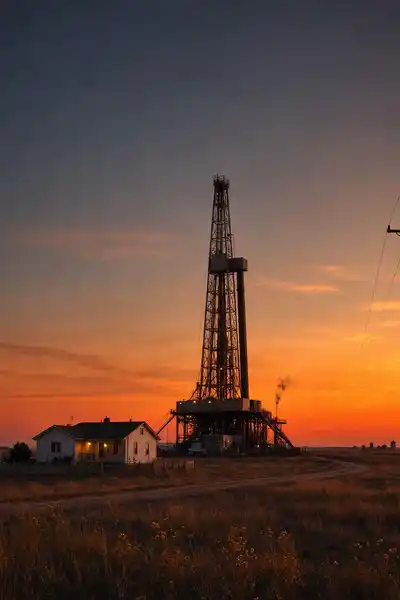
In 1998, a small Texas oil-and-gas company called Mitchell Energy, operating in the Barnett Shale formation north of Dallas, completed a well using a new combination of two existing technologies: horizontal drilling, which had been developed across the 1980s and 1990s, and hydraulic fracturing, which had been used in the petroleum industry since the late 1940s. The combination, which the company’s engineers had been developing across the previous decade with limited initial success, finally produced commercially viable production in the previously unproductive shale formation. The breakthrough was, in retrospect, one of the more consequential technological developments of the early twenty-first century. Across the subsequent fifteen years, the combination of horizontal drilling and hydraulic fracturing — what the industry has called unconventional production and what critics have called fracking — transformed the United States from one of the largest net importers of oil and natural gas to one of the largest producers in the world. By 2018, the United States had surpassed Saudi Arabia and Russia to become the world’s largest oil producer, with shale production providing the substantial majority of the increase.
The energy and geopolitical consequences have been substantial. The American shift from importer to producer reshaped global energy markets across the 2010s, with substantial implications for relations with Saudi Arabia, Russia, and Iran, and for the broader American foreign policy orientation in the Middle East. The domestic economic consequences have been substantial — multiple states have experienced substantial employment and tax-revenue growth from shale production, and the United States has substantially reduced its energy import dependency. The environmental and public health consequences have also been substantial. The water contamination, the seismic effects, the methane emissions, and the climate implications of the broader fracking boom have produced substantial scientific and political controversy across the period of the production expansion.
The case has become one of the standard examples in contemporary energy economics of how a technological breakthrough can transform an entire industry and reshape the global geopolitical landscape within a single decade. The fracking case is also one of the standard examples in environmental policy of how the costs of energy production are distributed across populations and time periods in ways that the simple cost accounting of the energy industry does not adequately capture. The same technology that has produced substantial economic benefits to specific populations has produced substantial environmental and health costs to other populations, with the political economy of distributing these costs being one of the central questions of contemporary American energy policy.
The question we’re asking: what did Mitchell Energy actually develop, how did the technology transform global energy markets, and what does the case reveal about the distribution of costs and benefits in modern energy production?
What we’ll see: the technological development and the production boom, the geopolitical consequences, the environmental and health costs, and what survives.
Table of contents
01The technology and the breakthrough
The two technologies had been individually developed across the preceding decades. Hydraulic fracturing — the injection of high-pressure fluid into a wellbore to fracture the surrounding rock — had been used by Halliburton and other service companies since 1949. The technology had been routine in conventional production for decades. Horizontal drilling, which allowed wells to be drilled vertically and then turned to run horizontally through specific rock formations, had been developed across the 1980s and 1990s as offshore drilling technology and adapted for onshore applications by the late 1990s.
The combination was not obvious. The conventional understanding of shale had been that the rock was too low in permeability for commercial production. The shale contained substantial quantities of oil and gas, but the rock was too tight to allow the hydrocarbons to flow into a conventional vertical wellbore at commercial rates. Mitchell Energy engineers led by Nicholas Steinsberger spent the late 1990s experimenting with fracturing fluids, well designs, and operational parameters. The breakthrough — through slickwater fracturing fluid, longer horizontal wellbore sections, and multiple fracturing stages — produced the first commercially viable shale production.

02The geopolitical consequences
The geopolitical consequences of the American production growth were substantial. The United States had been a net importer of oil since 1949 and a net importer of natural gas since 1958. The shale production growth allowed the United States to become a net exporter of natural gas in 2017 and a net exporter of total petroleum in 2020. The shift in global commodity flows produced substantial changes in the geopolitical landscape.
The relationship with Saudi Arabia was substantially affected. The Saudi response, evident in the 2014-2016 oil price collapse, was an attempt to maintain market share against the new American supply by maintaining production levels even as prices fell. The strategy produced approximately two years of low oil prices and substantial American bankruptcies. It was eventually abandoned in 2016, with Saudi Arabia and Russia coordinating production cuts through what became known as OPEC+. American shale production had become substantial enough to require coordinated international response, but was not eliminated by the Saudi pressure.
03The environmental and health costs
The environmental and health consequences of the fracking boom have been substantial and contested. The water contamination concerns have been one of the most prominent areas of controversy. The hydraulic fracturing process uses substantial quantities of water — typically several million gallons per well — combined with a mix of chemical additives, some of which have been documented as toxic. The wastewater that returns to the surface after the fracturing operation contains the additives, along with the formation water from the shale that often contains substantial concentrations of salt, heavy metals, and naturally occurring radioactive materials. The disposal of this wastewater has been one of the central environmental challenges of the industry.
The documented water contamination cases have been substantial but contested. The 2016 EPA study, which had been the most comprehensive federal assessment of fracking’s water impacts, concluded that the activity had contaminated drinking water resources in specific cases but found that the evidence was not sufficient to support broader generalizations about systematic risk. The conclusion was politically contested, with environmental organizations arguing that the study had understated the documented harms and with industry organizations arguing that the study had overstated them. Subsequent research has continued to document specific cases of contamination while debating the broader systematic risk.
04What survives, and what the case shows
The American shale industry has continued to operate at scale, with production levels in 2025 substantially exceeding the levels at any previous point in the history of American oil and gas production. The financial structure of the industry has substantially consolidated across the past decade, with the smaller and less capital-disciplined operators having been substantially eliminated through the 2014-2016 and 2020 price collapses and the larger integrated operators having absorbed much of the production. The technology has continued to evolve, with longer horizontal wells and more sophisticated fracturing operations producing continued improvements in well economics.
The deeper lesson is about how energy transitions actually occur. The shale boom represented a substantial expansion of fossil fuel production across the same decade as the Paris Agreement, the rapid expansion of solar and wind capacity, and the broader acceleration of global climate concern. The two trends — expansion of fossil fuel production and expansion of renewable energy — have operated in parallel across the past fifteen years, with implications for the climate trajectory substantially less favorable than either trend alone would have suggested.
05Conclusion
George Mitchell, the founder of Mitchell Energy who funded the persistent experimentation across the 1990s, died in 2013 at the age of ninety-four. He had become a substantial advocate for environmental regulation of the industry across his last decade, arguing that the technology he had helped to develop required substantial regulatory oversight to prevent the worst environmental consequences.