Flow
The state we all want and can't schedule
Description
There is a mental state that almost everyone has experienced a handful of times and almost nobody can produce on demand. You are absorbed in something writing, climbing, coding, playing an instrument, a complex conversation and at some point the ordinary self-consciousness thins out. Time stops being something you are tracking. The activity seems to produce itself. You are not deciding what to do next; you are inside a sequence that is unfolding, and the decisions are being made faster than you could deliberate about them. When it ends, you feel clearer, calmer, and more alive than you did before. You want to do it again, and you cannot quite figure out how.
This state has had many names. Athletes call it the zone. Musicians call it being in the pocket. Writers talk about the rhythm that takes over on a good day. The first serious attempt to study it scientifically came from a Hungarian-born American psychologist named Mihaly Csikszentmihalyi, who spent the 1970s interviewing chess players, surgeons, rock climbers, dancers, and artists about their experience at the peak of their performance. What he found, across these very different activities, was a consistent cluster of phenomenological features that he eventually named flow.
Flow is one of the better-known concepts in modern psychology and one of the most frequently misread. The research literature describes it as a specific state with identifiable preconditions and measurable after-effects. The self-help literature treats it as a productivity hack that can be summoned by blocking your calendar and putting on headphones. These are not the same thing, and confusing them has produced a generation of earnest attempts to reverse-engineer flow that mostly succeed in generating frustration. The actual conditions for flow are well understood. They are also harder to engineer than the popularization suggests.
The question we're asking: what does it take to enter the state of total absorption, and why can't we reliably produce it?
What we'll see: Csikszentmihalyi's research, the preconditions for flow, the self-help misread, and what the science does and does not promise.
Table of contents
01The Hungarian psychologist
Csikszentmihalyi came to psychology through experiences that shaped his lifelong question. He grew up in Europe during the Second World War, witnessed the collapse of social order in occupied Hungary, and emerged convinced that the ordinary framework of pleasure and pain was inadequate to explain what made a life worth living. People in extreme circumstances sometimes exhibited extraordinary composure. People in comfortable circumstances sometimes exhibited chronic dissatisfaction. The difference did not correlate cleanly with the objective conditions of their lives. Something else was doing the work.
In the late 1960s and through the 1970s, working at the University of Chicago, Csikszentmihalyi developed a research program around what he initially called the autotelic experience experience that is its own reward, done for itself rather than for some external outcome. He interviewed chess players who reported losing sense of their surroundings during games, climbers who described the mountain face as the only thing in the world while they were on it, surgeons who spoke of the hours in the operating theater as the clearest time in their week. The convergence across populations was striking.

02The preconditions
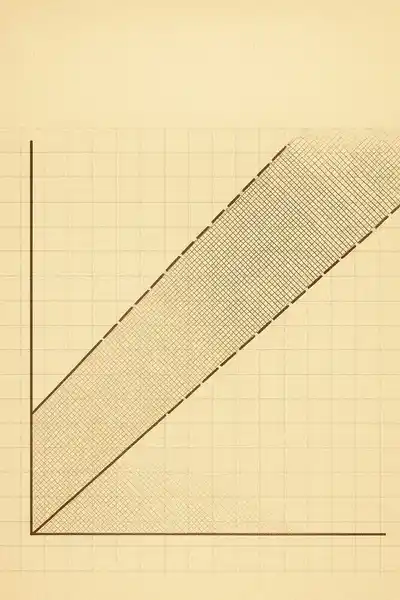
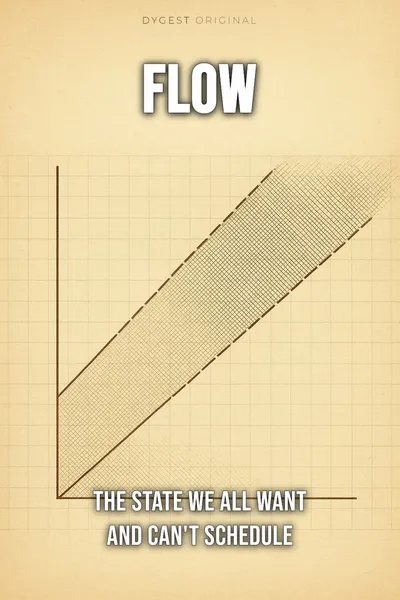
The research identifies three conditions that together produce flow, with a handful of secondary features that usually follow. The first and most often cited is the balance between challenge and skill. The activity must be difficult enough that full attention is required, but not so difficult that it cannot be performed. A task too easy produces boredom. A task too hard produces anxiety. The narrow band in between, where skill is being stretched but not exceeded, is where flow occurs. This balance is not static; as skill grows, the challenge must grow with it, or the activity will slide back into boredom.
The second condition is clear and immediate feedback. The practitioner must be able to tell, continuously, whether they are succeeding. Climbing provides this through the body's relationship to the rock. Chess provides it through the evolving board position. Surgery provides it through the tissue response. Writing, notably, does not provide clean continuous feedback, which is one of the reasons writing flow is rare and fragile. Activities with ambiguous outcomes, delayed evaluation, or diffuse goals resist flow even when the practitioner is otherwise well-matched to them.
03The self-help misread
The productivity literature of the 2010s and 2020s has made a concerted effort to repackage flow as a summonable state. Books like Steven Kotler's The Rise of Superman and The Art of Impossible argue that flow can be triggered through specific protocols deep-work blocks, dopamine-priming routines, environmental cues, targeted challenge-skill calibration. The claims are not exactly false. Some of these protocols make flow more likely. But the framing understates the fragility of the state and overstates the degree of control a practitioner can exert over entering it.
The more honest summary of what the research supports is that flow is a probabilistic outcome of correctly structured activity, not a deterministic one. You can set up the conditions. You cannot make the state occur. A climber with the right route, the right fitness, and the right mental preparation will enter flow on some attempts and not on others. The same is true of musicians, writers, surgeons, and athletes at every level. The variability is not well understood, but it is consistent across all populations studied. Flow is an emergent state with inputs we can partly control and outcomes we mostly cannot.
04What flow does and does not promise
The research is reasonably clear on what flow correlates with and what it does not. People who report more frequent flow experiences report higher subjective well-being, higher engagement with their work, and lower levels of certain forms of anxiety. They also tend to be more skilled at what they do, because flow facilitates the kind of full-attention practice that builds skill over time. Flow is both a pleasant state to be in and a mechanism for continued improvement. These two functions reinforce each other; skill growth creates more opportunities for flow, which creates more practice, which creates more skill growth.
What flow does not do is produce happiness in the ordinary sense. Csikszentmihalyi was careful to distinguish flow from pleasure. Pleasure is the experience of immediate reward the first bite of good food, the relief of rest after exertion. Flow is the experience of total engagement, which is not always pleasant in the moment and is sometimes mildly uncomfortable. People exit flow and report that the experience was meaningful; they rarely exit flow reporting that it felt good in the way a warm bath feels good. Confusing the two categories, as much of the popularization does, obscures what the research is actually claiming.
05Conclusion
The flow concept matters because it names something real that most other psychological frameworks have trouble accounting for. The hedonic model of well-being pleasure up, pain down, equilibrium in between cannot explain why people consistently report their most meaningful experiences as ones that involved discomfort, effort, and sustained attention rather than comfort and rest. The flow framework provides a language for these experiences, a set of preconditions that makes them more likely, and an empirical backing for the intuition that difficult engaged activity is a central ingredient of a life worth living.
Related books