DNA
The molecule that rewrote biology
Description
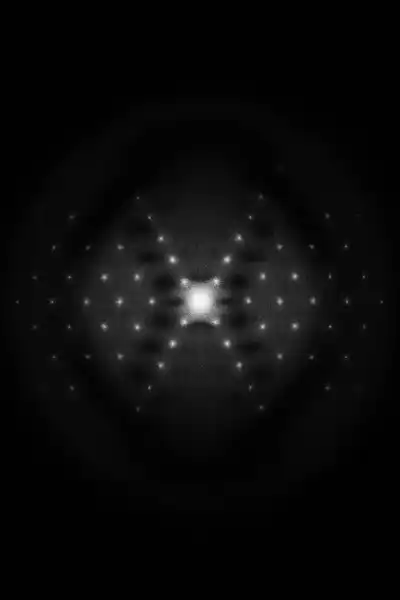
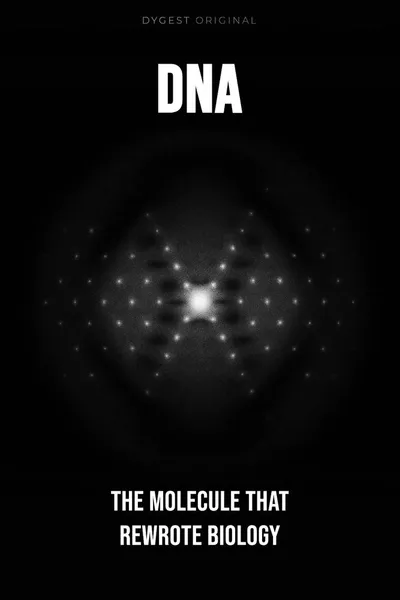
Before 1953, biology was a collection of extraordinary observations without a center. Darwin had explained how species changed, Mendel had worked out that heredity travels in discrete units, biochemists had catalogued enzymes. What nobody had was a mechanism tying any of it together. Life was described but not understood — like owning a perfect photograph of a clock and still not knowing how it keeps time.
In April 1953, a one-page paper in Nature changed that. Watson and Crick proposed that a molecule called deoxyribonucleic acid, present in every living cell, was built as a double helix in which two strands carried complementary sequences of four chemical letters. The structure did something almost no scientific object ever does: it suggested its own function. Heredity, suddenly, was chemistry. Mutation was a typo. A cell dividing was a book copying itself. Biology got a central dogma almost overnight.
Seventy years on, the double helix has stopped being the whole story. The larger revolution came after — PCR, sequencing costs collapsing from three billion dollars to less than a thousand, CRISPR turning cells into editable text files, a cheek swab telling a teenager that a quarter of her ancestry comes from Ghana. DNA is now infrastructure. It runs crime labs, ancestry apps, cancer clinics and the quiet horizon of human self-engineering. The molecule explained life, then it let us rewrite it.
● The question we're asking: how did a single molecule, whose structure was sketched on a Cambridge blackboard in 1953, end up running crime labs, ancestry apps, cancer clinics, and the quiet horizon of human self-engineering?
● What we'll see: the race to find the code, the move from structure to function, the tools that industrialized biology, and what happens when DNA escapes the lab into forensics, consumer genetics, ancient history and ethics.
Table of contents
01The race to find the code
The question of what carries heredity stayed open much longer than textbooks admit. Through the 1930s, the smart money was on proteins. Proteins were complex and everywhere in the cell — the right kind of molecule to encode the thousands of traits a body inherits. DNA, by comparison, looked boring. It had four nucleotide bases and a sugar-phosphate backbone, and most biochemists assumed it was structural scaffolding on which the real hereditary machinery rested.
Oswald Avery broke that assumption at the Rockefeller Institute in New York in 1944. Working on pneumonia bacteria, Avery and his colleagues showed the factor transferring traits between strains was DNA, not protein. The result was ignored for almost a decade. Avery was a cautious sixty-six-year-old who downplayed his own findings, the field distrusted his preparations, and most geneticists didn't want DNA to be the answer. In 1952, the Hershey-Chase experiment confirmed it with a trick involving radioactive sulfur and phosphorus. DNA had earned the seat.

02From structure to function
What Watson and Crick actually found, beyond the shape, was a mechanism. The two strands pair by strict complementarity — A with T, C with G — which means splitting the helix down the middle gives you two templates, each of which reconstructs the other. Heredity stopped being a mystery and became a copying rule. In 1958, Meselson and Stahl used nitrogen isotopes to show that DNA replication really does work this semi-conservative way. Biology had found its equivalent of Newton's laws — a local rule that generated the global behavior.
Francis Crick then sketched the shape of everything that came next. In a 1958 paper he called the central dogma, Crick argued that genetic information flows in one direction: DNA makes RNA, RNA makes proteins, proteins do the work of the cell. The claim was bold because it was specific. Information could move from nucleic acid to protein, but not backward. This turned out to be almost entirely right, give or take retroviruses like HIV, which copy RNA back into DNA and earned their own chapter.
03The tools that industrialized biology
Knowing the structure did not automatically give anyone power over it. Between 1953 and the late 1970s, DNA stayed essentially read-only; you could infer sequences indirectly, but you couldn't cheaply copy, cut or read the molecule itself. Three inventions changed that. Fred Sanger in Cambridge published a practical sequencing method in 1977, the first way to spell out a DNA strand. Restriction enzymes, bacterial scissors that cut at specific sequences, made it possible to paste fragments together. Recombinant DNA, perfected at Stanford and UCSF in 1973, had engineered bacteria producing human insulin by 1978.
The invention that industrialized everything was PCR. Kary Mullis, a Cetus chemist in the Bay Area, later described driving up Highway 128 to his cabin in Mendocino in 1983 when he worked out a cycling reaction that could double a target stretch of DNA every few minutes. By the thirtieth cycle you had a billion copies of a sequence that started as a single molecule. PCR turned trace samples — a drop of dried blood, a cheek cell, a bone fragment from a cave — into usable DNA. Mullis won the Nobel in 1993 and spent the rest of his life being a difficult person; the reaction went on to power half of modern biology.
04DNA in the wild
CRISPR arrived in 2012 as a side effect of studying how bacteria remember viruses. Jennifer Doudna at Berkeley and Emmanuelle Charpentier, then in Sweden, showed that a bacterial system called CRISPR-Cas9 could be reprogrammed to cut any DNA sequence a researcher chose, guided by a short RNA. Within months, Feng Zhang at the Broad Institute adapted it for mammalian cells. The patent war between Berkeley and the Broad is still running; Doudna and Charpentier won the Nobel in 2020. CRISPR took genome editing from a rare craft to a graduate-student weekend project. The first CRISPR therapy, for sickle cell disease, was approved by the FDA in December 2023.
On the consumer side, 23andMe and Ancestry.com turned a spit tube into a household product. By 2019, more than twenty-six million Americans had submitted saliva samples, and the two companies held the largest private genetic databases on the planet. The appeal is real — people find half-siblings, confirm family stories, locate migration routes their grandparents refused to discuss — and so are the costs. Insurance implications stay unresolved. Police now quietly use genealogy databases to close cold cases. In 2018, investigators identified the Golden State Killer by cross-referencing crime-scene DNA with a site called GEDmatch. The FBI's own CODIS database, running since 1998, holds over twenty million profiles.
05Conclusion
DNA is the rare scientific object whose structure doubled as its theory. Finding the helix in 1953 gave biology a center it had lacked for a century, turning heredity into chemistry and mutation into a typo. The central dogma, the cracked genetic code and the arrival of cheap sequencing moved the molecule from a blackboard drawing to the operating system of modern medicine, forensics and identity itself.
Related books