Without Their Permission
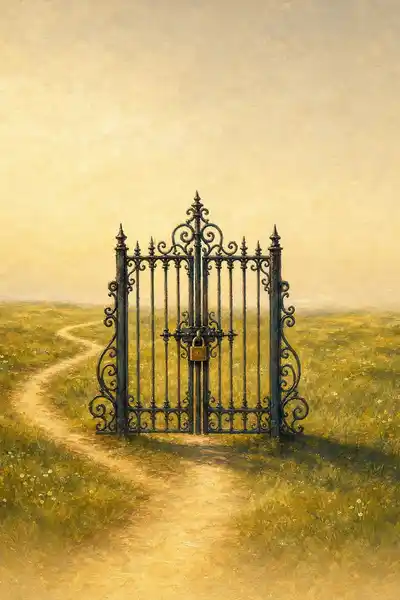
Building without gatekeepers
Description
In the spring of 2005, two twenty-one-year-olds from the University of Virginia drove to Boston to pitch a startup accelerator called Y Combinator. Their idea was a phone-ordering service for takeout food, and the man across the table, Paul Graham, rejected it on the spot. Alexis Ohanian and Steve Huffman got back on the train, deflated. Then Graham called them before they'd made it home and told them to come back — the food idea was dead, but he wanted them anyway. Build something else, he said. What they built, over a summer in a cramped apartment, was a site where anyone could post a link and everyone else could vote it up or down.
That site was Reddit. Sixteen months later, they sold it to Condé Nast for a sum reported at somewhere between $10 and $20 million. Ohanian was twenty-three. The number matters less than what it represented: two people with no permission from anyone — no network, no pedigree, no gatekeeper's blessing — had built something millions of strangers wanted to use, and they'd done it with a laptop and a server. The barrier that had always stood between a good idea and the people it might reach had, for a certain kind of project, quietly collapsed.
In his book, Ohanian turns that experience into an argument about the moment we're living through. The internet, he insists, is the most open distribution system humans have ever had — and the people who understand this early get to build without asking. Yet the openness is not automatic, and it does not do the work for you. That tension is what the book keeps circling.
The question we’re asking : What does it actually mean to build something in a world where nobody's permission is required first?What we’ll see : How a rejected pitch became Reddit, and what Ohanian draws from it about an internet that lets anyone start.
Table of contents
01 Chapter 1 — Two roommates and a rejected pitch
Ohanian and Huffman had met freshman year at Virginia, assigned to the same dorm hallway. By senior year they'd talked themselves into wanting to start a company rather than take the consulting and law-school paths in front of them. The takeout idea — they called it MyMobileMenu — was their ticket. It got them into the room with Paul Graham, and Graham's rejection, followed almost immediately by his reversal, became the origin myth Ohanian tells with real affection. The lesson he pulls from it is not that they were geniuses. It's that they were willing to keep going after a no, and that the person judging them cared more about the founders than the pitch.

02 Chapter 2 — The internet as a level field
The core claim of the book is almost stubbornly optimistic: the internet is the great equalizer of distribution, and we're only beginning to grasp what that means. For most of history, reaching a large audience required owning or renting expensive infrastructure — a newspaper, a television network, a chain of stores, a record label with radio connections. Those things were controlled by a small number of people who decided what got through. The web, Ohanian argues, dissolves that chokepoint. A charity, a band, a software tool, a joke, a movement — any of them can now go from one person to millions without a single intermediary signing off.
He fills the book with examples of people who did exactly that. He tells the story of Kickstarter and of independent creators funding projects directly from the people who wanted them. He points to Humble Bundle, the pay-what-you-want games storefront he'd advised, and to campaigns where an ordinary person's idea found its audience through sheer word of mouth online. The through-line is that talent and attention no longer have to route through a gatekeeper who might say no for reasons that have nothing to do with quality — cost, connections, taste, plain bias.
03 Chapter 3 — Make something people want
If the internet removes the gatekeeper, it does not remove the harder problem: someone still has to make something worth using. Ohanian borrows Y Combinator's unofficial motto — make something people want — and treats it as the whole game. An open field means anyone can start, which also means everyone does, and the noise is deafening. What survives is not the loudest launch or the cleverest business plan but the thing that genuinely solves a problem or delights the people who find it. The permission may be gone, but the demand for real value is not.
He's blunt about how unglamorous this is. The book reads, in stretches, like a practical manual: talk to your users constantly, ship early and imperfect, watch what people actually do rather than what they say, iterate without ego. Reddit succeeded not because its founders had a grand vision fully formed but because they kept adjusting the thing until it fit. He warns against the seductive trap of building for an imagined audience — of falling in love with a feature no one asked for. The crowd that Reddit had handed the keys to was also the crowd that told the founders, relentlessly, what was broken.
04 Chapter 4 — Permissionless, and what that costs
Step back from the individual stories and the book is really making a claim about power — where it used to sit and where it's moving. For a century, the ability to reach people at scale was concentrated in institutions that could afford the infrastructure and were trusted to run it. Ohanian's argument is that the internet has redistributed that ability outward, to anyone with a connection and something to say. The word he keeps circling, even when he doesn't use it, is permissionless: you no longer have to be chosen. You can simply begin, and let the crowd decide whether you continue.
That's a genuinely radical shift, and Ohanian is right that it produced Reddit, Kickstarter, the SOPA revolt, and a thousand quieter successes that a gatekept world would have smothered. But the book's optimism sits alongside a tension it doesn't fully resolve. Removing the old gatekeepers doesn't produce a permanent open field; it produces a race to become the new gatekeeper. The platforms that let anyone build — the app stores, the search engines, the social feeds, and yes, Reddit itself — accumulate their own power to promote, demote, and quietly decide what surfaces. Permissionless entry can coexist with a very small number of companies controlling where the attention flows.
05 Conclusion
The train ride back from Boston in 2005 is where the book keeps returning, because it holds the whole idea in miniature: a no, a reversal, and then a summer in which two people with nothing but a laptop built something millions of strangers wanted. Ohanian sold that something before he could legally rent a car without a surcharge, and he spent the years afterward trying to explain why it had been possible — not for him specifically, but for anyone paying attention to what the internet had quietly become.
Related books