When
The science of ideal timing
Description
Timing has long been seen as an art, but research now shows it is a science with definitive laws. When we make decisions has a major impact on outcomes. There are optimal times for productivity, performance, creativity, and health. Our energy levels and cognitive abilities fluctuate in predictable daily and seasonal patterns. Matching the right tasks to our body's rhythms leads to better results.
The time of day affects learning, focus, memory retention, persuasiveness, ethical behavior, and more. Small adjustments to our schedules can generate significant gains. Understanding the hidden patterns governing our days allows us to work smarter and live better. Timing research offers practical guidance for individuals and organizations on scheduling for success. Leveraging these scientific insights, we can make better personal and professional decisions about when to act.
Table of contents
01 Ride the daily waves
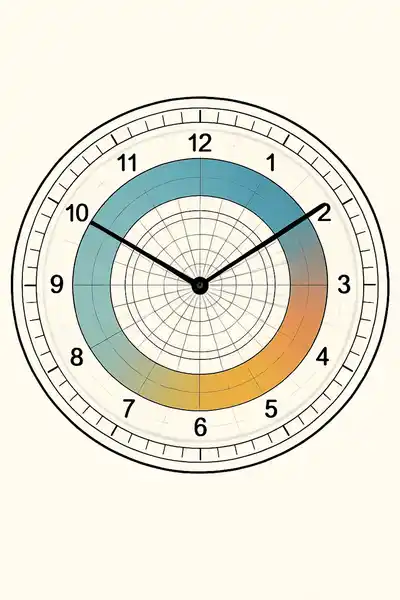
Understanding and leveraging the natural ebb and flow of energy levels throughout the day can significantly enhance productivity and alertness. Most people experience a daily pattern of peaks and troughs in their energy, which can be predictable. By recognizing these patterns, individuals can schedule their most important tasks during periods of natural alertness to achieve better results.
Cornell University sociologists conducted a study analyzing over 500 million tweets from 2.4 million users across two years, revealing consistent patterns in people's behavior during their waking hours. This peak-trough-rebound pattern is not only evident in personal energy levels but also reflects in various societal aspects, including stock market trends.
To make the most of these patterns, scientists categorize individuals into three chronotype categories: "Larks," who are early risers and feel most energetic in the morning; "Owls," who are more alert in the late afternoon or early evening and make up about 25% of the population; and "Third birds," who represent over 60% of people and have fluctuating energy levels rather than a set pattern of morning or evening energy.
Identifying your chronotype allows you to tailor your work schedule to your most alert periods, leading to improved performance. While online quizzes can provide some insight, a more accurate method is to track your alertness systematically over a week using a journal. By setting an alarm to go off every 90 minutes during waking hours and recording your current activity, mental alertness, and energy level on a scale of 1-10, you can identify your chronotype and understand when your energy dips occur.

02 Leverage project milestones
Project beginnings, midpoints, and endings are not just separate moments in time. They present opportunities to use time more effectively. A bad start can be overcome by starting over, perhaps with different partners. Midpoints allow for reinvigorating enthusiasm for projects. Endings inject meaning into life and work. Use these waypoints wisely.
We can influence beginnings and the effects of imperfect ones. The recipe is simple. In most efforts, be alert to the power of starts and try to begin strongly. If that fails, attempt a fresh start. If the start is beyond control, get others to collectively commence. The principles for good beginnings: Start properly. Restart. Start together.
A solid project start boosts success odds. That's why people make January 1 resolutions - that date is prominent mentally, so it's a good commencement point. Fortunately, January 1 isn't the only effective beginning. There are over 80 annual days for fresh starts, like the first of each month or season and personal milestones such as birthdays.
In addition to linking project launches to key dates, preview potential problems via "premortem" meetings. Assemble the team and imagine the initiative already failed. Identify reasons like unclear tasks, wrong staffing, or ambiguous leadership. Address those issues now to avoid real failures later.
New job beginnings also warrant planning. Research-backed ideas include: Visualize already occupying the role to start strongly on day one. Let early results demonstrate abilities rather than overpromising initially. Stockpile initial motivation to withstand inevitable energy drops when novelty subsides. Schedule small wins to build early momentum and reputation.
03 Sync team rhythms
Synchronizing with others is often perceived as a simple, methodical process, but true collaboration demands more than just mechanical interactions. Real coordination is rooted in creating a sense of community within the group and upholding a unified, compelling goal that drives its members.
This journey inevitably reveals facets of each individual's personality, sometimes highlighting strengths and other times exposing weaknesses. Therefore, ensuring everyone remains on the same page is an ongoing task that requires diligent leadership and effort.
Daniel Pink, an author, points out that humans are fundamentally social beings. Much of our endeavors in work, education, and personal life involve some level of coordination with others. Our survival and success are deeply dependent on our ability to synchronize our actions with those around us, both spatially and temporally. While managing our personal schedules is important, the timing within a group is equally critical. Hence, grasping the nuances of collective coordination is crucial.
Being part of a high-functioning team offers immense satisfaction. Collaborating with others towards a common vision of making a significant difference, as Steve Jobs once said, injects a distinct energy into the endeavor. Beyond professional settings, engaging in group activities like joining a choir or band, starting a running group, participating in a rowing club that emphasizes teamwork, taking synchronized dance or yoga classes, joining spontaneous public dance acts, or even enrolling in tandem cooking classes can significantly boost personal energy and motivation. These activities, while not directly related to professional development, foster skills and mindsets that are beneficial in collaborative work environments.
Related books