
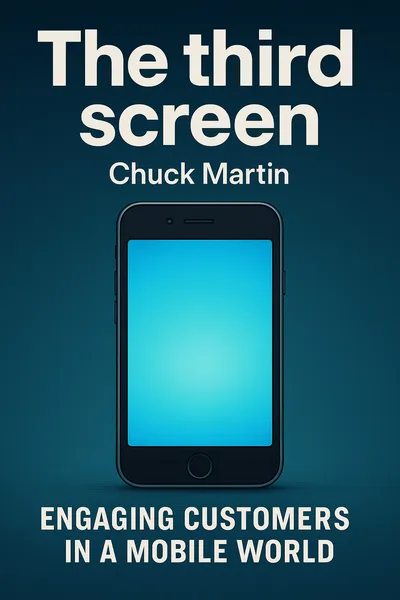
The third screen
Engaging customers in a mobile world
Description
Television was the first medium to transform marketing, allowing messages to be broadcast to millions at once, with viewers passively absorbing content. The advent of personal computers marked a shift to interactive marketing, as consumers engaged directly with brands online. Now, mobile devices are reshaping the landscape, enabling real-time, peer-to-peer communication and information sharing at the point of sale.
This evolution towards mobile commerce demands marketers to engage in conversations and enhance the customer experience. Mobile technology not only facilitates transactions but also revolutionizes the entire shopping journey, emphasizing hyperlocal marketing and personalized customer interactions, thereby redefining brand presence in the digital age.
Table of contents
01 The evolution of mobile marketing
The emergence of mobile commerce, or m-Commerce, as a dominant player in the market can be attributed to two significant shifts. The first is the technological revolution that has made mobile marketing not only feasible but increasingly widespread. The second shift is in consumer behavior, with individuals quickly adapting to and embracing these technological advancements. Understanding the impact of these factors is essential to grasp the essence of m-Commerce fully.
The technological landscape has seen a dramatic transformation, setting the stage for the rise of mobile marketing. The introduction of the internet in the mid-1990s required consumers to invest in computers, subscribe to internet services, and navigate the complexities of digital technologies, which was a considerable hurdle. However, the infrastructure is now well-established, and the widespread adoption of the internet has made people more comfortable with web-based business models and mobile technology. This ease of access has paved the way for a smoother transition into mobile marketing. The mobile industry, currently in a phase of rapid expansion, is reminiscent of the early days of the World Wide Web in 1995. This period is characterized by a boom in mobile startups, innovation, and investment, mirroring the explosive growth witnessed in the early internet era.

02 The future of mobile marketing
Embrace push and pull
Mobile marketing operates on a dynamic push-pull mechanism, allowing marketers to actively send tailored advertising messages and offers to consumers, diverging from the mass-market approach of traditional television commercials. Conversely, empowered consumers have the liberty to seek out information, ranging from product reviews to updates, at their convenience. This interaction is not limited to peer exchanges but extends to valuable promotional content provided by companies. Among the myriad of strategies to engage mobile users, text messaging stands out for its effectiveness. By opting in, consumers can receive messages that guide them to websites for further information, seamlessly blending the push-pull model. This strategy is particularly potent for promoting one-time events, as demonstrated by a chevrolet dealership's successful text message campaign that significantly boosted sales. The advent of multimedia messaging service (mms) in many u.S. Cell phones has further enriched mobile marketing, allowing for the transmission of photos and videos, which have proven to be 20% more effective than text alone. Companies like reebok and nike have leveraged mms to enhance their marketing campaigns with multimedia content. Moreover, the weather channel exemplifies a service so inherently valuable that it attracts consumers without the need for initial incentives, showcasing the potential of mobile marketing when executed with a clear strategy, defined goals, and adaptability.
Experiment, learn, adapt
In today's digital age, engaging with mobile consumers requires a flexible and experimental approach, as mobile technology has liberated users from stationary computing, marking a significant shift from the past. Unlike the "launch and learn" strategy of the early web era, the mobile market's established customer base demands a more nuanced method. The essence of mobile commerce (m-commerce) lies in its personalized interaction, where customers dictate their terms of engagement, making a one-size-fits-all strategy ineffective. Companies must embrace a cycle of testing, learning, and evolving to discover what resonates with their audience. A prime example of this methodology is kraft's ifood assistant app, which underwent three phases of development, each focusing on expanding its features based on consumer feedback. Initially centered on recipes, the app expanded to include more mobile platforms, budget-friendly options, and enhanced shopping list capabilities. The final phase introduced barcode scanning and social sharing features, alongside a partnership with coupons.Com for coupon delivery. Kraft's strategy of starting with a free version to encourage upgrades exemplifies the importance of adapting to mobile dynamics, where new platforms and technologies constantly emerge. Businesses are advised to adopt a test-and-learn approach, seeking customer feedback and cautiously integrating new technologies to ensure they align with their objectives and meet consumer demand. This strategy prevents resource wastage on fleeting trends and ensures meaningful innovation.
Related books