The Telomere Effect
How lifestyle shapes our cellular aging
Description
In 1975, a young researcher named Elizabeth Blackburn was studying a pond organism, Tetrahymena, under a microscope at Yale — a single-celled creature with an unusually large number of chromosome ends. She noticed that those ends carried a short repeated sequence of DNA, the same little unit copied over and over. It looked like nothing much. Decades later, that observation, extended with Carol Greider and Jack Szostak, would win the 2009 Nobel Prize in Physiology or Medicine, and reframe how we think about growing old.
The repeated sequence sits at the tip of every chromosome, and it has a name that has since escaped the lab: the telomere. Blackburn spent her career mapping how these tips work, and how a cell can rebuild them using an enzyme her team discovered, telomerase. Years on, she teamed up with a health psychologist, Elissa Epel, who had been asking a different sort of question — whether the pressures of an ordinary life, the caregiving, the worry, the sleeplessness, leave a mark down at that molecular level. Their answer, worked out across a long collaboration, became a book that spent time on bestseller lists and changed how a lot of readers picture aging.
What they describe is not a fountain of youth, and they are careful to say so. It is something quieter and stranger: a measurable link between how we live and how our cells hold up over time. The telomere turns out to be less a fixed genetic countdown than a register that responds — to stress, to sleep, to food, to the neighborhood we live in. Which raises a real question about where the line between fate and habit actually falls.
The question we’re asking : If aging is written into our cells, how much of that writing do our daily lives quietly revise?What we’ll see : How a discovery about the tips of chromosomes turned into a claim about the way we live — and what it does and doesn't let us control.
Table of contents
01Chapter 1 — The caps at the end of the chromosome
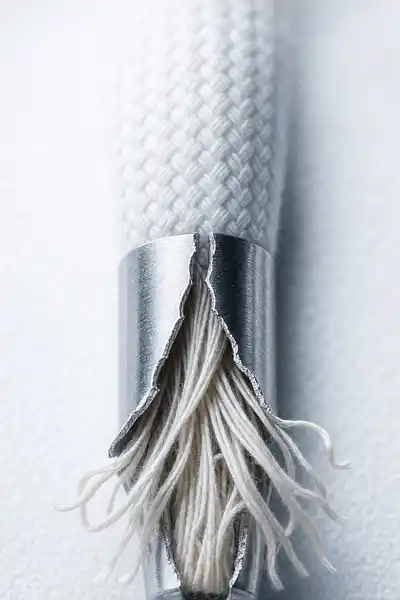
Every time a cell divides, it has to copy all of its DNA. The machinery that does this copying has a flaw known since the 1960s: it can't quite finish the job at the very end of each strand. A little is lost with every division. Left unprotected, the loss would eat into genes the cell needs to survive. Telomeres are the solution evolution landed on — stretches of repeated, non-coding DNA that sit at the ends like protective caps, taking the hit so the useful genes underneath stay intact.
In humans the repeat is the sequence TTAGGG, laid down thousands of times. Blackburn's work, and the work she shared the Nobel for, showed that these caps shorten as we age and as our cells divide. When a telomere wears down past a critical point, the cell can no longer divide safely. It stops — entering a dormant, aged state biologists call senescence — or it dies. Multiply that across the tissues of a body over decades, and you have a plausible mechanism for a lot of what aging feels like.

02Chapter 2 — When the clock runs down early
The finding that turned telomeres from cell biology into a story about human lives came from a study Epel and Blackburn published in 2004. They looked at mothers caring for chronically ill children — a group under sustained, unrelenting stress. Some had been at it for years, some for months. When the researchers measured the telomeres in the women's immune cells, a pattern emerged: the longer a mother had been under this strain, and the more stressed she reported feeling, the shorter her telomeres. The gap between the most and least stressed was striking — on the order of a decade of extra cellular aging.
That single result did a lot of work. It suggested that something as intangible as chronic psychological stress could leave a physical trace at the level of DNA. It didn't prove that stress caused the shortening on its own, and the authors were careful about that. But it opened a line of research that a great many studies have since followed, linking short telomeres not just to stress but to earlier onset of the diseases we associate with age — cardiovascular disease, diabetes, weakened immunity, some cancers.
03Chapter 3 — The mind gets under the skin
Much of the book is Epel's territory: the specific habits and states of mind that the research associates with better-maintained telomeres. None of it is exotic. Regular aerobic exercise shows up consistently, along with the kind of movement that raises the heart rate for sustained stretches. Sleep matters — both duration and quality, with poor sleep linked to shorter telomeres in several studies. Diet points the familiar direction: whole foods, fiber, omega-3s associated with slower shortening, while sugary drinks and heavily processed food track the other way.
The more interesting claim concerns the mind. Not stress itself, which is often unavoidable, but the way we meet it. The authors distinguish between threat responses — where a challenge feels like danger, the body braces, the heart pounds with dread — and challenge responses, where the same difficulty is met as something to engage. The physiology differs, and over time the wear on telomeres may differ too. Hostility, pessimism, and rumination, the mental habit of chewing the same worry without resolution, all show up in the research as costs.
04Chapter 4 — Aging as something we half-write ourselves
Step back from the biology and the book is making a larger argument about where health comes from. For a long time the story about aging was mostly genetic — you inherited a hand of cards and played it out. The telomere research complicates that. Telomere length has a heritable component, but it is also visibly shaped by exposure and behavior, which means aging is neither pure fate nor pure choice. It is something closer to a draft we keep revising, within limits we did not set.
The part of the book that has aged best, arguably, is where it refuses to make this purely individual. Blackburn and Epel are clear that telomeres respond to conditions a person often can't control — chronic financial strain, unsafe neighborhoods, exposure to pollution, the accumulated weight of discrimination. Studies have found shorter telomeres in populations under sustained social disadvantage. This turns a self-care message into something with a public dimension: if stress erodes cells, then the distribution of stress across a society becomes a health question, not just a private one.
05Conclusion
The line runs from a pond organism under a microscope in the 1970s to a mother caring for a sick child, and the thread connecting them is a repeated sequence of DNA that most of us will never see. Blackburn spent decades understanding how those caps protect the genome and how a cell rebuilds them; Epel showed that the wear on them tracks with the texture of an ordinary human life. Put together, their work moved the telomere out of the laboratory and into the daily register of sleep, food, worry, and circumstance.
Related books