
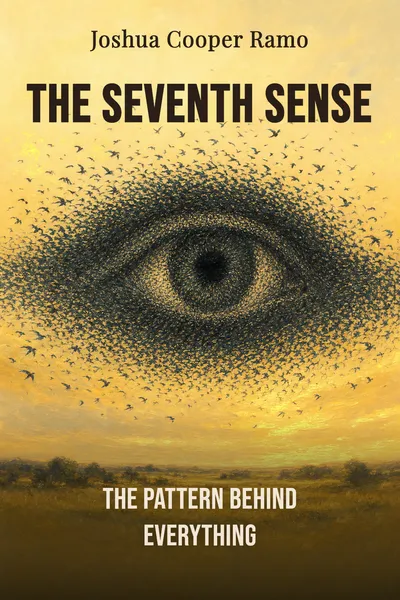
The Seventh Sense
The pattern behind everything
Description
In 1806, on the eve of the battle of Jena, the philosopher Georg Wilhelm Friedrich Hegel was finishing a book while Napoleon's army marched into his town. Hegel later described watching the French emperor ride past his window and feeling that he was seeing "the world-soul" on horseback — history itself, moving. What unsettled Hegel wasn't the man but the sense that an old order was being replaced by something his contemporaries could not yet name. Joshua Cooper Ramo, a former journalist turned geostrategist, opens his 2016 book The Seventh Sense with that scene because he thinks we are living through a moment with the same shape: the instruments we use to read the world have quietly stopped working, and most of us haven't noticed.
Ramo's claim is blunt. The endless terror alerts, the refugee waves, the economy nobody seems able to steer, the elections that defy every forecast, the fortunes made overnight, the medical breakthroughs — we tend to file these as separate crises, each with its own experts and its own headlines. He argues they are not separate at all. They are symptoms of one underlying change: everything of consequence is now connected to a network, and connection changes the nature of the things it touches. A bank, a virus, an idea, a friendship, a weapon — plug any of them into a network and it starts to behave differently.
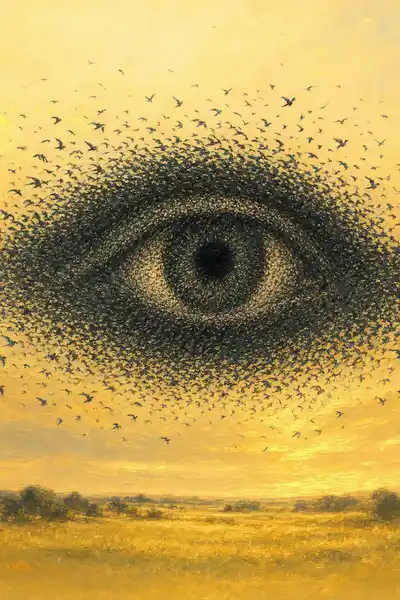
The trouble is that our instincts were trained for a world of separate objects. We are good at judging a thing on its own terms. We are bad at seeing what it becomes once it is wired into everything else. Ramo borrows a word from Friedrich Nietzsche, who once wrote that history demands a new organ of perception — a sense beyond the usual five and beyond even common sense. That, in Ramo's telling, is what our era is asking us to grow.
The question we’re asking : If terror, markets, elections and epidemics are all connected, what is the connection actually doing — and can we learn to perceive it?What we’ll see : How a single shift in the fabric of the world reorganizes power, safety and fortune, and what it takes to read that shift before it reads us.
Table of contents
01Chapter 1 — A Prussian philosopher and a Chinese warlord walk into a networked age
Ramo's method is to reach for old thinkers to describe a new condition, and his opening move is that Hegel scene at Jena. The point isn't nostalgia. Hegel's insight was that historical change is often invisible to the people living through it, because their instincts belong to the order that is ending. A soldier at Jena could see cavalry and cannon; he could not see that the age of aristocratic warfare was dissolving in front of him. Ramo thinks we are that soldier, and the thing dissolving is the world of discrete, separable objects that our schools, governments and companies were all built to manage.
The organizing concept is the network. Not the internet specifically, though the internet is the loudest example, but the general fact of dense connection — of nodes linked to other nodes, passing information, money, disease, influence back and forth at speeds and volumes without precedent. Ramo's core proposition is that connection is not a neutral pipe. It transforms whatever flows through it and whatever sits at its ends. A stock exchange run by shouting men in a pit is a different beast once it becomes a lattice of servers trading in microseconds. Same function, new nature.

02Chapter 2 — What connection does to the things it touches
The heart of the book is a single observation, turned over and over: connection changes the character of everything. Take money. A currency was once a thing you held, backed by a government you could point to. Wired into global markets, it becomes a signal that can move a trillion dollars across borders before a minister finishes a sentence. The 2008 financial crisis, in Ramo's reading, wasn't a failure of any one bank so much as a failure to grasp that banks had become densely connected nodes, each one's trouble instantly everyone's trouble. The regulators were watching institutions. The danger was in the links between them.
The same logic reshapes violence. A terrorist cell in the old model was a local hazard, contained by geography. Connected to a network, it becomes something else: an idea that recruits across continents, coordinates through encrypted apps, and turns a video into a weapon that detonates in a thousand places at once. Ramo's point is not that the internet made people cruel. It is that connection removed the friction — the distance, the delay, the isolation — that used to keep local dangers local. What was contained is now contagious.
03Chapter 3 — The gates, and the people who hold them
If connection is the new terrain, the most valuable position on it is the gate. Ramo means the points through which the flows must pass — the search engine everyone uses, the operating system every phone runs, the payment rails every transaction crosses, the platform where a billion people meet. Whoever controls a gate controls the terms of connection for everyone downstream, and networks, by their nature, funnel traffic toward a few of them. Power in this world is less about owning territory than about owning the doorways.
This is where he thinks the old political vocabulary breaks down. We still argue about nations, borders and armies, but the entities that increasingly decide what is possible are the companies and protocols that hold the gates. A firm that controls how a billion people find information wields a kind of authority no medieval king possessed, exercised not through law but through defaults, rankings and terms of service that reshape behavior silently. Ramo isn't cheering this. He is pointing out that a new aristocracy of gatekeepers is forming while our institutions keep legislating as if the map were still drawn in countries.
04Chapter 4 — Learning to think like the network
Step back from the examples and Ramo is really making a demand on how we perceive. The seventh sense is not information you can acquire by reading one more briefing; it is an instinct you have to grow, the way a chess master stops seeing individual pieces and starts seeing the whole board as a field of forces. He argues that the people already thriving — the founders, the strategists, the movements that keep surprising us — share this instinct less as knowledge than as reflex. They look at any object and automatically ask what connection is doing to it. The rest of us are still asking what the object is.
That reframing changes what it means to be safe, to be powerful, or to belong. Safety used to mean building a wall around what you valued. In a connected world, Ramo suggests, the things worth having are precisely the things that must stay connected to have value — a currency, a company, an idea — so the old instinct to seal off and protect can hollow out the very thing it guards. Power stops meaning accumulation and starts meaning position: sitting at the right junction of flows. Even belonging shifts, as identity attaches less to a place on a map than to a place in a network.
05Conclusion
Return to Hegel at his window, watching Napoleon and feeling an order end. Ramo's wager is that we are in a comparable interval, aware that our tools have stopped fitting the world but not yet equipped with the ones that would. The terror, the crashes, the improbable elections, the sudden fortunes and the medical marvels are not a random pileup of misfortunes and wonders. They are the readable signature of a single change — the moment connection became the master fact of the world — showing up in every domain at once.