The Prosperity of Vice
War, growth and the modern economy
Description
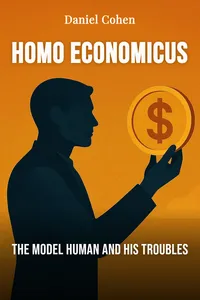
For most of human history, nothing happened to the standard of living. A peasant in the year 1000 lived roughly as his ancestors had a thousand years earlier, and roughly as his descendants would for centuries after. The economist Daniel Cohen opens his book The Prosperity of Vice, published in French in 2009, with this flat, almost unbearable fact: growth — the idea that each generation might be materially richer than the last — is a newcomer. It arrived in Europe barely two hundred years ago, and it broke a silence that had lasted since the first cities.
Cohen's question is not the usual one. He does not ask why the West grew rich. He asks what growth is made of — and finds, uncomfortably, that its raw materials include a great deal of violence. War, conquest, plunder and the slow business of taming them run through his account of how the modern economy came to be. Prosperity, in his telling, is not the opposite of vice. It is what vice becomes when a society learns to channel it, redirect it, and eventually price it into ledgers instead of settling it with armies.
That reframing matters now more than when Cohen wrote it. The center of gravity of the world economy has been sliding east for a generation, and the old European story — enrichment purchased partly through bloodshed, then partly through its containment — is being replayed at a scale the nineteenth century never imagined. Cohen wrote as a European looking backward and forward at once, and his book reads less like economic history than like a warning wrapped in one.
The question we’re asking : If growth is so recent, and so entangled with violence, what exactly did the modern economy learn to do with the appetites that used to end in war?What we’ll see : How a two-century-old habit of getting richer emerged from a very old habit of taking by force — and what happens when the rest of the world takes it up.
Table of contents
01Chapter 1 — The long sleep before growth
Cohen's starting point is a number that still surprises economists: for millennia, the average human income barely moved. He leans on the work of Angus Maddison, who spent decades reconstructing world output back to the Roman Empire, and the picture Maddison drew is nearly flat. A Chinese farmer under the Song dynasty, a Roman under Augustus, a French villager under Louis XIV — measured by what they could eat, wear and heat, their lives were of the same order. Wealth accumulated in palaces and cathedrals, but the mass of humanity stayed poor in a way that felt permanent because, for all practical purposes, it was.
Why the long sleep? Cohen borrows the answer from Thomas Malthus, the English clergyman who, in 1798, gave the trap its name. Any gain in productivity — a better plow, a wetter decade, a new crop — was swallowed by more mouths. Population rose to meet the food, then pressed against it, and famine or disease pushed it back down. Progress existed, but it turned into people rather than into prosperity. Humanity ran hard and stayed in place, generation after generation, on a treadmill it could not see.

02Chapter 2 — When war paid, and then stopped paying
The escape did not come cheap, and it did not come clean. Cohen refuses the comforting story in which Europe simply out-invented everyone. The Industrial Revolution grew inside an economy already fattened by three centuries of plunder — the silver of the Americas, the labor of enslaved Africans, the trade routes secured by naval guns. Cotton spun in Manchester was grown by slaves in the American South. The first great machines ran on raw materials that Europe had learned to extract by force. Prosperity and predation, in this period, are not two stories but one.
And yet Cohen's deeper point is about a reversal. For most of history, war paid. A successful conquest transferred land, treasure and people from the vanquished to the victor, and the arithmetic was favorable. But as economies came to rest on machines, factories, skilled workers and complex commerce rather than on farmland, the arithmetic quietly flipped. You cannot loot a productive economy the way you loot a granary. Bombing a rival's factories destroys the very wealth you hoped to seize; killing skilled workers erases the value they carried in their heads. War, once a profitable enterprise, was becoming a way to burn money.
03Chapter 3 — The engine that has no brakes
If growth once acted as a substitute for war, Cohen is far from serene about the substitute. Modern growth, he argues, has a temperament of its own, and it is closer to addiction than to contentment. The promise of capitalism was that abundance would eventually satisfy us. Instead, each rung climbed reveals another above it. Cohen turns here to a strand of economics running from Thorstein Veblen to Richard Easterlin: much of what we want is not comfort in absolute terms but standing relative to our neighbors. And relative standing, by definition, cannot be shared out to everyone at once. The race has no finish line.
This is why rich societies, materially safer than any in history, do not report themselves much happier than they were decades ago. Easterlin noticed the puzzle in the 1970s: past a certain threshold, more income buys surprisingly little extra satisfaction, because our sense of "enough" rises with our means. We adapt to prosperity the way our ancestors adapted to poverty, and then we look around to see how we are doing compared to everyone else. Growth becomes a machine that must keep accelerating simply to hold our contentment steady — a treadmill again, faster and better upholstered, but a treadmill all the same.
04Chapter 4 — The measure of a civilization
Stand back from Cohen's history and a single wager comes into view. The modern economy is a bet that societies can keep their oldest appetites — for more, for status, for dominance — pointed at production rather than at each other. Growth is not merely a happy fact of the last two centuries; it is the mechanism by which the West domesticated its own violence, converting the energy that once fed conquest into the energy that feeds commerce. Cohen's uneasy suggestion is that we do not know how sturdy that conversion really is, because it has only ever been tested during a long, unbroken climb.
This is where the eastward shift he watched becomes the true subject of the book. Asia's rise is not a footnote to the Western story; it is that story replayed at a scale that dwarfs the original. China alone lifted hundreds of millions of people out of the poverty that Maddison's flat line describes, compressing into a few decades a transformation that took Europe a century and a half. If Cohen is right that development is a way of taming violence, then the entry of billions of new participants into the growth machine is the largest peace experiment in human history — and also the largest strain on the planet's ceiling.
05Conclusion
Cohen began with a peasant whose life had not changed in a thousand years, and the distance we have traveled from that figure is genuinely staggering. In two centuries, the flat line bent skyward, mass poverty stopped being the human condition, and the profit went out of war. None of it was inevitable, and Cohen refuses to let us treat it as either a moral triumph or a mere technical accident. It was a strange alchemy in which the very appetites that once ended in bloodshed were rerouted into the making of things.
Related books