The Paradox of Choice
Too many choices, too much regret
Description
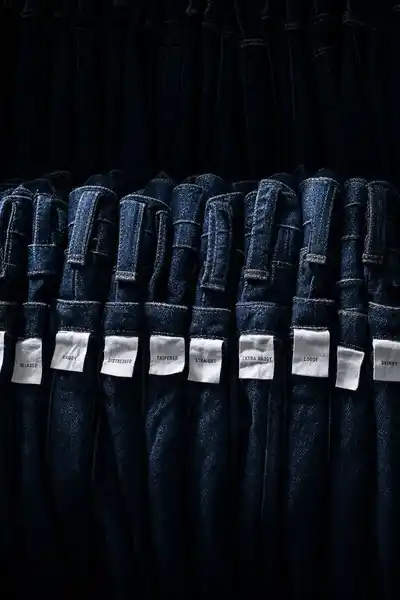
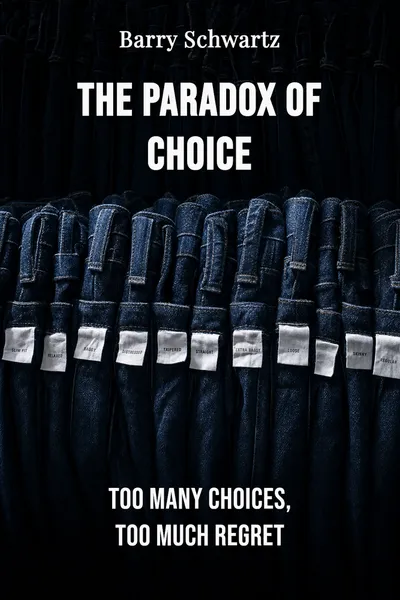
Somewhere around the turn of the millennium, the psychologist Barry Schwartz walked into a Gap looking for a pair of jeans. He gave his size, expecting to walk out a few minutes later. Instead the salesperson asked whether he wanted slim fit, easy fit, relaxed fit, baggy or extra baggy; stonewashed, acid-washed or distressed; button-fly or zipper; faded or regular. He tried on several, found a pair that fit better than any jeans he had owned, and left the store vaguely dissatisfied. That small deflation became the opening scene of his 2004 book, The Paradox of Choice.
His argument runs against one of the deepest assumptions of modern life: that more options make us better off. In a market economy, choice is treated as an unqualified good, and freedom is often measured by how many options we have. Schwartz doesn't dispute that some choice is essential to well-being. What he documents is that the relationship stops being helpful past a certain point, and then quietly reverses. Somewhere between no choices and a hundred, added options begin subtracting from our satisfaction rather than adding to it.
He borrows the register of Alvin Toffler's Future Shock — a book-length worry about a culture overwhelmed by its own acceleration — and points it at the supermarket aisle, the 401(k) enrollment form, the college application, the search for a doctor. The affluence that was supposed to liberate us, he suggests, has left a lot of people more anxious and more prone to regret than the generation that had less. The book asks why.
The question we’re asking : If having options is supposed to make us free and happy, why does an abundance of them so often leave us anxious, paralyzed, and quietly disappointed?What we’ll see : How a shopping trip becomes a theory of modern unhappiness, and where the promise of endless choice quietly breaks down.
Table of contents
01Chapter 1 — The jeans that started it
The jeans anecdote works because it is so ordinary. Nothing went wrong. Schwartz got better jeans than before and paid a fair price. And yet the experience left a residue of dissatisfaction that the old, dumber system — one style, take it or leave it — never produced. That mismatch is the whole puzzle in miniature: an objectively better outcome that feels subjectively worse. Schwartz spends the book explaining why that isn't a quirk of one shopper's mood but a predictable feature of how choice scales.
He builds the case by inventory. A single suburban supermarket he describes carries a few hundred varieties of cookies, dozens of laundry detergents, hundreds of breakfast cereals. An electronics store offers enough component combinations to assemble millions of distinct stereo systems. None of this is fraud or waste in the usual sense; each option exists because someone, somewhere, prefers it. The trouble is that every shopper now has to move through all of it, and the mental work of doing so is real even when it goes unnoticed.

02Chapter 2 — Two ways to walk into a store
The most useful idea in the book is a distinction Schwartz borrows from the economist Herbert Simon and turns into a portrait of two kinds of people. There are maximizers, who need to be sure that every choice they make is the best one possible. And there are satisficers, who settle for something that is good enough and don't fret about whether an unseen alternative might have been better. A satisficer still has standards — the sweater has to be soft, the price has to be right — but once those standards are met, the search ends.
The maximizer's search never really ends, because it can't. To know you bought the best sweater in town, you would have to survey every sweater in town, and then wonder about the next town. In a world of ten options, maximizing is exhausting but survivable. In a world of ten thousand, it becomes a kind of low-grade torment. Schwartz reports research he conducted with colleagues finding that people who score high on maximizing tend to be less happy, less optimistic, and more depressed — and, in one memorable study, that maximizing job-seekers landed objectively better-paying jobs than satisficers while feeling worse about them.
03Chapter 3 — The costs hiding inside abundance
If added options carry hidden costs, Schwartz's task is to name them, and he lists several. The first is paralysis. When faced with too many alternatives, people often make no choice at all. He leans on the now-famous jam study by Sheena Iyengar and Mark Lepper, in which a supermarket display of twenty-four jams drew more curious tasters than one of six — but shoppers facing the smaller selection were roughly ten times more likely to actually buy. He extends the pattern to retirement plans, where each additional block of funds offered measurably lowered the rate at which employees enrolled at all, walking away from free matching money rather than decide.
The second cost is that even a good decision feels worse after the fact. With more roads not taken, the mind fills with what psychologists call opportunity costs — the imagined pleasures of the options you passed up. A beach vacation is diminished by the mountains you might have seen instead; the good jeans are shadowed by the possibly-better jeans on the next rack. Every unchosen alternative subtracts a little from what you actually chose, so satisfaction leaks away in proportion to how much was available.
04Chapter 4 — A freedom that turned on itself
Step back from the jeans and the jam, and Schwartz's real subject comes into view: not shopping, but an ideology. Modern affluent societies have quietly fused two ideas that don't actually belong together — that freedom is good, and that more options equal more freedom. From there it follows, apparently inescapably, that a society should maximize options everywhere, all the time, in everything. Schwartz's argument is that this equation is a category error with real casualties. Autonomy and freedom of choice are genuine goods, but treated as absolutes with no ceiling, they stop delivering the well-being they were supposed to guarantee.
What makes the point more than an academic quibble is where it lands. The book connects the private ache of the overwhelmed shopper to a public trend — the long climb in clinical depression and anxiety across exactly the wealthy, choice-saturated nations that were supposed to have solved the problem of scarcity. If material abundance were straightforwardly good for us, the graph would run the other way. Schwartz doesn't claim choice alone explains the rise, but he insists it belongs in the account, and that a culture congratulating itself on its options has an interest in not noticing.
05Conclusion
Schwartz ends where he began, back in the store, but with a different posture toward it. He offers no manifesto against abundance and no fantasy of returning to the days of one jean and one cereal. His practical suggestions are modest and deliberately unheroic: choose when to choose, learn to want good enough rather than best, deliberately limit the options you let yourself consider, and make more decisions non-reversible so the mind can stop shopping after the fact. The aim is not less freedom but less of the self-inflicted friction that unlimited freedom generates.
Related books