
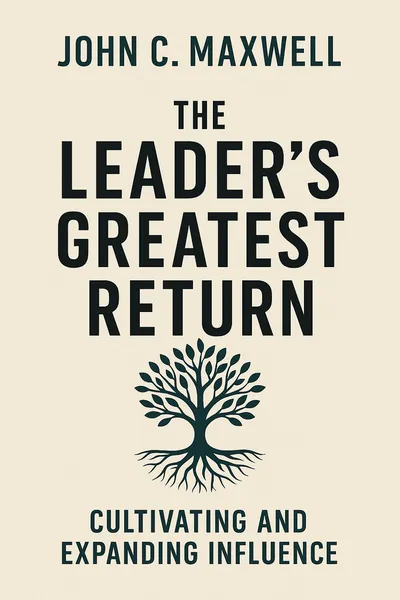
The leaders greatest return
Cultivating and expanding influence
Description
Developing leaders is vital for an organization's success. The greatest return a leader can generate is to develop future leaders who reach their full potential. This is a difficult yet worthwhile 10-step process. Ultimately, a leader's success depends on maximizing their people's abilities, which requires helping others develop as leaders. As Carnegie noted, effective leaders can motivate those more clever than themselves.
To ensure a surplus of ready leaders for future opportunities, organizations need a leadership culture where development is systematic. In this culture, leaders are routinely nurtured through structured programs aligned with business objectives. The result is a pipeline of capable successors ready to fuel continued success. Though challenging, prioritizing leadership development delivers immense rewards.
Table of contents
01 Step #1 - Recognize .
For any organization to thrive, it's essential to define the skills and qualities needed in leaders who can advance its mission and drive progress. Before looking externally, evaluate current employees for potential leadership qualities that can be cultivated. While external leaders with a proven track record can add value, ensuring they align with the company culture is essential. Ideal candidates are those eager to shoulder more responsibility and elevate their teams, adept at navigating uncertainty and complexity with resilience.
Leaders should be driven by results and motivated to challenge the status quo, using inspiration to drive change rather than authority. Their track record should show a history of surpassing expectations. They must maintain their integrity and values under stress and take ownership of their mistakes. They should be self-aware, open to feedback, and committed to personal growth.

02 Step #2 – draw in.
Establishing a leadership table where aspiring leaders can gather to learn and experience leadership firsthand is a valuable initiative for organizations aiming to attract top leadership talent. By offering an open invitation to those interested, it provides an opportunity for fresh talent and those looking to advance to step up and contribute significantly.
To keep the leadership table engaging and developmental, it's crucial to foster a culture that encourages newcomers to actively participate, engage in transparent discussions, and take on new responsibilities to drive change. This environment allows seasoned leaders to mentor emerging ones, facilitating a learning process where leadership skills are both observed and taught. Being in close proximity to strong leaders gives newcomers exemplary role models, from whom they can learn and receive feedback on their leadership journey.
03 Step #3 – connect .
Connecting with people is an essential first step before trying to lead them. Finding common ground builds the foundation for a positive relationship. Attempting to impart wisdom without first establishing mutual understanding will likely fail. People need to know you stand with them before they will stand with you. Leaders who make the effort to understand their people's perspectives and experiences will find it easier to motivate them during challenges.
There are three effective methods to better understand the people you lead: First, consistently try to see situations from their point of view. Great leaders recognize leadership is not about self-interest. You must invest significant time and energy to comprehend how your people think. Meeting them where they currently stand allows for growth rooted in reality. Ask for their take on current circumstances and integrate that understanding into your decisions. While your longer-term goal may be expanding their vision, you must start with their existing lens and build from there.
04 Step #4 – inspire .
Effective leadership transcends traditional motivation techniques, focusing instead on inspiring team members through personal connection.
Leaders today recognize the importance of aligning team members with a purpose that resonates deeply, granting them the autonomy to shape their own paths. This approach fosters a work environment where employees feel valued, trusted, and respected by their peers.
To truly motivate and develop future leaders, it's essential to offer opportunities for both personal and professional growth, encouraging excellence and recognizing achievements. Financial well-being and fair compensation are also key to ensuring team members feel appreciated and secure. Understanding individual motivations is crucial, as it allows leaders to connect on a deeper level, recognizing that motivation varies from person to person.
05 Step #5 – direct.
Developing leaders capable of elevating your organization is a strategic investment that yields significant returns. Your ultimate aim should be to prepare your successors, effectively making your role redundant.
Leadership begins with setting an example; embody the traits of a leader who is continuously learning, applying knowledge, and nurturing talent. Reflect on your personal growth and mentorship efforts daily.
Focus on identifying individuals with high leadership potential and provide them with personalized attention, coaching, and increased responsibility. This investment in their development is crucial. Challenge them with questions that test their decision-making skills, pushing them to think critically and strategically.
06 Step #6 – entrust .
Empowering others to lead is a transformative act that can yield remarkable outcomes. By adopting the 10-80-10 principle, leaders can effectively nurture emerging talents. Initially, setting leaders up for success is crucial. This involves clear communication of goals, aiding their planning with thoughtful questions, providing essential resources, and offering support, before stepping back to let them take charge.
The bulk of the process, the 80 percent, is granting leaders the freedom to develop and implement their strategies, facilitating rather than directing their efforts, and using influence to advance progress. The final phase involves guiding the team to refine their work, acknowledging their achievements, and encouraging reflective learning to glean insights from the experience.
07 Step #7 - strategize .
A strong leader alone cannot match the power of a united team of leaders, each bringing their unique strengths to the table. When these leaders come together, sharing common values and goals, they can achieve what would be impossible individually.
Building such a team starts with selecting individuals who have proven themselves as capable contributors, with a history of excellence in relevant roles. These leaders should have a clear understanding of their skills and be eager to apply them to collective aims. They should also be energized by working with equally motivated peers and be committed to the organization's vision over personal accolades.
The true strength of a leadership team lies in its synergy. A unified vision is crucial, as it ensures that all members are working towards the same organizational objectives.
08 Step #8 – Coach .
Mentoring is a powerful tool for accelerating success and advancement. By investing intentionally in others, especially leaders, the impact of mentoring can extend far beyond the individual to influence many more. Successful mentoring involves a selective approach, choosing mentees with high leadership potential and compatible strengths. Establishing clear expectations from the outset ensures both parties understand their roles, commitments, and the goals of the mentoring relationship. Personalization is key; understanding the mentee's personality, learning style, and strengths allows for a more effective and emotionally resonant mentoring experience.
09 Step #9 – multiply .
Building leadership bench strength is essential for organizations aiming for long-term success. Like sports teams with ready substitutes, companies need a strong pipeline of leadership talent to ensure innovation, business continuity, and adaptability. This bench strength becomes critical when key leaders leave unexpectedly, as it helps minimize disruption from turnover and maintain performance, especially in the wake of the "Great Resignation" affecting hiring and retention.
Strategic efforts are necessary to spot and develop high-potential employees, equipping them with strategic thinking, communication, emotional intelligence, team leadership, and relationship management skills. Mentoring and coaching play a vital role in this process. Managers should actively coach their reports, fostering growth, while a coaching culture promotes continuous learning and leadership development organization-wide. Leaders should focus on empowering others to lead, not just gathering followers.
10 Step #10 - accelerate.
The 80/20 rule, which posits that a majority of outcomes (80%) come from a minority of causes (20%), is particularly relevant in leadership development within organizations. By concentrating on nurturing a select group of top talent, rather than attempting to develop every employee equally, organizations can achieve greater returns. This approach involves identifying high-potential individuals early and providing them with tailored opportunities and support to facilitate their growth. While initial progress may be modest, these efforts can lead to significant organizational transformation over time.
Patience and persistence are essential, as developing human capital and leaders is a gradual process. The investment in talent cultivation today can lead to substantial future payoffs. Moreover, focusing personal efforts on a few promising individuals is more effective than diluting efforts across the entire workforce. Empowering these standout employees to uplift their peers can create a cascading effect of positive development.
Related books