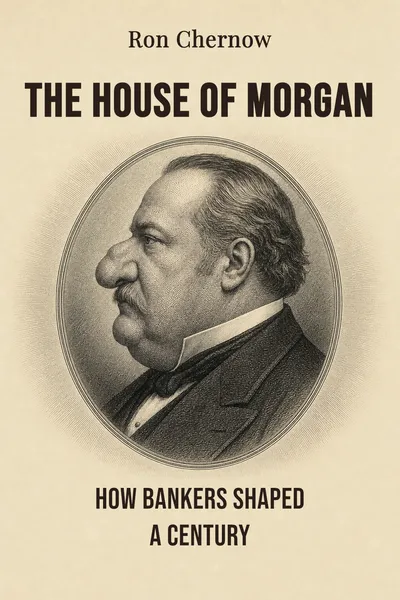
The House of Morgan
How bankers shaped a century
Description
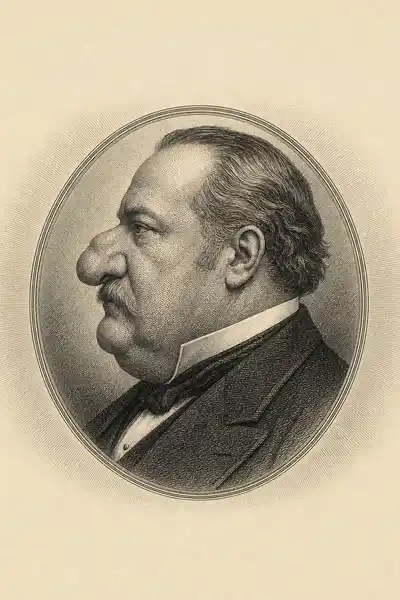
In the autumn of 1907, a run on the New York banks threatened to take the whole American financial system down with it. There was no Federal Reserve, no deposit insurance, no lender of last resort. What there was instead was a seventy-year-old man with a bulbous, disfigured nose and a private library on Madison Avenue. J. Pierpont Morgan summoned the city's frightened bankers into that library, locked the doors, and refused to let them leave until they had agreed to pool their money and stop the panic. He was not a public official. He held no office. He was simply the most trusted banker in the country, and for one long night that trust was the only thing standing between America and collapse.
Ron Chernow's The House of Morgan tells the story of how one family and one firm came to occupy that place — able to steady a nation without a mandate to do so. The saga runs more than a century, from a Connecticut merchant setting up shop in Victorian London to the trading floors of the late twentieth century. Along the way it passes through civil wars and world wars, the crash of 1929, the New Deal that broke the bank in two, and the slow erosion of the discreet, relationship-based finance the Morgans had perfected.
It is a history told through people as much as through balance sheets — the sons who inherited the firm, the partners who ran it, the presidents and prime ministers who owed it favors or resented its reach. And it is a history of a shift, one that quietly reshaped how money moves and who decides where it goes.
The question we’re asking : How did a single private bank end up shaping a century of American and global finance, and what dissolved that power?What we’ll see : How a merchant house in London became the closest thing America had to a central bank — and how the world that made it possible came apart.
Table of contents
01 Chapter 1 — A merchant banker crosses the Atlantic
The dynasty did not begin in New York. It began in London, where a Connecticut-born financier named Junius Spencer Morgan joined the merchant bank of George Peabody in the 1850s and eventually took it over, renaming it J.S. Morgan & Co. In the nineteenth century, London was the capital of world finance, and the United States was a developing country hungry for capital. The men who could stand between the two — channeling British savings into American railroads and government bonds — held enormous quiet power. Junius made himself one of them, building a reputation for caution and reliability that would become the family's most valuable asset.
Chernow's key insight is that this was gentleman banking, or what he calls the world of the great Anglo-American houses. These firms did not chase deposits from ordinary savers or lend to walk-in customers. They served governments, railroads, and large corporations, and they did it through personal relationships that could span generations. A Morgan client was a Morgan client for life, and the bond ran both ways. Reputation was the capital that mattered most, because a merchant bank that lost the market's confidence lost everything at once.

02 Chapter 2 — The Gilded Age banker who was also a central bank
The 1907 panic was the clearest demonstration of a strange truth about Gilded Age America: it had built the largest industrial economy on earth without building the institutions to manage it. There was no central bank. When credit dried up and depositors rushed the banks, there was no public body with the money and the authority to intervene. The vacuum was filled, again and again, by private bankers — and above all by Pierpont Morgan, whose word carried more weight than any regulator's because it was backed by a reputation no politician could match.
Chernow shows that this was both the source of the Morgan mystique and the seed of its undoing. Morgan could stop a panic because everyone believed he would honor his commitments and because he could compel other bankers to fall in line. But a private citizen wielding that much power over the public economy was, to a growing number of Americans, an intolerable idea. Who had elected him? To whom was he accountable? The very indispensability of the man raised the question of why the country depended on him at all.
03 Chapter 3 — The wall goes up between deposits and deals
Under Pierpont's son, Jack, the House of Morgan reached the peak of its prestige between the wars. It floated loans that helped finance the Allied effort in the First World War, brokered the stabilization of European currencies in the 1920s, and remained the bank governments called when they needed serious money raised. Its partners moved between Wall Street and the corridors of Washington and Whitehall as though the two worlds were one. To much of the public, Morgan was less a company than an institution of state that happened to be privately owned.
Then came 1929. The crash and the Depression that followed turned public opinion against Wall Street with a vengeance, and the Morgan name became a lightning rod. Congressional hearings in the early 1930s, led by the investigator Ferdinand Pecora, exposed how the great banks had operated, and the revelations hardened the case for reform. Chernow captures how the firm, long accustomed to deference, suddenly found itself cast as the villain of a national morality play.
04 Chapter 4 — A dynasty dissolves into the market it built
Step back from the individual Morgans and a larger movement comes into view — the one Chernow really wants us to see. His book is organized around a slow migration of power through three ages of banking. There is the baronial age, when a firm like Morgan dominated helpless clients and governments came asking for favors. There is the diplomatic age, between the wars, when the bank shared power with governments and central banks as a near-equal. And there is the casino age of the later twentieth century, when power passed to the markets themselves and no single house could command them.
The through-line is the steady replacement of the relationship by the transaction. The old House of Morgan ran on trust that accumulated over decades — a client stayed loyal, a bank stayed discreet, and reputation did the work that contracts and regulators do now. As capital grew more mobile, as corporations learned to shop around, and as trading came to dwarf the patient business of underwriting, that intimacy became a liability rather than an advantage. Loyalty could not survive a world where money went wherever it was cheapest by the second.
05 Conclusion
We started in that locked library in 1907, with an aging banker holding the American economy together by sheer force of reputation. Chernow's achievement is to show how singular and how doomed that moment was. The House of Morgan could act as the system's conscience precisely because the system had not yet built one of its own. Every reform that followed — the Federal Reserve, Glass-Steagall, the machinery of modern regulation — was in part an answer to the discomfort of depending on a private man's character.
Related books