The Great Influenza
When science faced invisible death
Description
In the autumn of 1918, in an army camp outside Boston called Camp Devens, doctors watched men die in ways that made no medical sense. Healthy soldiers reported to the infirmary in the morning and were dead by nightfall, their skin turning a shade of blue so deep that physicians could no longer tell white men from Black men. Their lungs filled with a bloody froth. Autopsies revealed organs so damaged that veteran pathologists, men who had spent careers cutting into the dead, stepped back from the tables. One of the most respected physicians in the country, William Welch, looked at those lungs and said this must be some new kind of infection or plague.
It was not new. It was influenza — the flu, the illness we associate with a lost week and a box of tissues. But the strain that circled the globe between 1918 and 1919 killed somewhere between fifty and one hundred million people, more than the First World War that had helped spread it, more than the medieval plague managed in a comparable stretch of time. It did this in about fifteen months, and it did it while a generation of American scientists, freshly trained in the methods of European laboratories, believed they were finally ready to fight back.
John M. Barry's account of that year is less about the body count than about a collision. On one side stood a young, ambitious, newly rigorous American medical science. On the other stood a pathogen nobody could see, arriving in the middle of a war whose managers had decided that morale mattered more than truth. What happens when the best minds a country can assemble meet a problem that outpaces every tool they have?
The question we’re asking : What happens when a newly confident science, and the governments around it, meet a killer they cannot see, name, or stop?What we’ll see : How American medicine remade itself just before the test of its life, and what the flu exposed about knowledge, power, and the words leaders choose.
Table of contents
01 Chapter 1 — A revolution in American medicine, just in time
Barry opens not in 1918 but decades earlier, because the drama he wants to tell needs a protagonist, and his protagonist is American medicine itself. In the late nineteenth century, that medicine was close to worthless. A man could become a doctor in the United States without ever touching a patient or looking through a microscope; medical schools were businesses that sold diplomas, and their graduates bled and purged people according to theories inherited from antiquity. Meanwhile, in Germany and France, Koch and Pasteur were building the germ theory of disease, turning healing into something that could be measured and tested.
The reformers who dragged American science across that gap gathered around a single institution. Johns Hopkins, opened in 1893, was built deliberately on the German model — laboratory work, original research, standards that failed most applicants. William Welch, the pathologist who would later stare at those blue-tinged lungs, was its central figure, less a great discoverer than a great builder of people and places. From Hopkins spread a network of researchers who had learned to distrust received wisdom and to ask, coldly, what the evidence actually showed.

02 Chapter 2 — The virus that killed the young and strong
What made the 1918 flu monstrous was not only its reach but its choice of victims. Ordinary influenza kills at the edges of life — infants, the very old, the already sick. This one carved its deepest losses out of the middle: people between twenty and forty, the strongest, the ones with everything ahead of them. Charted on a graph, mortality by age formed a W instead of the usual U, with a savage spike where a spike should never appear. Young adults were dying at rates that erased the assumptions on which every doctor had been trained.
Barry explains the cruelty through the immune system. A robust young body, meeting this virus, mounted an overwhelming defense — and that defense, flooding the lungs with fluid and inflammation, could drown its owner. The very vigor that should have protected people became the mechanism of their deaths. Some died within a day of the first symptom, cyanotic and gasping. Most who died lingered longer and were killed by bacterial pneumonia that colonized lungs the virus had already wrecked, a second wave of infection riding in behind the first.
03 Chapter 3 — When the truth became the first casualty
Layered over the medical catastrophe was a political one, and Barry treats it as the more damning failure. The United States had entered the war in 1917, and the Wilson administration had mobilized not just armies but opinion, building a propaganda apparatus and passing sedition laws that made discouraging words nearly criminal. In that atmosphere, the governing instinct when the flu arrived was to protect morale — which meant, in practice, to lie.
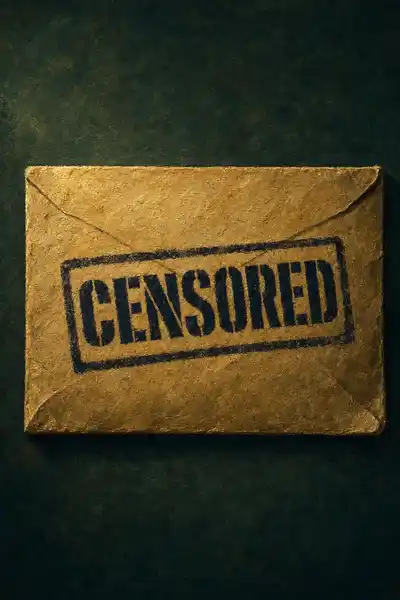
Public officials and much of the press insisted, against mounting corpses, that this was ordinary influenza and nothing to fear. Newspapers printed reassurance while their own cities ran out of coffins. The name itself, "Spanish flu," came from this censorship: Spain, neutral in the war, had a free press that reported the epidemic honestly, so the disease seemed to belong to the one country willing to admit it existed. Everywhere the fighting nations were, the truth was managed.
04 Chapter 4 — What a pathogen teaches about the machinery of science
Step back from the graves and the parades, and Barry's book becomes an argument about what science actually is — not the confident certainty of the reformers of 1918, but something slower, humbler, and stranger. Real inquiry, he writes, lives in uncertainty; it advances by admitting ignorance and then working patiently at its edges. The researchers who mattered were not the ones who announced a cure but the ones willing to sit with a question they could not yet answer, and to accept that their most cherished hypothesis, like the hunt for Pfeiffer's bacillus, might simply be wrong.
This is why the flu defeated the best minds of its moment. The virus was beyond the reach of their instruments and their theories; courage and intelligence were not enough when the tools did not exist. But the same episode seeded the future. The work Oswald Avery did on pneumonia bacteria in the years around the pandemic led him, decades later, to a discovery of the first order: that DNA carries the material of heredity. The pandemic did not yield its own solution, yet it pushed a generation of scientists to build the methods that would let later generations answer questions no one in 1918 could even ask.
05 Conclusion
The autumn wave burned out over the winter, as such waves do, leaving a third, milder round in early 1919 and then a long silence. The virus receded not because science stopped it but because it ran out of new bodies and, in mutating, lost some of its ferocity. The men who had stared into those ruined lungs at Camp Devens went back to their laboratories, several of them carrying questions that would occupy the rest of their lives. William Welch, who had built the institutions that trained them, lived to see American science become the equal of any in the world.
Related books