The Essential Writings of Ralph Waldo Emerson
American thought, American voice
Description
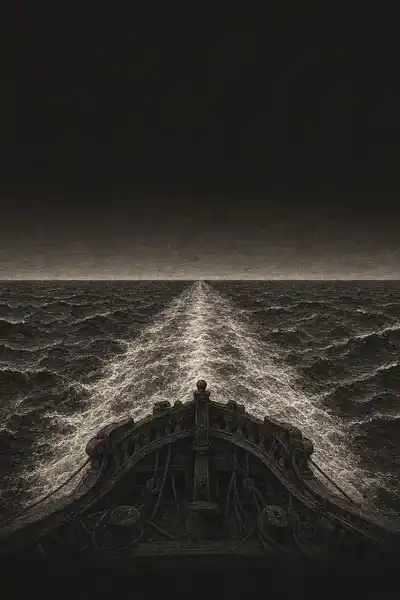
On September 9, 1832, Ralph Waldo Emerson stood in the pulpit of Boston's Second Church and told his congregation he could no longer serve them communion in good conscience. He was twenty-nine, recently widowed, and about to give up the one profession his family had practiced for generations. The sermon was not an attack on faith. It was an argument that the ritual had stiffened into a form, and that no form was worth keeping once a person stopped feeling it. Within weeks he had resigned, boarded a ship for Europe, and begun the slow work of becoming something the country did not yet have a word for.
What came back from that trip was not a settled man but a restless one. Emerson met Coleridge, Wordsworth, and Carlyle, and found the great European minds smaller up close than they had seemed at a distance. The lesson he drew was not that Europe had nothing to teach, but that an American who kept borrowing its clothes would never learn to speak in his own. Over the next three decades he built a body of work — lectures, essays, poems, and a lifelong journal — that tried to answer a single stubborn question about how a person, and a young country, might think for themselves.
The Essential Writings gathers that work: the speeches that scandalized Harvard, the essays Matthew Arnold called the most important prose of the century, the poems, the late reflections. Read together, they are less a philosophy than a temperament pushed to its limit — a running case for trusting what he called the splendid labyrinth of one's own perceptions, made by a man who kept walking into that labyrinth and reporting back.
The question we’re asking : How did a former minister turn a private crisis of belief into the founding voice of American thought?What we’ll see : From a pulpit he abandoned to a country he helped name, the collected work of a writer who decided the self was the only ground worth standing on.
Table of contents
01 Chapter 1 — A minister who walked out
Emerson came from a line of clergymen, and he entered the ministry the way a man enters a family business — with competence and a growing suspicion that it wasn't his. His first wife, Ellen, died of tuberculosis in 1831, barely two years into their marriage. The grief seems to have loosened whatever held him to the ordinary machinery of the church. The following year, unable to reconcile himself to administering the Lord's Supper as a fixed rite, he resigned his pulpit at Second Church. He gave up his income and his standing to keep faith with a feeling he could not name in doctrinal terms.
The Europe he sailed to in December 1832 was supposed to hold the answers. Instead it gave him a kind of relief. The living giants of English letters were, he found, ordinary men with private ambitions and blind spots. Carlyle, whom he sought out in the Scottish countryside, became a lifelong friend precisely because he was cranky and human rather than oracular. Emerson returned home in 1833 with the outline of a conviction: that reverence pointed the wrong way when it pointed backward, toward dead authorities, instead of inward and outward, toward the self and the present.

02 Chapter 2 — The scholar who had to be American
In August 1837 Emerson delivered an address to the Phi Beta Kappa society at Harvard that came to be called "The American Scholar." Oliver Wendell Holmes later described it as America's intellectual declaration of independence, and the phrase, though grand, is not far off. Emerson stood before the country's educated class and told them their learning was secondhand. The true scholar, he argued, was not a bookworm but a person who read, observed, and then acted — who let experience correct what the library got wrong.
The claim was as much about a country as about a man. Emerson believed the United States had been living on borrowed intellect for too long, treating London and Berlin as the source and itself as the province. He wanted an American who wrote about American things in an American cadence — plainer, more restless, less deferential — not because the old world was worthless but because imitation was a form of surrender. The style he forged to make this point was itself the argument: aphoristic, jumpy, built from sentences that could each stand alone.
03 Chapter 3 — Trust the labyrinth of your own perceptions
The essays that followed in the 1840s turned this posture into something closer to a working philosophy. "Self-Reliance," the most famous of them, is often read as a hymn to rugged individualism, but that flattens it. Emerson was not celebrating selfishness; he was arguing that most of what we call thinking is borrowed opinion held nervously, and that the harder discipline is to say what you actually perceive before someone credible says it back to you. "A foolish consistency is the hobgoblin of little minds" — meaning that clinging to yesterday's position out of fear is worse than the honest embarrassment of changing it.
This is where the transcendentalist core shows itself. Emerson trusted intuition over inherited system, the direct flash of insight over the slow proof. He believed each person had access to a truth no institution could mediate, and that the work of a life was to keep faith with that access even when it contradicted the crowd, the church, or one's own earlier self. He called the reward the splendid labyrinth of one's own perceptions — not a straight path but a maze worth wandering, because the wandering was the point.
04 Chapter 4 — The voice that outlived the doctrine
Transcendentalism, as a movement, did not last long. By the 1850s the circle had scattered, the experiments in communal living had failed, and the label had begun to sound quaint. Yet Emerson's writing kept spreading, and the reason is worth sitting with. He had not left behind a philosophy that could be defended point by point. He had left behind a voice — a way of putting American experience into American sentences — and a voice is harder to kill than a system.
This is the deeper thing the collected work reveals. Emerson mattered less for what he concluded than for how he sounded, and how he gave others permission to sound. Whitman read him and found the nerve to write Leaves of Grass. Thoreau carried the self-reliance argument to Walden Pond and made a life of it. Nietzsche kept the essays close and marked them heavily. The influence ran less through a set of ideas than through a granted freedom: you are allowed to trust your own eyes, and to write as though you do.
05 Conclusion
The man who walked out of a Boston pulpit in 1832 spent the rest of his life refusing finished forms — the communion rite, the borrowed European book, the tidy philosophical system, even his own earlier certainties. What he built instead was cumulative and unsystematic: lectures become essays, essays become the granite sentences people still quote without knowing where they got them. The Essential Writings holds that arc, from the young widower's crisis to the chastened wisdom of the later work, and the throughline is not a set of beliefs but a habit of attention turned relentlessly on the self and the present.
Related books