The culture code
Secrets behind thriving teams
Description
Great teams have great cultures. An extensive study of high performing teams showed three skills create great cultures: Making everyone feel they genuinely belong (safety). Taking mutual risks to build trust and cooperation (vulnerability). Telling compelling stories around shared goals and values (purpose).
Group culture is an influential force. We tend to think of culture as a fixed trait, like DNA. But culture is created through relationships working toward a goal. It's not something you are, it's something you do.
Successful cultures may seem magical, but they result from specific skills. Culture isn't fate, it's built through safety, vulnerability and purpose. Any group can develop an outstanding culture by mastering those three skills.
Table of contents
01 Cultivate belonging
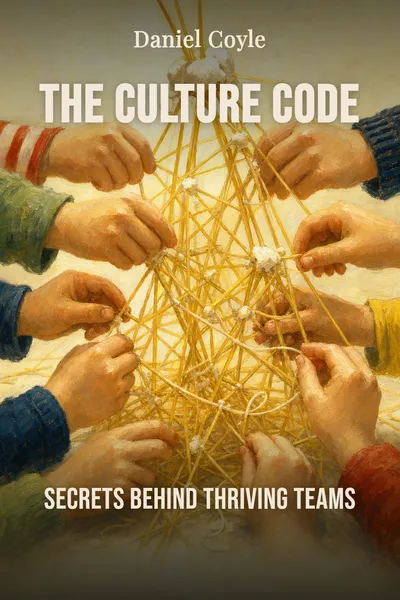
High performing teams feel like a tight-knit family, not just an organization. Team members feel they belong and connect deeply, with a chemistry binding them together. They have confidence their teammates support them. To build great teams, foster safety and belonging. We may assume packing talent together ensures collaboration. Peter Skillman, a designer and engineer, tested this idea. He instructed several four-person teams, including university students, lawyers, managers, and kindergarteners, to build the tallest structure possible from given materials.
The adults strategized by examining materials, brainstorming ideas, identifying the approach with most potential, and executing the best idea. The kindergarteners grabbed materials and started building, standing close together, abruptly taking items if they saw better uses. Their technique was "trying stuff together." We might expect the adults to excel, but actually the business students averaged structures under ten inches tall, while the kindergarteners consistently hit twenty-six inches. As Daniel Coyle explains, "We focus on visible individual skills. But skills don't matter. Interaction matters." The kindergarteners outperformed by working together better, not greater individual talent. Teams' magic comes from this collaboration.

02 Share honestly
When high-performing teams face difficult obstacles, they tend to unite and collaborate to find solutions. This cohesion is admirable, but it does not happen due to top-down directives. Rather, effective teams have candid discussions about problems and feedback, no matter how awkward. Based on open and honest input from all members, they generate ideas to move forward. In this way, bonded teams translate their connections into trusting cooperation. Though paradoxical, reviewing flaws and struggling together is key to becoming a tight-knit group. Admitting vulnerabilities and receiving blunt critiques enables improvement.
For example, Pixar holds "Brain Trust" meetings where directors present works-in-progress to veteran colleagues. The feedback is frank - storylines are confusing, characters unappealing, jokes not funny. After this unfiltered critique, the group unites to brainstorm improvements. Similarly, Navy SEALs conduct "After Action Reviews" following missions. As they eat and rehydrate, the team analyzes why each person acted as they did and how future missions could be enhanced. At their core, these meetings demonstrate vulnerability. By exposing weaknesses, members model openness to feedback so all may set aside insecurities, cooperate, and optimize performance.
On July 10, 1989, an explosion severed all hydraulic lines in a United Airlines DC-10, locking the controls. With the systems failure, turning was only possible by asymmetric engine thrust. As the pilots struggled to steer towards Sioux City Airport using this technique, a United trainer joined the cockpit crew. In emergencies, standard procedure is for the captain to take charge, yet Captain Al Haynes asked: "This is a situation we have not trained for. Any ideas how to land this aircraft?" With input from First Officer Bill Records and the trainer on the throttles, they conceived a novel plan to attempt landing.
03 Instill purpose
High-performing teams create an environment that serves as a hall of fame for their purpose. They surround themselves with reminders of their mission and make vivid connections between the present moment and their future ideal. They also enshrine a story that encapsulates why they work and where everyone should direct their energy. Exceptional teams embrace challenges, using them to motivate and inspire confidence to move forward.
Great teams build high-purpose environments. For example, walking into SEAL headquarters reveals a twisted girder from the World Trade Center, a Mogadishu flag, and memorials honoring fallen SEALs. Similarly, visiting Pixar exposes full-size Woody and Buzz Lightyear Lego figures and a twenty-foot Luxo lamp at the entrance. These groups make their spaces reflect their mission, confronting employees daily.
High-performance teams also use powerful language conveying their drive: "Technology inspires art and art inspires technology" at Pixar; "Shoot, move and communicate" among SEALs; "Our first responsibility is to doctors, nurses and patients..." at Johnson & Johnson.
Building such an inspirational environment does not happen through speeches or one-time gestures. Instead, leaders send steady, aligned messages reinforcing the shared goal through daily interactions. Consistency matters more than inspiration. Team members should consistently sense the reason for working and objectives. Along with visual reminders, methods for building high-purpose environments depend on the skills required:
Related books