

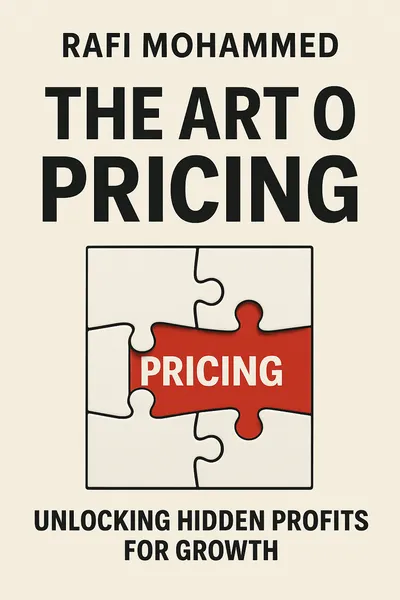
The art of pricing
Unlocking hidden profits for growth
Description
Price is not a one-size-fits-all matter. Adopting this mindset means missing out on hidden profits that could be used to expand your business. Instead of seeking a single optimal price, consider a multi-faceted approach to maximize profits. Understand that the perceived value to buyers should guide pricing, not just competitor prices or cost-plus margins.
Use a method to deconstruct value into its components, enhancing your understanding of customer perceptions. Implement pricing strategies designed to boost your company's profits, which are more than mere numbers but an array of cohesive tactics. Recognize that for any product, different customers will pay different prices, and by not leveraging this, companies forfeit significant profit opportunities.
Table of contents
01Essential pricing principles
Numerous enterprises exhibit a lack of proficiency in formulating pricing strategies. They frequently resort to a pricing model that is a hybrid of competitor pricing, their own cost considerations, and the prevailing market demand. This approach often leads to a scenario where potential profits are inadvertently forfeited.
However, there exists a more sophisticated and effective methodology for pricing that necessitates an understanding of three pivotal concepts. Firstly, it is imperative to cultivate a business environment conducive to advantageous pricing. Secondly, the intricate relationship between the perceived value of a product or service and its pricing must be comprehended. Lastly, it is crucial to acknowledge that customer valuations of the same product can vary significantly, influencing their willingness to pay different prices.
In an intriguing twist, many companies do not prioritize profit generation within their operational culture. Instead, there is a prevalent tendency among frontline employees to offer discounts to customers under the assumption that this is essential for outcompeting rivals. Such well-meaning actions, however, lead to the erosion of profits that could have otherwise been secured. While this might not pose a significant issue on an individual transaction basis, the cumulative effect of thousands of such transactions can severely impact overall profitability.
To counteract this, establishing a culture where profitability is not merely desirable but deemed absolutely critical is essential. This can be achieved by empowering employees with detailed information about product profitability, thereby enabling them to guide customers towards higher-margin products. Additionally, implementing clear guidelines on discounting practices can prevent unnecessary price reductions. Fostering confidence in the value of your products among employees is also vital, as it empowers them to confidently assure customers of the value they are receiving, without resorting to further discounts. Moreover, offering products with varying quality levels can allow for the accommodation of different customer segments, enhancing profitability.

02Understanding product value
Before embarking on the journey to establish a robust pricing structure, it is important to understand your customers' perception of the value of your product or service. This includes considering the various factors that influence this perception. Once you have a solid understanding, you can focus on enhancing your product's value and determining an appropriate market price. It is crucial to acknowledge that value is dynamic and subject to fluctuations, so staying updated on changes is vital for maximizing profitability. The perception of value is shaped by five distinct factors:
1. Price and availability of substitute products: Customers compare your product to others in terms of price, and if competitors offer unrealistically low prices, it can diminish the perceived value of your product. 2. Comparison of attributes with competitors: Customers evaluate various aspects such as brand reputation, convenience, quality, service, and style to determine if your product's value is superior or inferior. This evaluation is crucial in deciding if you can command a premium price. 3. Income bracket and spending habits of target audience: The income levels and spending habits of your target audience significantly influence your pricing flexibility. Changes in their income levels can alter their value perceptions. 4. Fluctuations in prices of related products: Price movements in products related to yours can significantly influence the perceived value of your offering. For example, a surge in gasoline prices can affect the relative value of fuel-intensive vehicles. 5. Overall market environment: Trends, new information, and unforeseen external events can affect your product's value. Understanding these factors is essential for navigating through market dynamics.
03Strategies for pricing
In the ever-evolving landscape of commerce, the quest for the ideal pricing model has shifted from a singular focus to a more dynamic, multi-faceted approach. This paradigm shift is essential for tapping into the potential for increased profits that may otherwise go unnoticed. A singular price point is no longer sufficient; what's necessary is the implementation of a variety of strategies that leverage the unique value each customer perceives in a product.
To cultivate a mindset that embraces multiple pricing strategies, there are four primary methodologies that can be employed. These include:
1. Differential pricing: selling the same product at varying prices to different customers. 2. Versioning: offering a product line at different tiers and prices. 3. Segment-based pricing: devising strategies to engage customers who might otherwise remain inactive. 4. Pricing according to market conditions: setting prices high to foster high value expectations or lowering them when strategically or ethically justifiable.
A classic illustration of differential pricing in practice can be observed in the airline industry, where it is commonplace for two passengers seated adjacent to each other to have paid significantly different fares for their tickets. The crux of this strategy lies in ascertaining the maximum amount each customer is willing to pay and presenting the product at that precise price point. There are seven distinct techniques for implementing differential pricing. These include:
1. Utilizing customer characteristics to discern different valuations and set corresponding prices, as exemplified by Disneyland's lower rates for in-state residents. 2. Employing hurdles that require customers to demonstrate their valuation through actions, such as coupon clipping. 3. Differentiating prices based on delivery times to cater to those who value immediate gratification. 4. Offering quantity discounts to incentivize bulk purchases. 5. Varying prices based on the purchase location, a tactic often used by luxury brands. 6. Utilizing mixed bundling to sell product combinations at a price lower than the sum of individual components. 7. Engaging in negotiation to allow customers to reveal their price point through direct dialogue.