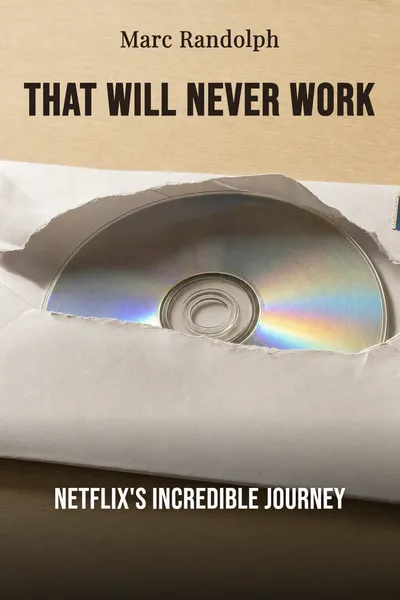
That will never work
Netflix's incredible journey
Description
In today's world, brimming with advanced presentation tools and abundant data, the most effective way to resonate with people and sway their opinions remains through compelling storytelling that touches their emotions. To influence others, master the art of "purposeful storytelling," which is designed with a clear objective. By excelling in the creation and delivery of such stories, you'll effortlessly persuade others to back your endeavors.
Despite the business world's historical preference for dry presentations and hard data, the skill of conveying a meaningful narrative is now more sought after than ever. In an era marked by economic volatility and swift technological shifts, it's the emotional impact of storytelling, not the binary code of digital innovation, that truly captivates and motivates audiences to support noble causes. Reflecting on my extensive business experience, I've found that the ability to engage and convince through storytelling has been my paramount competitive edge. To make a genuine connection, forget the latest tech; it's the heartfelt stories told in person that truly make a difference.
Table of contents
01 Ignition point
Marc Randolph and Reed Hastings first crossed paths in 1996 when Hastings' company, Pure Atria, acquired Integrity QA, a startup Randolph had co-founded. Following the acquisition, Randolph became VP of corporate marketing at Pure Atria. Living close to each other, they began carpooling to work, which became the breeding ground for their future business ideas. During this period, Pure Atria was undergoing a merger that threatened their jobs, prompting Randolph and Hastings to brainstorm various startup ideas during their commutes. Randolph, eager to start his own internet-based company, pitched numerous ideas to Hastings, ranging from customized baseball bats to personalized dog food.
The turning point came when Randolph shared his frustration over a late fee from Blockbuster for a VHS rental. This conversation sparked the idea of an online video rental service. Initial research by Randolph and his team suggested that mailing VHS tapes would be costly and impractical. However, the introduction of DVDs, which were cheaper to mail due to their size and weight, presented a viable solution. To test the feasibility of mailing DVDs, Randolph sent a music CD to Hastings' house, which arrived undamaged, proving the concept could work.

02 Birth of mail-order cinema
With $2 million secured, Marc Randolph embarked on the journey of establishing a new company, gathering a team to bring the vision to life. He chose a modest office in Scotts Valley, reminiscent of a space a dentist or tax attorney might occupy, featuring a large open room adorned with an unattractive green carpet. This space, once a small bank complete with an accessible walk-in safe, was furnished frugally for less than a thousand dollars, with employees bringing in beach chairs as makeshift seating. Randolph, as CEO, claimed an office with a view of the parking lot and a Wendy’s, emphasizing that the focus was not on luxury but on the mission and the work ahead.
Instead of investing in lavish office decor, the company prioritized purchasing dozens of Dell computers and setting up its own servers, a necessity in the pre-cloud computing era of 1997. The initial Netflix office was a blend of a computer geek’s basement and a makeshift campaign center, reflecting a culture that valued problem-solving and camaraderie over perks and aesthetics. This ethos attracted a core team of seven, including Christina Kish, Te Smith, Eric Meyer, Boris and Vita Droutman, Jim Cook, Suresh Kumar, and Kho Braun, all of whom accepted pay cuts for the opportunity to work on challenging and meaningful projects.
03 Inauguration moment
Netflix, initially funded with $2 million and staffed by twelve employees, wasn't always known by its current name. In its early stages, the company operated under the working name "Kibble," a choice inspired by an old marketing adage emphasizing the importance of product quality over advertising. The name was meant to serve as a constant reminder that, regardless of the marketing efforts, the success of the company would ultimately depend on the value it provided to its customers. As the launch date of March 10, 1998, approached, the team explored various potential names, including NowShowing, Directpix.com, Rent.com, Videopix, CinemaCenter, WebFlix, and CinemaDirect. The naming process was challenging, aiming for a catchy, memorable name that was easy to spell and recall. Despite concerns that the "flix" part of Netflix might evoke negative associations, the name was chosen for its simplicity and impact.
04 Initial success
In its first full month of operations in May 1998, Netflix saw a promising start, generating over $30,000 in revenue, which quickly escalated to $94,000 by June. This rapid growth put the company on a trajectory to surpass $1 million in revenue in its inaugural year. However, the company faced a significant challenge as customers preferred purchasing DVDs at $25 each over renting them for $4. This preference for buying over renting was problematic for Netflix, as a DVD could only be sold once but rented out multiple times. Additionally, the company noticed that customers who rented a DVD rarely returned for another rental. Despite these challenges, Netflix meticulously tracked all its data to understand customer behavior and improve its services.
Marc Randolph, one of Netflix's founders, highlighted the company's reliance on data analytics. The Netflix servers, numbering twenty-four at the time, processed the previous day's transactions every night, maintaining a comprehensive data warehouse on a single hard drive. This system tracked every customer interaction, from site visits to DVD rentals, providing invaluable insights into customer preferences and behavior.
05 Ideal team assembly
After turning down an offer from Amazon, Netflix began seeking additional funding from venture capitalists. Institutional Venture Partners (IVP) invested $4 million in Netflix, not because of the company's financials but due to Reed Hastings' involvement. Hastings had a track record of success, and IVP believed he could replicate that success with Netflix. However, the company faced challenges early on, such as an easily exploited promotion with Sony that allowed people to claim free DVDs without purchasing a DVD player, unreliable servers, and a business model that was losing money. Despite these challenges, co-founders Marc Randolph and Reed Hastings believed in the startup's potential.
06 Success blueprint
The response to our new subscription model was nothing short of phenomenal. On the very first day of testing, an overwhelming 90% of those who clicked on our banner ad were willing to provide their credit card details. The subscription uptake was four to five times higher than our previous a-la-carte rental service. This was a surprising success, especially to me, as I had been skeptical about testing all our ideas at once, and this solution was the most unexpected. Marc Randolph, Netflix's co-founder, reflects on the journey, acknowledging that the path to this successful model was not straightforward. It was a result of relentless experimentation, extensive work, and considerable financial investment. The idea that "nobody knows anything," a phrase coined by Hollywood scriptwriter William Goldman, resonates with the Netflix experience. It underscores the unpredictability of consumer preferences and the importance of being open to failure as a part of the learning process.
07 Expansion phase
Marc Randolph, co-founder of Netflix, likens companies to boats that occasionally need to dock for maintenance to remove any hindrances to their progress. After the Blockbuster debacle and the dot-com crash, Netflix underwent a self-assessment and pruned unnecessary programs and enhancements. This led to a pivotal moment in September 2001 when Reed Hastings and Randolph made the difficult decision to lay off 40% of their staff, which paradoxically propelled the company forward by creating a culture of excellence and leaving only the top performers focused on reaching one million subscribers.
Netflix's innovative strategy included setting up around sixty small shipping hubs across the country, enabling next-day DVD delivery nationwide. This system bypassed the need to return DVDs to a central warehouse, significantly improving efficiency. Despite the success of their DVD service, Netflix was already anticipating the future of digital delivery, although the exact timing and form it would take were still uncertain.
Related books