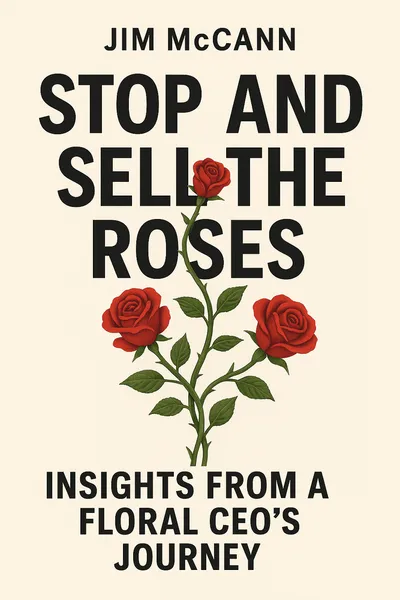
Stop and sell the roses
Insights from a floral ceo's journey
Description
Despite the emphasis on advanced technologies, business triumph still hinges on personal connections—genuine, warm interactions with colleagues and clients.
The essence of business achievement lies not in minimizing the human element, but rather in leveraging modern technologies to enhance and multiply the human interactions between your business and its customers. Concentrate solely on this aspect, and success is bound to ensue.
Table of contents
01 Jim mccann's journey and 1-800-flowers
Jim McCann, the President of 1-800-FLOWERS, has had an inspiring journey. He went from being a bartender and social worker to leading the world's largest florist and a highly successful online commercial site.
McCann started his career tending bars and working as a social worker, but eventually found his way into the floral business. At the age of 25, he bought a Flower World shop in New York for $10,000, using family loans and credit cards. He then expanded to 13 more shops over the next decade, transitioning from an "accidental entrepreneur" to a full-time business owner.
After severing ties with the Flower World franchise, McCann rebranded to Flora Plenty. He introduced extended shop hours and a 24-hour phone service, which he personally managed. His venture into street peddling significantly boosted Flora Plenty's sales and taught him valuable lessons in business flexibility and customer engagement.

02 Ten guidelines for success
Every business is unique, and its success often hinges as much on luck as on the entrepreneur's intelligence and skills. Here are ten semi-commandments for achieving success: Begin by spending your youth engaging in original activities. Instead of focusing solely on career-building, develop social skills like crisis management, motivation, and goal-setting. Think of yourself as a cultural engineer first, and an entrepreneur second. Don't worry if you don't have an MBA. Aim to create a company that becomes a case study in business schools, not just read about them. Remember, many successful entrepreneurs like Ted Turner, Bill Gates, and Henry Ford didn't have MBAs either.
Start your venture without waiting to know everything. Embrace adventure and entrepreneurship, as most successful businesspeople didn't fully understand what they were getting into at the beginning. Treat yourself as a brand, focusing on consistency and credibility. Work on your image, hone your message, and always deliver on your promises.
03 The ultimate business concept
In the 1930s, Claude Steiner developed a psychology concept emphasizing the human need for social intimacy, which is equally crucial in business. The essence of commerce is not merely the products or services themselves but the relationships between buyers and sellers. It's the emotional connections that drive business success, making it a contact economy at its core.
1-800-FLOWERS embodies this principle with their 'absolute guarantee' policy, ensuring customer satisfaction by offering replacements, refunds, or any necessary action to maintain a happy customer base. Their customer service teams are dedicated to quality experiences, operating under the belief that while the customer may not always be right, they are always the customer.
The company recognizes that customers are the sovereigns of today's consumer-driven economy, with five primary needs: a compelling reason to engage with a business, quality products matched by quality service, accessibility through various technologies, an enjoyable experience, and the intelligent use of technology to eliminate inefficiencies and offer great value.
04 Balancing tech and humanity
The future of successful Internet-based companies lies not merely in leveraging new technology to enhance traditional tasks but in utilizing information technology to liberate human resources for more productive endeavors, such as direct customer interaction.
Building customer relationships is crucial for business success, with the relationship itself being the core of transactions, rather than the mere exchange of goods and services. Technology should be used to expand reach and increase contact frequency, but maintaining the human element is essential for success.
Despite the widespread fascination with the transformative potential of Internet commerce and the dream of becoming a home-based professional, the reality is that most people prefer working in a social environment away from home distractions. The workplace, therefore, is unlikely to vanish.
05 Personal branding essentials
In the past, individuals often spent their entire careers with one company, so there was little need to focus on developing resumes. Work history was easily accessible within the company. However, the modern job market is characterized by frequent employment changes. This prompts individuals to develop a diverse skill set that is not limited to one industry or company. To remain competitive and prepared for career changes, it is essential to engage in projects outside of work that enhance skills and contribute to a well-rounded resume.
The foundation of personal brand value lies in the resume. It serves as a record of professional achievements and capabilities. The resume addresses critical questions potential collaborators or employers may have, such as an individual's skill set, previous work experiences, and feedback from former partners, clients, employers, and business associates. Viewing oneself as an entrepreneur with a unique set of skills to offer, it becomes clear that expanding skills, broadening professional networks, and accumulating accomplishments are crucial steps in building a strong personal brand.
06 Mastering the art of errors
The art of embracing mistakes is often undervalued in the business world. Many operate under the belief that mistakes must be avoided at all costs, not realizing that welcoming intelligent mistakes is crucial for progress. A business or individual not making mistakes is likely not taking risks or seeking new opportunities. Rather than shying away from errors, we should elevate mistake-making to an art form, actively exploring new business ventures with the understanding that many will not succeed. This approach should not put the company at risk but should encourage pushing boundaries slightly. Even if no new opportunities arise, this mindset demonstrates a willingness to innovate.
Central to capitalism and free enterprise is the concept of taking calculated risks, which inherently involves making mistakes and learning from them. Whether it's hiring someone who doesn't fit, making a poor investment, or developing a product with little demand, the key is to persist and not let these setbacks halt progress. A flawless record often indicates a lack of real competition. By striving to compete at higher levels, you not only challenge your competitors but also elevate your own and your company's performance standards. Mistakes indicate attempts at something new, and adopting a learning mindset towards these errors, ensuring not to repeat them, is vital.
Related books