
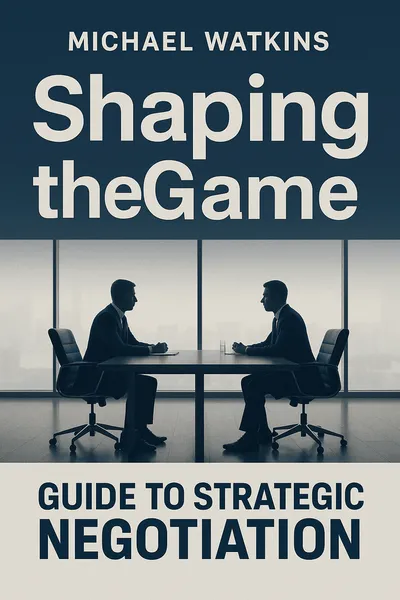
Shaping the game
Guide to strategic negotiation
Description
Effective leaders negotiate to align interests and build relationships. Prepare by gathering information to justify your ask. Consider alternatives to increase flexibility.
Ask diagnostic questions to understand the other party's needs and priorities. Adopt their perspective. Stay positive, not pushy.
Support salary expectations with research and data. Know your worth. Be prepared to answer questions.
Maintain enthusiasm. Put negotiation skills to the test. Show gratitude and excitement for the opportunity.
Table of contents
01 Strategic toolbox for successful negotiations
Negotiation is an intricate art that demands a meticulous examination of the situation at hand. To navigate through this complex process successfully, one must delve into the structure and process of the negotiation, laying a solid groundwork for crafting effective strategies. At the core of the negotiation structure are the parties and issues involved. It is imperative to identify who is at the negotiating table and what their key issues and interests are. Understanding what is at stake for each party is fundamental, as it drives their engagement and dictates the dynamics of the negotiation.
Equally important are the alternatives and deadlines that each party faces. These alternatives could range from accepting the current deal, seeking a more favorable one, walking away, or opting to wait. Deadlines play a critical role as they often compel parties to take action. By understanding the alternatives, one can discern the underlying motivations and constraints of the other parties. Interests and trade-offs are another vital element. It is essential to determine what each party values the most and what they are willing to give up to reach an agreement. For instance, one party might be willing to exchange vacation time for a higher salary. The degree of willingness to make such trade-offs significantly influences the negotiation structure.

02 Imperative #1 - align strategy with context
Effective negotiation is an art that requires a deep understanding of the unique dynamics present in each situation, rather than adhering to a rigid, one-size-fits-all methodology. The primary goal in any negotiation should be to create and capture as much value as possible for all involved parties, rather than trying to mold the negotiation to fit a preferred style. To develop an appropriate negotiation strategy, it is crucial to carefully evaluate six key dimensions.
Firstly, consider the nature of the relationships involved. Is the negotiation a one-time transaction or the beginning of an ongoing partnership? In the case of one-off deals, it may be beneficial to claim immediate gains. However, for long-term relationships, the focus should shift towards building trust and sustainability, even if it means accepting less profit upfront. It's important to recognize that the ledger does not need to balance with every transaction when the goal is to invest in enduring ties.
Secondly, identify whether the negotiation is centered around deal-making or dispute resolution. Deal-making is focused on creating mutual gains, while dispute resolution aims to prevent further loss of value that has already been compromised due to conflict. Thirdly, assess the potential for joint gains. Is it possible to enlarge the pie for mutual benefit, or is the negotiation about dividing a fixed pie? In situations with a single issue, it's important to claim a fair share while considering sustainability and the impact on reputation. However, with multiple issues at play, look for opportunities to expand the pie through cross-issue trade-offs, planning future deals, risk-sharing arrangements, and contingent agreements based on differing assessments of likelihoods.
03 Imperative #2 - understand and influence counterparts
Negotiation is a complex process that hinges on effective persuasion, which can be broadly categorized into interest-based and alternatives-based approaches. Regardless of the chosen method, certain steps can significantly boost your influence during negotiations. The initial step involves conducting thorough research to grasp the desires, acceptable trade-offs, risk aversion, perceptions, available alternatives, and the capacity to influence these alternatives of all involved parties. This foundational knowledge is crucial for understanding the negotiation landscape and preparing for productive discussions.
Active listening and learning through questioning is another vital step. By asking open-ended, non-defensive questions and rephrasing them to check for consistency, you can gain a deeper understanding of the other party's position. Summarizing what you've heard helps confirm your comprehension, while exploring "what-if" scenarios can provide further insights. Paying attention to emotional reactions can reveal topics of passion or concern, known as "hot buttons." It's important to avoid confirmation bias by only acknowledging information that supports your viewpoint and to prevent defensive reactions by emphasizing your intention to add value to the negotiation.
Framing the situation in a constructive manner that advances the discussion is also essential. Techniques for effective framing include highlighting collective benefits over individual costs, connecting choices to core values and identity, emphasizing the risks of potential losses, and proposing ambitious requests with the expectation of settling for something more realistic. Other strategies involve presenting the situation as unique, expanding the scope of issues under consideration, preemptively addressing anticipated challenges, and providing a script for interacting with others.
04 Imperative #3 - actively shape the negotiation
In the realm of negotiation, gaining control over the structure of the process as it unfolds is crucial for achieving the dual goals of creating value and securing a significant share of that value for oneself. This control involves a blend of actions taken both at the negotiating table and behind the scenes. Shaping the negotiation is about exerting influence over other parties, the agenda, and the perceptions of interests and alternatives through proactive rather than reactive measures. There are seven key strategies for actively shaping negotiations.
The first strategy involves ensuring that you are properly resourced. This means creating either an in-house or external organization dedicated to influencing the negotiation process. Establishing a "war room" staffed with experienced personnel who can conduct thorough research is essential. The aim is to leave nothing to chance, ensuring that every aspect of the negotiation is meticulously planned and prepared for. The second strategy is to get involved in setting the agenda. By making the agenda as comprehensive as possible, you create more opportunities for all parties involved to advance their interests. This broad agenda allows for a wider range of issues to be discussed, increasing the chances of finding mutually beneficial solutions.
Becoming skilled at framing problems constitutes the third strategy. The way problems are framed can significantly influence the negotiation. Developing a catchy phrase or sound bite that encapsulates the purpose of the negotiation, such as "corporate synergies," can be very effective in shaping perceptions and guiding the negotiation towards favorable outcomes. The fourth strategy is identifying the best forum for the negotiation. The location and setting of negotiations can have a profound impact on participation, rules, and enforcement. Choosing the right forum can significantly increase your bargaining power by creating an environment that is conducive to achieving your objectives.
05 Imperative #4 - Learn from Every Interaction
Mastering the art of negotiation is a challenging endeavor that demands more than just participation. It requires a deliberate and methodical approach to learning from each experience, thereby climbing the learning curve and steering clear of previous errors. To enhance your negotiation skills, focus on developing proficiency in five critical areas:
Firstly, pattern recognition is essential. It involves sifting through the noise to identify both opportunities and threats. Secondly, mental simulation is about envisioning the potential outcomes of your proposals to better predict and prepare for the responses they might elicit. Thirdly, parallel processing is the ability to keep track of the substance of the negotiation while simultaneously guiding its progression. The fourth skill, robust response, is about being able to quickly devise a range of options when under pressure and facing tight deadlines. Lastly, reflection-in-action is crucial for maintaining objectivity. It involves the ability to take a step back from the negotiation when necessary to reassess and recalibrate.
However, simply engaging in negotiations is not sufficient for improvement. To expedite the accumulation of expertise, it is vital to engage in reflection and to internalize the lessons from each experience. A key practice in this process is to conduct a thorough debrief after each negotiation. Reflecting in writing helps to solidify the memory of the event and aids in future recall. During this reflection, consider the following questions: What aspects of the negotiation went well, and which did not, and why? What elements were unexpected, and what were the pivotal moments? Evaluate whether you created and captured the maximum value, and if not, understand why and determine how to do better in the future.
Related books