
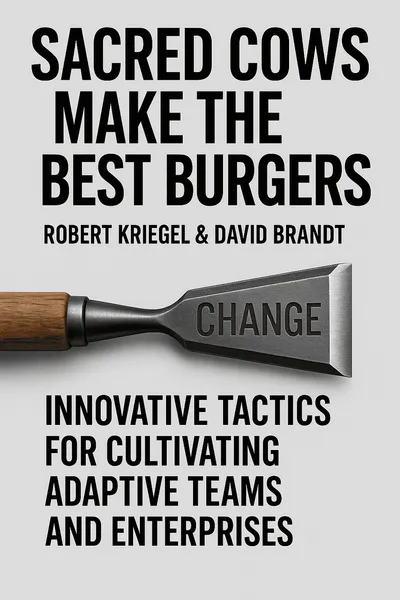
Sacred cows make the best burgers
Innovative tactics for cultivating adaptive teams and enterprises
Description
Sacred cows represent the obsolete policies, practices, procedures, and paperwork that sap the productivity of companies and organizations. They hinder these entities from adapting to changing market dynamics or seizing new opportunities.
To circumvent the negative impact of sacred cows on an organization's profitability, it's crucial to cultivate a Change-Ready environment. Such an organization should be receptive to new ideas, eager to implement changes, and dedicated to reaping the benefits that come with transformation.
Table of contents
01 The ultimate objective: building a change-adaptive organization
To cultivate a Change-Ready attitude within an organization, it's essential to embrace a series of steps that foster openness to new ideas, excitement about change, and a commitment to continuous adaptation. This begins by identifying and challenging entrenched beliefs and practices, often referred to as "sacred cows." Creating an environment that encourages change-readiness involves not only preparing for change but actively seeking it out and leading the way, rather than merely reacting.
Transforming resistance into readiness is crucial, as people are naturally inclined to resist change. Motivating individuals to embrace change requires understanding their fears and addressing them directly, ensuring they see the benefits clearly.

02 First step: identify untouchable beliefs
In the dynamic world of business, the concept of "sacred cows" represents outdated practices that hinder innovation and productivity. These are traditional methods that companies cling to without questioning their current value, often leading to inefficiency. To foster a thriving, adaptable business environment, it's crucial to identify and eliminate these sacred cows.
Common sacred cows include excessive paperwork, which should be reduced if it doesn't enhance customer value, productivity, or morale. Meetings, often seen as time-wasters, should be shortened or scrapped. The obsession with speed can compromise quality and employee well-being; a slight reduction in pace can improve both. The "expert cow" suggests that fresh perspectives can lead to breakthroughs, so encourage asking simple, overlooked questions.
03 Second step: cultivate a change-adaptive atmosphere
Creating an environment conducive to innovation and openness to new ideas is most effective before changes become necessary. This approach simplifies subsequent steps and fosters efficient teams. Unlike the past, where managers prioritized processes and products with a top-down approach, modern business leaders adopt a coaching style, emphasizing people skills over technical skills. The key distinction between a traditional boss and a coach lies in trust.
Historically, bosses might have undermined trust by insisting on approval for all decisions, limiting information shared with employees, taking credit for employees' ideas, and publicly pointing out their faults. In contrast, contemporary leaders build trust by working closely with their team during challenging times, sharing information transparently, celebrating collective achievements, and maintaining confidentiality. A trust-based relationship paves the way for a change-ready environment, further strengthened by investing in employee training, respecting their needs and aspirations, demonstrating empathy by understanding their perspectives, and acknowledging their extra efforts, whether publicly or privately.
04 Third step: transform resistance to preparedness
Organizations aiming to implement change must navigate through four common barriers: fear, a sense of powerlessness, inertia, and a lack of perceived relevance or self-interest. Fear, often self-fulfilling, can lead to panic or procrastination and is best managed by reality checks, assessing the likelihood of feared events, and preparing contingency plans to boost confidence.
Employees feeling powerless, particularly when changes are imposed without their input, can be engaged by involving them in the change process or allowing them to shape the implementation of new directives. This approach can mitigate resistance and lead to better outcomes.
05 Fourth step: encourage adaptive behavior
Motivating organizational change requires crafting a compelling vision of potential achievements when everyone collaborates effectively. The foundation of change-readiness lies in establishing a sense of urgency, which can be achieved by illustrating the consequences of inaction through realistic projections, feedback from respected partners, or the risk of losing market leadership. This urgency, combined with a vivid, inspiring vision that appeals to people's aspirations, ignites a passion for change.
To sustain this momentum, fostering a sense of ownership is crucial. This involves clarifying expectations, assigning responsibility for specific business areas, and holding individuals accountable for their results. Moreover, a well-designed reward system plays a pivotal role in motivating change. Effective rewards, which can be both intrinsic, like recognition and autonomy, and extrinsic, such as bonuses or promotions, should be personalized, promptly delivered, and, when possible, public.
06 Fifth step: foster seven key adaptability traits
Being change-ready is essential for thriving in an ever-evolving world, and it hinges on cultivating seven key character traits: resourcefulness, optimism, adventurousness, drive, adaptability, confidence, and tolerance for ambiguity. Resourcefulness involves making the most of any situation with available resources, seeing multiple pathways to achieve goals. Developing this trait can be as simple as finding unconventional uses for everyday items or imagining survival on minimal funds.
Optimism, the belief in a positive future, can be fostered by viewing challenges through a positive lens and reframing negatives constructively. Adventurousness encourages taking risks and embracing the unknown, which can be cultivated by engaging in activities that push boundaries and express contrarian views. Drive, the energy behind all other traits, is fueled by passion and determination, and can be enhanced by visualizing success and embracing one's passions.
Related books