River Out of Eden
Where life's replication began
Description
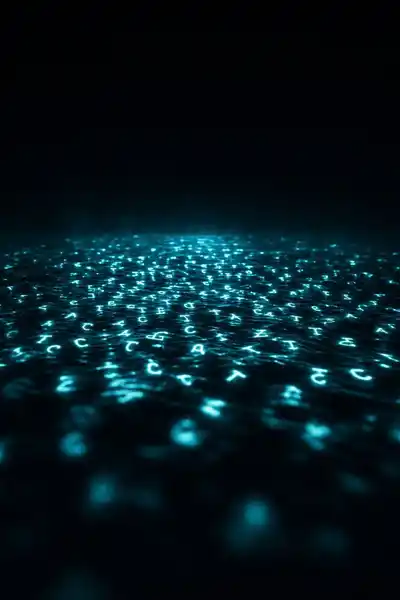
There is an image Richard Dawkins keeps returning to across his 1995 book River Out of Eden, and it is not the tree of life we usually reach for. It is a river. Not a river of water, but a river of DNA — a torrent of coded information flowing forward through time, branching now and then, drying up in places, but never once running backward. Every living thing that has ever existed, from the bacteria in a hot spring to the reader holding this text, is a momentary eddy in that current. The river started somewhere, roughly three to four billion years ago, and it has not stopped since.
Dawkins wrote the book as part of a series meant to explain a big scientific idea to non-specialists, and his gift was always the same: taking something that sounds forbiddingly technical — molecular replication, digital coding, natural selection as an optimizing process — and making it feel almost obvious once you see it his way. The New York Times once described his prose as the sort of science writing that makes the reader feel like a genius. The trick is that he never talks down. He assumes we can follow, and then he pulls us along the current until the mystery of where life came from looks less like magic and more like the inevitable consequence of one very particular kind of chemistry.
What flows down this river, insisted Dawkins, is not stuff. It is information — a code, digital in the strict sense, written in four letters and copied with astonishing fidelity across geological time. Once you take that seriously, the old questions change shape. Life is not a warm, mysterious essence. It is a copying process that got started and has been running ever since, and the interesting thing is what a river of pure copied information does to everything it touches, and where it might be flowing next.
The question we’re asking : How did the copying process we call life get started, and where — on this planet or beyond it — is that current ultimately heading?What we’ll see : How a single idea, that life is information flowing down a river of DNA, reorganizes everything from our shared ancestry to the fate of life in the cosmos.
Table of contents
01 Chapter 1 — The river that only ever flows with information
Dawkins asks us to picture the flow of DNA through the generations as an actual river, and the metaphor is more literal than it first sounds. What passes from a parent to a child is not the body, which dies, but the code — the sequence of instructions written in the four-letter alphabet of the genetic molecule. That code is digital, in the same sense a computer file is digital: discrete symbols, copied character by character, with error-correcting fidelity that far exceeds anything analog. This was, for Dawkins, one of the great unremarked revolutions of the twentieth century. Before Watson and Crick in 1953, heredity might have been some blending fluid. After them, it was plainly a code, and biology quietly became a branch of information technology.

02 Chapter 2 — Why every ancestor was a success
From the river metaphor Dawkins pulls a claim that sounds trivial until you sit with it: not a single one of our ancestors died young. Every organism in your direct line of descent, going back to the first replicating molecule, lived long enough and reproduced successfully enough to pass the code along. This is true by definition — an ancestor who failed to reproduce would not be an ancestor — but the consequence is staggering. You are the endpoint of an unbroken sequence of billions of reproductive successes, with no failures anywhere in the chain. Failure is common in life; it is just never on the ancestral line, because failure leaves no descendants to remember it.
This lets Dawkins dismantle a persistent confusion about evolution: that it is about the good of the species, or the survival of the group. It is not. The river carries genes, and genes are copied because they are good at getting copied. A gene that builds a body slightly better at surviving and reproducing in its particular environment will, over generations, become more common in the river simply by arithmetic. There is no foresight, no plan, no striving toward a goal. There is only differential copying, repeated over vast time.
03 Chapter 3 — The utility function of a mindless universe
Engineers use a phrase, borrowed by economists, called a utility function — the quantity a system behaves as though it were trying to maximize. If you reverse-engineer a well-designed machine, you can read off what it was built to optimize. Dawkins turns this diagnostic on nature and asks what living things behave as though they are maximizing. The answer, uncomfortably, is not happiness, not the survival of the species, not the balance of the ecosystem. It is the survival of DNA. Everything else — the beauty, the suffering, the extravagance — is a side effect of that single accounting.
He presses the point with an example that refuses to be sentimentalized. A cheetah is exquisitely engineered to catch and kill gazelles; a gazelle is exquisitely engineered to escape cheetahs. If some benevolent designer were optimizing for the total welfare of the savanna, this arms race makes no sense — the same effort could have been spent on a peaceable equilibrium. But nobody is optimizing welfare. Cheetah genes are maximized by dead gazelles, gazelle genes by live gazelles, and the two utility functions grind against each other with no referee. The result looks purposeful from inside each animal and pointless from above.
04 Chapter 4 — The bomb that might be waiting to go off
The last movement of the book zooms out until the Earth is a speck, and Dawkins reframes the whole river as something he calls a replication bomb. His argument is that the origin of self-copying is a threshold event, and once a system crosses it, an explosion of information becomes almost inevitable. He lays out a sequence of thresholds any such bomb might pass — the replicator threshold first, then phototrophy, then the coming-together of many-celled bodies, then a nervous system, then language, then technology, then radio, and finally, perhaps, the ability to leave the planet altogether. Earth's river has passed several of these. Whether it passes the last few is genuinely open.
The word bomb is chosen deliberately. What begins as a single self-copying molecule can, given the right chemistry and enough time, run away into a planet-spanning cascade of coded information — the same runaway logic as a chain reaction, only measured in eons rather than microseconds. This is why Dawkins thinks the true rarity in the universe may not be life's persistence but its ignition. The chemistry that lets replication start might be vanishingly uncommon; the deserts between the sparks might be almost unimaginably wide.
05 Conclusion
Dawkins ends where he began, back at the river. The DNA flowing through us tonight is the same current that started in some warm chemical setting billions of years ago, unbroken, never once reversing course. Every ancestor a success, every gene a survivor, every living thing an eddy that will pass while the water flows on. The metaphor holds all the way down: life is not a substance but a message, copied with fidelity across a span of time the mind can barely hold.
Related books