Priceless
What money really buys
Description
In 1974, a pair of psychologists ran a small experiment that should have embarrassed the entire idea of rational pricing. Daniel Kahneman and Amos Tversky spun a wheel of fortune rigged to stop at either 10 or 65, then asked people what percentage of African nations belonged to the United Nations. The wheel had nothing to do with Africa. Everyone could see it was random. And yet the people who saw 10 guessed around 25 percent; the people who saw 65 guessed around 45. A number pulled from a spinning wheel had quietly bent everyone's estimate toward itself. This is the crack William Poundstone widens open in his book Priceless — the crack running underneath every price tag we've ever trusted.
Poundstone's wager is that prices are not measurements. We treat the number on a tag the way we treat the reading on a thermometer, as if it reports something real and external — the worth of the thing. But value, he argues, has no fixed temperature. It's manufactured in the moment of exchange, out of comparisons, first impressions, and the human inability to know what most things should cost. The wine, the watch, the coffee, the settlement in a lawsuit: none of them arrive with a value attached. The price is what invents it.
Drawing on decades of behavioral research and the retailers, auctioneers, and menu engineers who quietly deploy it, Poundstone assembles a portrait of a world where the seller almost always knows something the buyer doesn't. Not a conspiracy — a craft. And once we've seen the craft, the ordinary act of glancing at a price and feeling it's fair starts to look a lot stranger than it did.
The question we’re asking : If value has no fixed measure, where do the prices we accept every day actually come from?What we’ll see : How a discipline of psychologists took apart the idea that a price reports what something is worth.
Table of contents
01Chapter 1 — The number that anchors everything
The wheel-of-fortune study gave the effect its name: anchoring. Drop a number into someone's head, even an obviously irrelevant one, and their subsequent judgments drift toward it. Poundstone treats this not as a party trick but as the load-bearing beam of modern pricing. Because most people genuinely have no idea what things should cost — what's the right price for a bottle of wine, a leather sofa, a legal settlement? — they reach for whatever number is nearest. And sellers make sure the nearest number is one they chose.
The tactics that follow are almost comically direct once we know to look. The store puts a $2,000 handbag in the window not because anyone will buy it but because it recalibrates the whole shop; the $600 bag beside it now feels reasonable. The menu lists a $115 seafood platter at the top so the $48 entrée reads as restraint. Poundstone recounts how a Williams-Sonoma bread machine sold poorly until the company introduced a larger, pricier model next to it — and sales of the original nearly doubled. Nobody bought the expensive one. It existed to make its sibling look sensible.

02Chapter 2 — Why free is never really free
If anchoring is the beam, the word free is the trapdoor. Poundstone leans on the work of Dan Ariely, who ran an experiment that has since become a small classic. Offered a choice between a Lindt truffle for 15 cents and a Hershey's Kiss for 1 cent, most people took the truffle — the better chocolate for a fair gap in price. Then Ariely dropped both prices by a single cent: the truffle to 14 cents, the Kiss to free. The rational calculation hadn't changed at all; the gap between them was identical. But the crowd stampeded to the free Kiss. Zero, it turns out, is not just another price.
Poundstone's point is that free short-circuits the ordinary weighing of cost against benefit. A one-cent chocolate carries a whiff of risk — what if it isn't worth even that? Free carries none. There's no possible loss, so the brain stops calculating and simply reaches. Retailers have industrialized the instinct. The free shipping threshold that makes us add a $30 item to dodge a $6 charge; the buy-one-get-one that we accept without checking whether the single price was inflated to cover it; the free trial engineered around our reluctance to ever cancel.
03Chapter 3 — The menu, the wine list, and the decoy
Poundstone spends real time inside the professions that price for a living, and few are more revealing than menu engineering. A restaurant menu is a designed object, and the design is aimed at the eye and the wallet at once. Consultants advise removing the dollar sign, because the symbol reminds diners that they are spending; they advise against a neat column of prices, because a tidy column invites comparison shopping down the page. Prices are tucked after the dish description, in the same typeface, so the number arrives softened by an appetite already stirred.
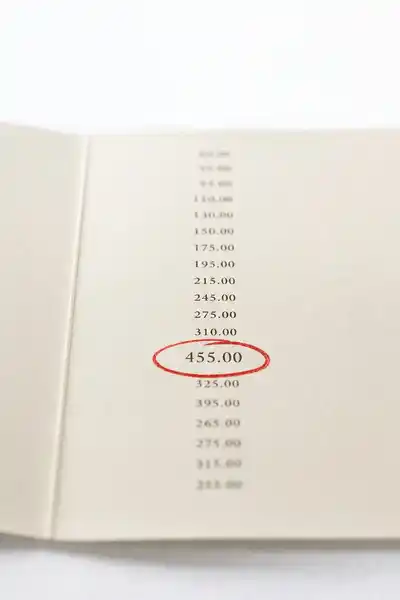
The wine list is the sharpest instrument on the table. Restaurants know that most diners are lost among the bottles and will not risk the cheapest — that would broadcast frugality to the table. So they will reach for the second-cheapest, which is precisely why the second-cheapest often carries the fattest markup in the house. The expensive bottles at the top of the list may exist only to make the middle look sane. It is anchoring plated and served.
04Chapter 4 — What a price actually measures
Step back from the truffles and the wine lists, and Poundstone's larger claim comes into focus. Economics long assumed that price emerges from the meeting of two forces — how much sellers want and how much buyers will pay — and that behind buyers' behavior sat stable, knowable preferences. Priceless argues that this floor isn't there. If a random wheel can move a valuation, if a free chocolate can overturn a rational choice, if a decoy can flip a preference, then there is no bedrock "worth" that price is faithfully reporting. Price is closer to a suggestion the mind accepts than a fact the market discovers.
This has consequences well beyond shopping. Poundstone traces the same psychology into courtrooms, where the dollar figure a plaintiff's lawyer requests — plucked, sometimes, from thin air — anchors the damages a jury eventually awards. He follows it into salary negotiations, where whoever names a number first tends to set the range everyone haggles within. He finds it in the way governments and companies price things that were never really priceable — a human life, an hour of someone's time, the risk of harm. The wheel of fortune, it turns out, is spinning in a lot of rooms.
05Conclusion
Kahneman and Tversky's rigged wheel was never really about African nations. It was a demonstration that a number, once seen, refuses to leave the room — that the mind treats even a confessed piece of nonsense as information. Poundstone builds an entire architecture on that finding, from the handbag in the window to the settlement in the courtroom, and the architecture holds because the crack it's built over is real. We do not carry around a private ledger of what things are worth. We decide in the moment, using whatever the seller was thoughtful enough to leave lying nearby.
Related books