Makers
Redefining industrial evolution
Description
The dawn of a new industrial revolution is upon us, as internet-enabled micro-manufacturing techniques begin to replace traditional mass manufacturing. This shift, powered by open-source design, desktop 3D printing, digital fabrication, and crowdfunding, is set to transform the production landscape akin to how personal computers revolutionized the digital world.
The internet's ability to connect buyers and sellers will disrupt the monopoly of mass manufacturing, paving the way for a surge in micro-manufacturers. This movement, termed "the Long Tail of Things," will be the next significant shift in the global economy. The past two decades have seen a burst of online innovation and entrepreneurship; it's time to bring this energy to the physical world.
The concept of a "factory" is evolving, with rapid prototyping technologies democratizing innovation. The future promises to be even more astounding than the past.
Table of contents
01 Basic principles of the modern industrial shift .
In the last decade, the internet has empowered individuals globally to explore innovative methods of creation, invention, and collaboration through computers that enhance human capabilities. As we move into the next decade, the insights gained from these experiences are expected to be increasingly implemented in the physical world. This upcoming transformation, often referred to as a new industrial revolution, will be built upon foundational principles that have emerged from our digital advancements.
Digital manufacturing emergence
Despite the significant disruption caused by digital transformation across various sectors, it has so far impacted only about 10% of the economy. This scenario is rapidly changing, especially in the manufacturing sector, which is currently undergoing a digital shift. Digitalization fundamentally alters operational methods and the entities involved. Nowadays, anyone with a novel idea or design can produce their product, either in small or large quantities, or even manufacture it themselves using advanced digital fabrication tools like 3-d printers. This independence from large corporations has given rise to the "maker movement," characterized by proficiency in digital tools, sharing and improving designs through online communities, and utilizing open design standards for easy production. This movement mirrors the personal computer revolution of 1985, where hobbyists exchanged ideas and fueled innovation, leading to the creation of robust businesses and markets for personal computers. Today's makers, equipped with technology and digital tools, are accelerating this transformative process.
Evolution of supply chains
Historically, manufacturing required significant investments in machinery and tooling, making it a domain for large corporations. A misstep could lead to financial losses due to unsellable inventory. However, the advent of digital manufacturing has democratized the process, allowing individuals with a design and internet connection to easily initiate production. Services now enable manufacturing with a few clicks, offering scalability from one to thousands of items. This shift blurs the line between amateurs and professionals, emphasizing software over expertise. The first industrial revolution began in 1776 with innovations in textile machinery, leading to mechanized factories. The second revolution, marked by steam power and assembly lines, enabled mass production. Today, the rise of digital and personal manufacturing may signify a new industrial era, transforming the maker movement. Chris anderson highlights the importance of manufacturing for economic strength, noting its significant contribution to the u.S. Economy and workforce. He suggests the next decade will focus on applying web-based collaboration to tangible manufacturing, indicating a significant shift in how goods are produced and emphasizing the role of creativity and collaboration in this new landscape.

02 Predictions for the future of the makers movement .
The necessary components for a new industrial revolution, centered around the makers movement, are already established. The era of mass-produced, one-size-fits-all products is on the brink of being replaced by specialized products. These products are designed by everyday individuals who utilize global manufacturing facilities to create items for those who share their interests, passions, and specific needs. This shift signifies a move away from the traditional manufacturing model towards a more personalized, niche-focused production approach, driven by the creativity and innovation of ordinary people.
Instrumentation
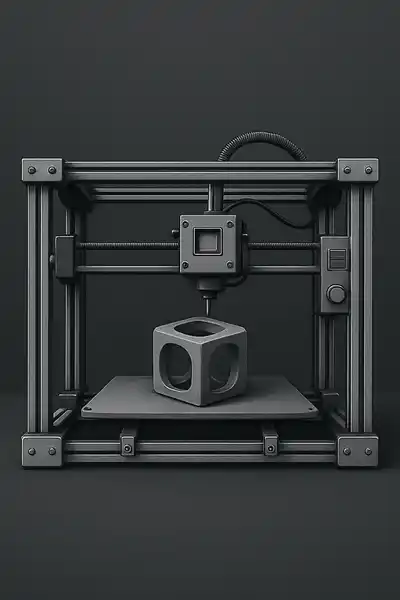
The maker movement embodies the idea that anyone can design and produce a product, starting from a digital design to sharing with peers for feedback, and finally manufacturing it cost-effectively in small quantities. This has been made possible by desktop manufacturing tools such as 3-d printers, cnc machines, and laser cutters. 3-d printers build objects by layering materials like plastic, although limited to one material at a time, they are highly effective. Despite their current high costs, prices are expected to decrease as more companies enter the market. Cnc machines, on the other hand, use a subtractive process to carve out products from materials like wood or metal. Laser cutters cut through materials to create intricate designs. Additionally, 3-d scanners can digitize physical objects into digital models. Digital fabrication, unlike traditional manufacturing, doesn't benefit from economies of scale, allows for easy customization, and lacks initial tooling costs, making it economically revolutionary by maintaining consistent costs per unit and enabling the production of complex items without the high costs associated with traditional manufacturing methods.
Accessible hardware
Innovative product development is being revolutionized by companies that forgo traditional r&d, instead leveraging online communities and open-source projects. This approach fosters a collaborative environment where users can freely share ideas, content, and media, leading to unexpected and groundbreaking innovations. Diydrones.Com exemplifies this, having quickly learned to repurpose mobile sensors and chips, rivaling aerospace achievements at a fraction of the cost. The community's success led to the creation of 3d robotics, which turned a volunteer project into a profitable business, earning $3 million by its third year, with two-thirds of sales international. This hybrid model combines the digital openness of sharing design files and software with the traditional sale of physical products, catering to the majority who prefer ready-made solutions while still benefiting from the creativity of the few who contribute to product innovation. This open hardware approach effectively merges the expansive reach of the web with the solid foundation of manufacturing.
03 Essentials for today's maker .
If you're intrigued by the prospect of playing a pivotal role in the third industrial revolution, all you need to do to join the maker movement is to establish a modern workshop. The fundamental elements of becoming a digital fabricator, as of 2012, are as follows:
Cad software is essential for visualizing and modifying your ideas. Design software is available in both 2-d and 3-d formats. For very basic projects, 2-d might suffice, but most will necessitate 3-d. Some suggestions include inkscape for a free 2-d option, adobe illustrator for a paid 2-d option, google sketchup and tinkercad for free 3-d options, and solidworks for a paid 3-d option.
A 3-d printer is necessary to transform your product concept into a prototype quickly and easily. 3-d printers, once costing tens of thousands of dollars, are now available around the $1,000 mark. Most 3-d printers construct objects with layers of melted abs plastic in various colors, with a limit of about half a millimeter in thickness. If a printer is beyond your budget, on-demand services like shapeways and ponoko can print for you. Makerbot replicator and ultimaker are some printer options. A 3-d scanner is useful as it can digitize the world faster than you can draw it in cad software. While expensive professional-level 3-d scanners are excellent, you can achieve good results with a cheap digital camera and intelligent software, provided your lighting is good. Autodesk 123d catch and meshlab are free software options, and makerbot 3-d scanner is a scanner option.
A laser cutter is a good investment as it allows you to create anything you design onscreen in wood, plastic, or thin metal. While it's the simplest form of digital fabrication, it's also the least necessary tool, as you can easily upload your file to a service bureau like ponoko and have them create it for you at a low cost. However, laser cutters can produce unpleasant fumes, so a good ventilation system is necessary if you use one. Autodesk 123d make is a software option.
Related books