Let My People Go Surfing
Business with a conscience
Description
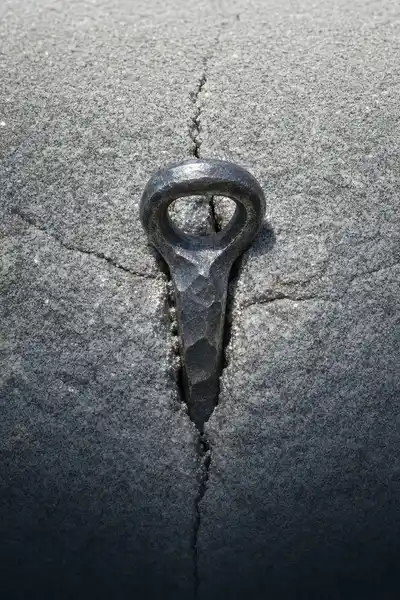
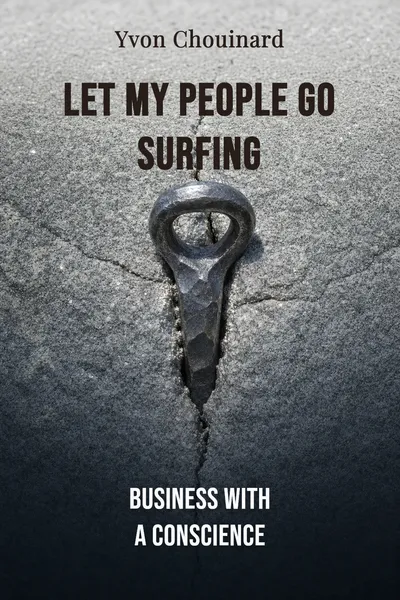
In the late 1950s, a teenager named Yvon Chouinard was teaching himself to climb the granite walls of Yosemite and sleeping in the dirt for weeks at a stretch. He needed pitons — the metal spikes climbers hammer into rock cracks — and the ones sold in shops were soft European steel, meant to be left in the rock forever. Chouinard wanted reusable ones. So he bought a used coal-fired forge, taught himself blacksmithing, and started hammering out his own from an old harvester blade. He sold them from the trunk of his car for a dollar and a half each, funding a climbing habit that took him up and down the West Coast and eventually around the world.
That trunk business became Patagonia, a company that by the time Chouinard wrote about it was earning well over $250 million a year and had spent decades as one of the strangest success stories in American commerce. It gave employees flexible hours to catch waves when the surf came up — the origin of the book's title. It made fleece jackets out of recycled soda bottles. It gave away at least one percent of sales to environmental groups every single year, profit or no profit. And it told customers, in a famous ad, not to buy its jacket unless they truly needed it.
None of this was a marketing pose bolted onto a normal company. Chouinard built the conscience into the machinery, and then watched the company grow faster because of it — not despite it. That is the puzzle worth sitting with: how a reluctant businessman who would rather be surfing ended up running a company that treats doing less harm as a competitive advantage.
The question we’re asking : How did a climber who distrusted business build one of America's most admired companies by refusing to run it like one?What we’ll see : How a homemade forge turned into a company, and how one man's refusal to separate his values from his ledger became a working philosophy.
Table of contents
01Chapter 1 — A blacksmith who never meant to be one
Chouinard's family came to Southern California in the 1950s from Maine, the children of a French-Canadian blacksmith who spoke little English and had less money. Yvon was small, scrappy, and miserable at school, and he found his real education outdoors — falconry as a boy, then climbing as a teenager. By his early twenties he was among the best climbers in America, putting up first ascents on walls that other climbers considered unclimbable. He belonged to a loose tribe of what he called dirtbags: people who structured their whole lives around being in the mountains and treated money as a nuisance to be minimized.
The forge was never meant to become a career. Chouinard made pitons because the available ones were bad and because making his own let him keep climbing. But the tools were good — better than good — and word spread through a small, opinionated community that noticed quality the way sommeliers notice wine. Fellow climbers wanted them, then demanded them. A way of life had, almost by accident, turned into a demand curve.

02Chapter 2 — The forge that became a company
Chouinard Equipment grew into the largest supplier of climbing hardware in America by the early 1970s, and then Chouinard did something that says a great deal about him: he set out to kill his own best-selling product. His pitons, hammered in and out of the same cracks, were scarring the rock on popular routes. So the company began phasing them out in favor of aluminum chocks that wedged into cracks and lifted out clean, leaving no trace. The catalog made the case in plain language, and climbers listened. It was an early, formative lesson — that a company could lead its customers away from a product for reasons that had nothing to do with the balance sheet, and survive.
03Chapter 3 — Making fewer, better things
The heart of Chouinard's philosophy is a preference for fewer, better things over more, cheaper ones. He wanted Patagonia to make products so durable and so well designed that a customer would buy one instead of five, keep it for years, and eventually hand it down. This runs directly against the logic of most consumer businesses, which depend on people buying often. Patagonia embraced it anyway, betting that quality builds a loyalty no discount can buy — and that a thing worn out slowly is a thing that does less harm to the world that made it.
The environmental turn deepened when the company examined what its own materials cost the planet. An assessment of conventionally grown cotton in the early 1990s found it soaked in pesticides and among the dirtiest crops in agriculture. Patagonia's response was drastic: it switched its entire cotton sportswear line to organic cotton by 1996, absorbing higher costs and a smaller supplier base rather than keep selling something it now knew to be damaging. It was the piton decision again, on a far larger scale — walk away from a proven product because you've learned what it truly costs.
04Chapter 4 — When a company decides what it owes
Step back from the fleece and the forge and Patagonia becomes an argument about what a company is for. The conventional view treats a business as a machine for returning profit to owners, with everything else — the environment, the workforce, the community — as either a cost to be minimized or a nice thing to fund once the profit is banked. Chouinard rejects the sequence entirely. In his telling, the values aren't spent out of profit; they generate it. The organic cotton, the reusable chocks, the one percent given away — these built the trust and the product quality that made the company worth buying from in the first place.
The one-percent pledge captures the logic. Patagonia committed to donating at least one percent of sales — not profit, sales — to environmental causes every year, treating it as a self-imposed earth tax, a cost of doing business on a finite planet rather than a charitable bonus paid when times are good. Chouinard later helped turn this into 1% for the Planet, an alliance inviting other companies to make the same pledge. The framing is deliberate: not generosity, but rent owed.
05Conclusion
The book returns, in the end, to the forge. Chouinard never set out to build an institution; he set out to keep climbing, and the tools he made to do it kept obliging him to become more of a businessman than he wanted to be. His answer was to bend the business toward the life rather than the other way around — to insist that the company make things worth making, sell them to people who needed them, and account honestly for what those things cost the world. Patagonia grew large not by abandoning that stubbornness but by scaling it into policy.
Related books