

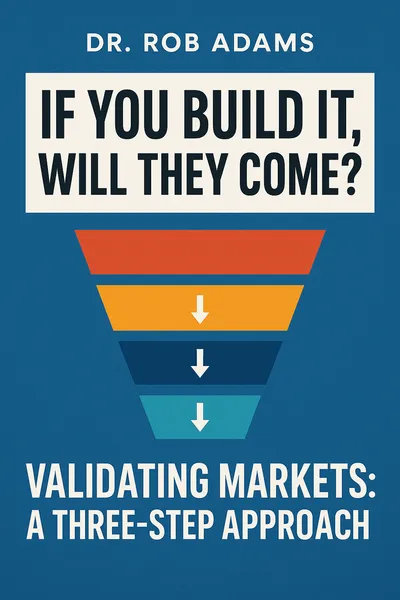
If you build it, will they come?
Validating markets: a three-step approach
Description
Before diving into a new product or start-up, ensure its market viability to avoid wasting resources. A comprehensive 60-day market validation process is crucial. Start by critically assessing your idea and the potential market size to determine its worthiness.
Next, engage with your target audience to collect diverse feedback on your concept. Finally, leverage the insights gained to effectively launch, market, and sell your product. This structured approach helps in making informed decisions and achieving success in the market.
Table of contents
01Preparing the concept
Before launching a project, assess its viability by determining the problem it solves, identifying the target market, estimating market size and payment willingness, and evaluating the idea's uniqueness and potential for being replicated. This research prevents investing in non-viable ideas.
Originating the thought
New ideas can be thrilling, often stemming from our creativity and passions. However, transforming an idea into reality demands incredible commitment of time, money and effort. Therefore, before embarking on this journey, evaluate if your idea is truly viable. Ideas originating from job experience tend to have the most potential. With a decade or more working in an industry, you have progressed far down the learning curve, gaining intimate knowledge of trends, players and forces shaping that market. By building on this expertise rather than venturing into unfamiliar territory, you mitigate risk. In contrast, ideas based on personal consumer frustrations assume falsely that being an expert user equates to being an expert producer. And ideas chasing suspected "huge markets" underestimate the strong existing forces controlling those markets. As one expert cautions, many enthusiastically share ideas to solve work problems and then optimistically extrapolate major market potential from minimal data points. When pressed about validating the market, they admit discussing only with like-minded colleagues, friends and family—people inclined to encourage pursuing dreams no matter the viability.
Evaluating market scale
Determining the current size of the market and whether it is expanding or contracting is crucial. This indicates if the market can sustain a new entrant. The market's growth rate shows if there is room for your new offering to flourish. Targeting a sizable market with faster than average growth provides advantages.
Calculate market size using industry-specific methods first to establish a baseline. Document assumptions made in this estimate. Determine what market share percentage you require to be viable. Critically evaluate if the present market opportunity is sufficient to support additional competition.

02Setting the direction
The aim section involves extensive research to understand market needs and assess demand for a new product. It requires analyzing customer satisfaction with current options, unmet needs, selection criteria, market size and growth, emerging trends, and potential customer switch rates to a new solution. This data informs product viability.
Understanding the pain
Before developing a product, it's crucial to understand the market's pain by interacting with potential customers through interviews, surveys, and focus groups. Face-to-face interviews offer deep insights, while phone and internet surveys are cost-effective. Focus groups can reveal collective viewpoints but watch for group-think. Identifying widespread problems guides product development.
Hearing customers
Market validation is an art, especially during the interview process where the aim is to objectively assess demand for a potential product. The key is maintaining objectivity to understand market needs and create a solution that stands out from competitors. Initially, interviews should explore general market problems without mentioning any product. The next stage narrows down potential solutions by identifying essential attributes and confirming trends. Finally, presenting multiple options helps gauge the most acceptable solution. This approach goes beyond surface-level market analysis, allowing for the development of a differentiated offering. Throughout the process, from initial problem-focused discussions to finalizing the offering, the focus remains on refining the understanding of the target audience's needs and preferences.
03Executing the launch
Fire represents the transition from gathering data to delivering a viable product. This is where you leverage all the market validation work you’ve done. Utilizing what you know, you set the appropriate business goals and then get to work making them happen. To execute effectively, address five questions: What unique value will you deliver to the marketplace? What key metrics will your business track? What are the milestones that will demonstrate progress? What activities will drive growth? And what resources do you need to make this happen? Keeping these questions in focus helps maintain alignment as you build your organization. Remember that fire transforms vision into reality through clarity, commitment and consistent effort.
Budgeting Appropriately
In the Fire phase of product development, transitioning from planning to execution is crucial. After confirming a market need, it's vital to allocate resources effectively, balancing product development and marketing costs. Surprisingly, sales and marketing expenses are often overlooked, yet they're essential in competitive markets. Before advancing, ensure you've judiciously used data to validate less than 5% of your budget has been risked.
Specifying the Product
The entire Market Validation process utilizes a structured, framework-based approach to address a very unstructured and nonlinear issue. The Ready, Aim, Fire methodology resembles a funnel: we input many opportunities at the wide opening and implement an extrusion process to determine what we can generate at the narrow end. To transition from the wide aperture to the narrow one, one of two occurrences must transpire: We either eliminate some concepts or concentrate the concept by more narrowly defining the market opportunity. Remember the adage: The key to success is learning from past failures. Victory does not come by forcibly entering a market merely to demonstrate we can make that market viable. We aspire to forcefully enter the market of least resistance.